
UNITED STATES
SECURITIES AND EXCHANGE COMMISSION
WASHINGTON, D.C. 20549
FORM
CURRENT REPORT
Pursuant to Section 13 or 15(d)
of the Securities Exchange Act of 1934
Date of Report (Date of earliest event reported):
(Exact name of registrant as specified in its charter)
| (State or other jurisdiction of incorporation) |
(Commission File Number) |
(IRS Employer Identification No.) | ||
| (Address of principal executive offices) | (Zip Code) | |||
Registrant’s telephone number, including area code:
Not Applicable
(Former name or former address, if changed since last report)
Check the appropriate box below if the Form 8-K filing is intended to simultaneously satisfy the filing obligation of the registrant under any of the following provisions:
| Written communications pursuant to Rule 425 under the Securities Act (17 CFR 230.425) |
| Soliciting material pursuant to Rule 14a-12 under the Exchange Act (17 CFR 240.14a-12) |
| Pre-commencement communications pursuant to Rule 14d-2(b) under the Exchange Act (17 CFR 240.14d-2(b)) |
| Pre-commencement communications pursuant to Rule 13e-4(c) under the Exchange Act (17 CFR 240.13e-4(c)) |
Securities registered pursuant to Section 12(b) of the Act:
| Title of each class |
Trading |
Name of each exchange | ||
Indicate by check mark whether the registrant is an emerging growth company as defined in Rule 405 of the Securities Act of 1933 (§ 230.405 of this chapter) or Rule 12b-2 of the Securities Exchange Act of 1934 (§ 240.12b-2 of this chapter).
Emerging growth company
If an emerging growth company, indicate by check mark if the registrant has elected not to use the extended transition period for complying with any new or revised financial accounting standards provided pursuant to Section 13(a) of the Exchange Act.
| Item 7.01 | Regulation FD Disclosure. |
Attached as Exhibit 99.1 and furnished for purposes of Regulation FD is a presentation that Candel Therapeutics, Inc. may use from time to time in presentations or discussions with investors, analysts, and other parties.
The information in this Item 7.01 (including Exhibit 99.1) is being furnished solely to satisfy the requirements of Regulation FD and shall not be deemed to be “filed” for the purposes of Section 18 of the Securities Exchange Act of 1934, as amended (the “Exchange Act”), or otherwise subject to the liabilities of that Section, nor shall it be deemed to be incorporated by reference in any filing under the Securities Act of 1933, as amended, or the Exchange Act.
| Item 9.01 | Financial Statements and Exhibits. |
(d) Exhibits
The following exhibits are being furnished herewith:
| Exhibit |
Document | |
| 99.1 | Investor presentation of Candel Therapeutics, Inc. | |
| 104 | Cover Page Interactive Data File (embedded within the Inline XBRL document) | |
SIGNATURES
Pursuant to the requirements of the Securities Exchange Act of 1934, the registrant has duly caused this report to be signed on its behalf by the undersigned hereunto duly authorized.
| Candel Therapeutics, Inc. | ||||||
| Date: September 9, 2026 | By: | /s/ Paul Peter Tak | ||||
| Paul Peter Tak, M.D., Ph.D., FMedSci President and Chief Executive Officer | ||||||
Exhibit 99.1 Tipping the balance in favor of the immune system to fight cancer NASDAQ: CADL Corporate Presentation | September 2026 © © 2026 2026 by by C Ca an ndel del T Ther hera ap peu eut ti ic cs s
Forward Looking Statements This Presentation contains forward-looking statements within the meaning of the Private Securities Litigation Reform Act of 1995. All statements other than statements of historical facts contained in this Presentation, including express or implied statements regarding our strategy, future financial condition, future operations, projected costs, prospects, plans, objectives of management and expected market size, are forward-looking statements. In some cases, you can identify forward-looking statements by terminology such as “may,” “will,” “should,” “expect,” “intend,” “plan,” “anticipate,” “believe,” “estimate,” “target,” “seek,” “predict,” “potential,” “continue” or the negative of these terms or other comparable terminology. Although we believe that the expectations reflected in these forward-looking statements are reasonable, these statements relate to our strategy, future operations, future financial position, future revenue, projected costs, prospects, plans, objectives of management and expected market size, and involve known and unknown risks, uncertainties and other factors that may cause our actual results, performance or achievements to be materially different from any future results, performance or achievements expressed or implied by these forward-looking statements. Forward-looking statements in this Presentation include, but are not limited to, statements about: the initiation, timing, progress, results, and cost of our research and development programs and our current and future preclinical and clinical studies, including statements regarding the timing of initiation and completion of studies or trials and related preparatory work, the period during which the results of the trials will become available, and our research and development programs; the therapeutic benefit of our programs, including the potential for our programs to extend patient survival; our ability to efficiently discover and develop product candidates; our ability to initiate, recruit and enroll patients in and conduct our clinical trials at the pace that we project; our ability to obtain and maintain regulatory approval of our product candidates; our ability to compete with companies currently marketing or engaged in the development of treatments that our product candidates are designed to target; our reliance on third parties to conduct our clinical trials and to manufacture drug substance for use in our clinical trials; the size and growth potential of the markets for our product candidates and our ability to serve those markets; the ability and willingness of our third-party strategic collaborators to continue research and development activities relating to our development candidates and product candidates; our ability to obtain and maintain adequate intellectual property rights; our estimates of our future expenses, revenue, capital requirements or our need for or ability to obtain additional financing; our ability to continue as a going concern, the potential benefits of strategic collaboration agreements, our ability to enter into additional strategic collaborations or arrangements, and our ability to attract collaborators with development, regulatory and commercialization expertise; our financial performance; and developments and projections relating to our competitors or our industry. We caution the recipient not to place considerable reliance on the forward-looking statements contained in this Presentation. The forward-looking statements in this Presentation speak only as of the date of this document, and we undertake no obligation to update or revise any of these statements. Our business is subject to substantial risks and uncertainties, including those referenced above. Certain information contained in this Presentation relates to or is based on estimates, projections and other information concerning the Company’s industry, its business and the markets for its programs and product candidates and studies, publications, surveys and other data obtained from third-party sources and the Company's own internal estimates and research. While the Company believes these third-party sources to be reliable as of the date of this Presentation, it has not independently verified, and makes no representation as to the adequacy, fairness, accuracy or completeness of, any information obtained from third-party sources. In addition, all of the market data included in this Presentation involves a number of assumptions; there can be no guarantee as to the accuracy or reliability of such assumptions. Finally, while we believe our own internal research is reliable, such research has not been verified by any independent source. These forward-looking statements are based on the beliefs of our management as well as assumptions made by and information currently available to us. Although we believe the expectations reflected in such forward-looking statements are reasonable, we can give no assurance that such expectations will prove to be correct. If such assumptions do not fully materialize or prove incorrect, the events or circumstances referred to in the forward-looking statements may not occur. We undertake no obligation to update publicly any forward-looking statements for any reason after the date of this presentation to conform these statements to actual results or to changes in our expectations, except as required by law. Accordingly, readers are cautioned not to place undue reliance on these forward-looking statements. Additional risks and uncertainties that could affect our business are included under the caption “Risk Factors” in our most recent Form 10-Q filed with the Securities and Exchange Commission on August 13, 2026. Corporate Presentation | September 2026 2 © 2026 by Candel Therapeutics
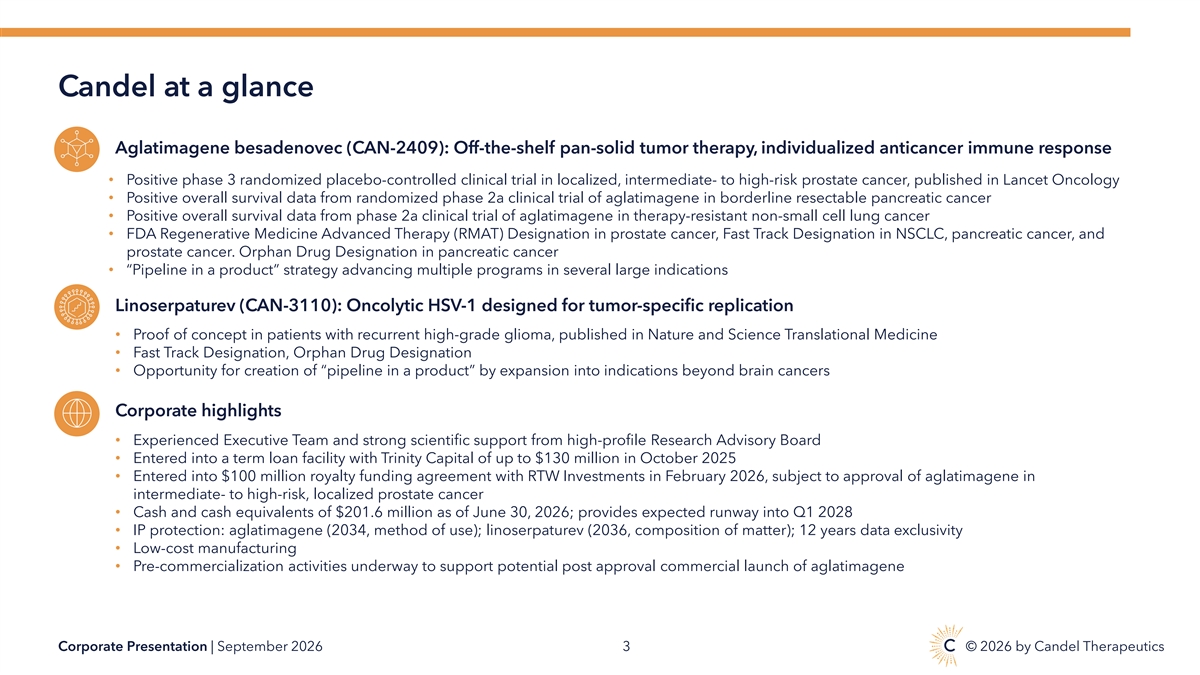
Candel at a glance Aglatimagene besadenovec (CAN-2409): Off-the-shelf pan-solid tumor therapy, individualized anticancer immune response • Positive phase 3 randomized placebo-controlled clinical trial in localized, intermediate- to high-risk prostate cancer, published in Lancet Oncology • Positive overall survival data from randomized phase 2a clinical trial of aglatimagene in borderline resectable pancreatic cancer • Positive overall survival data from phase 2a clinical trial of aglatimagene in therapy-resistant non-small cell lung cancer • FDA Regenerative Medicine Advanced Therapy (RMAT) Designation in prostate cancer, Fast Track Designation in NSCLC, pancreatic cancer, and prostate cancer. Orphan Drug Designation in pancreatic cancer • “Pipeline in a product” strategy advancing multiple programs in several large indications Linoserpaturev (CAN-3110): Oncolytic HSV-1 designed for tumor-specific replication • Proof of concept in patients with recurrent high-grade glioma, published in Nature and Science Translational Medicine • Fast Track Designation, Orphan Drug Designation • Opportunity for creation of “pipeline in a product” by expansion into indications beyond brain cancers Corporate highlights • Experienced Executive Team and strong scientific support from high-profile Research Advisory Board • Entered into a term loan facility with Trinity Capital of up to $130 million in October 2025 • Entered into $100 million royalty funding agreement with RTW Investments in February 2026, subject to approval of aglatimagene in intermediate- to high-risk, localized prostate cancer • Cash and cash equivalents of $201.6 million as of June 30, 2026; provides expected runway into Q1 2028 • IP protection: aglatimagene (2034, method of use); linoserpaturev (2036, composition of matter); 12 years data exclusivity • Low-cost manufacturing • Pre-commercialization activities underway to support potential post approval commercial launch of aglatimagene Corporate Presentation | September 2026 3 © 2026 by Candel Therapeutics
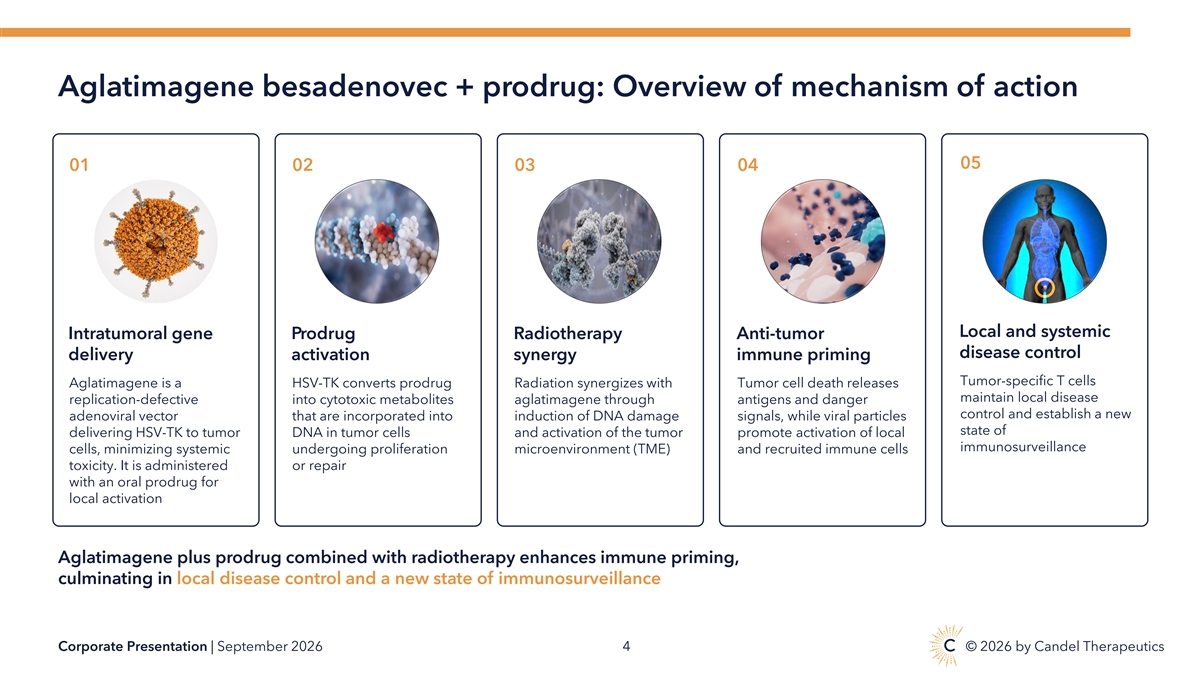
Aglatimagene besadenovec + prodrug: Overview of mechanism of action 05 01 02 03 04 Local and systemic Intratumoral gene Prodrug Radiotherapy Anti-tumor disease control delivery activation synergy immune priming Tumor-specific T cells Aglatimagene is a HSV-TK converts prodrug Radiation synergizes with Tumor cell death releases maintain local disease replication-defective into cytotoxic metabolites aglatimagene through antigens and danger control and establish a new adenoviral vector that are incorporated into induction of DNA damage signals, while viral particles state of delivering HSV-TK to tumor DNA in tumor cells and activation of the tumor promote activation of local immunosurveillance cells, minimizing systemic undergoing proliferation microenvironment (TME) and recruited immune cells toxicity. It is administered or repair with an oral prodrug for local activation Aglatimagene plus prodrug combined with radiotherapy enhances immune priming, culminating in local disease control and a new state of immunosurveillance Corporate Presentation | September 2026 4 © 2026 by Candel Therapeutics
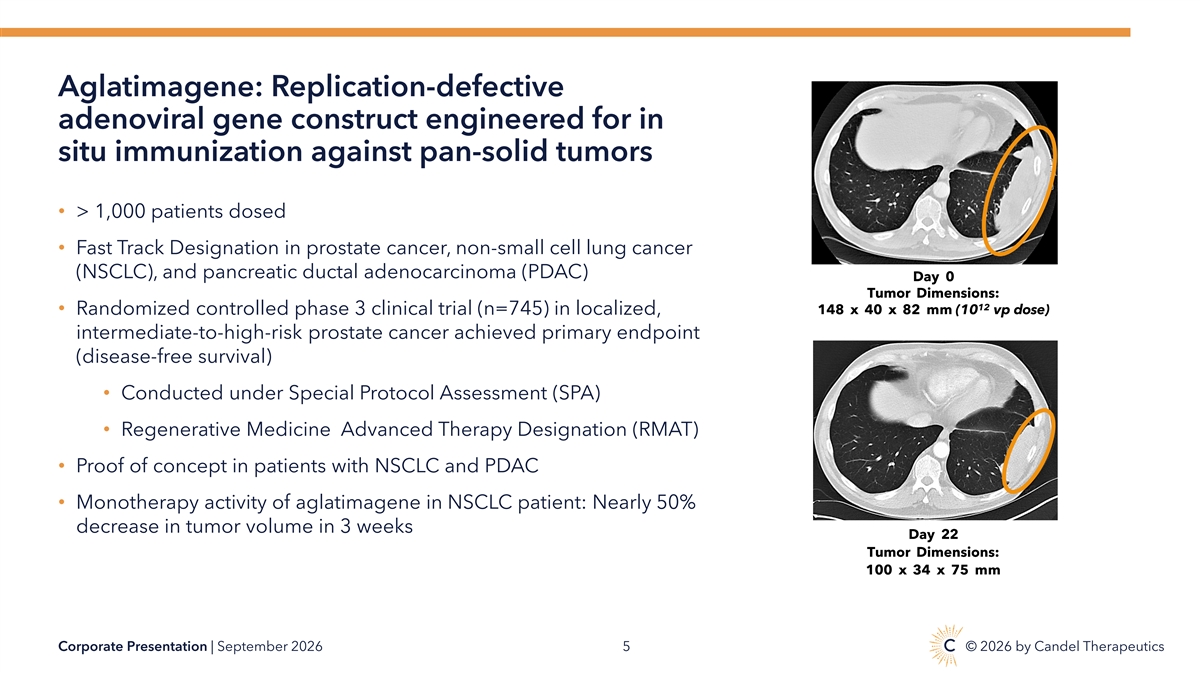
Aglatimagene: Replication-defective adenoviral gene construct engineered for in situ immunization against pan-solid tumors • > 1,000 patients dosed • Fast Track Designation in prostate cancer, non-small cell lung cancer (NSCLC), and pancreatic ductal adenocarcinoma (PDAC) Day 0 Tumor Dimensions: 12 • Randomized controlled phase 3 clinical trial (n=745) in localized, 148 x 40 x 82 mm (10 vp dose) intermediate-to-high-risk prostate cancer achieved primary endpoint (disease-free survival) • Conducted under Special Protocol Assessment (SPA) • Regenerative Medicine Advanced Therapy Designation (RMAT) • Proof of concept in patients with NSCLC and PDAC • Monotherapy activity of aglatimagene in NSCLC patient: Nearly 50% decrease in tumor volume in 3 weeks Day 22 Tumor Dimensions: 100 x 34 x 75 mm Corporate Presentation | September 2026 5 © 2026 by Candel Therapeutics
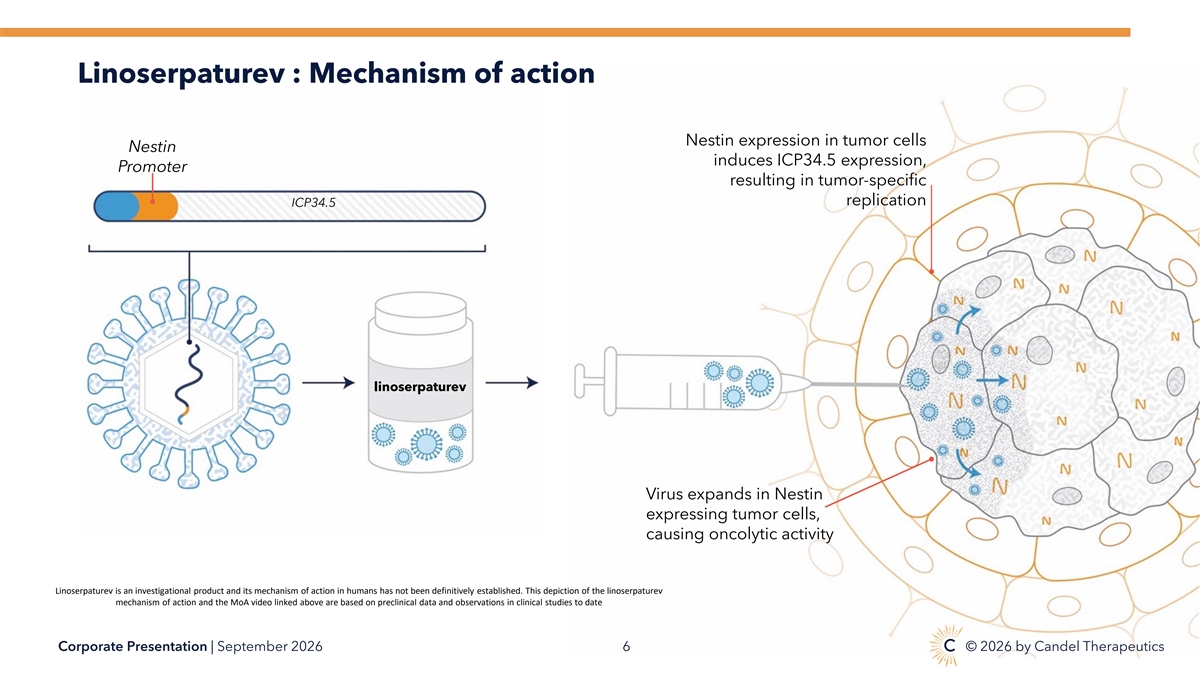
Linoserpaturev : Mechanism of action Nestin expression in tumor cells Nestin induces ICP34.5 expression, Promoter resulting in tumor-specific replication ICP34.5 linoserpaturev Virus expands in Nestin expressing tumor cells, causing oncolytic activity Linoserpaturev is an investigational product and its mechanism of action in humans has not been definitively established. This depiction of the linoserpaturev mechanism of action and the MoA video linked above are based on preclinical data and observations in clinical studies to date Corporate Presentation | September 2026 6 © © 2026 2026 by by C Ca an ndel del T Ther hera ap peu eut ti ic cs s
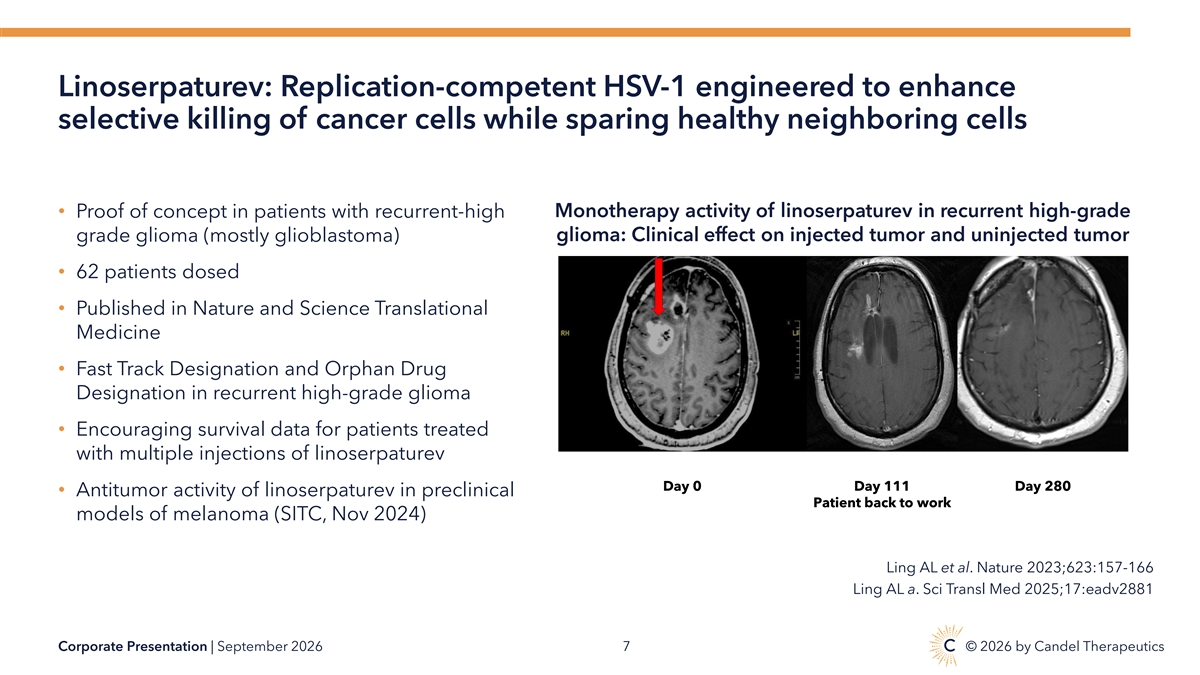
Linoserpaturev: Replication-competent HSV-1 engineered to enhance selective killing of cancer cells while sparing healthy neighboring cells • Proof of concept in patients with recurrent-high Monotherapy activity of linoserpaturev in recurrent high-grade glioma: Clinical effect on injected tumor and uninjected tumor grade glioma (mostly glioblastoma) • 62 patients dosed • Published in Nature and Science Translational Medicine • Fast Track Designation and Orphan Drug Designation in recurrent high-grade glioma • Encouraging survival data for patients treated with multiple injections of linoserpaturev Day 0 Day 111 Day 280 • Antitumor activity of linoserpaturev in preclinical Patient back to work models of melanoma (SITC, Nov 2024) Ling AL et al. Nature 2023;623:157-166 Ling AL a. Sci Transl Med 2025;17:eadv2881 Corporate Presentation | September 2026 7 © 2026 by Candel Therapeutics
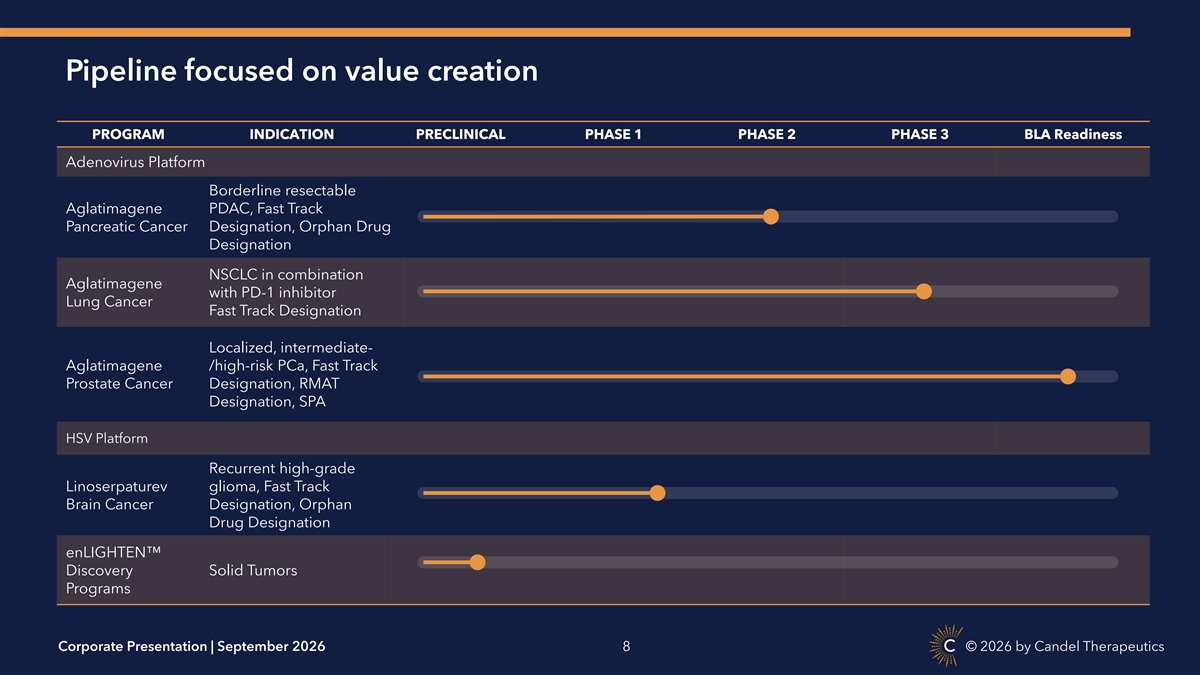
Pipeline focused on value creation PROGRAM INDICATION PRECLINICAL PHASE 1 PHASE 2 PHASE 3 BLA Readiness Adenovirus Platform Borderline resectable Aglatimagene PDAC, Fast Track Pancreatic Cancer Designation, Orphan Drug Designation NSCLC in combination Aglatimagene with PD-1 inhibitor Lung Cancer Fast Track Designation Localized, intermediate- Aglatimagene /high-risk PCa, Fast Track Prostate Cancer Designation, RMAT Designation, SPA HSV Platform Recurrent high-grade Linoserpaturev glioma, Fast Track Brain Cancer Designation, Orphan Drug Designation enLIGHTEN Discovery Solid Tumors Programs Corporate Presentation | September 2026 8 © 2026 by Candel Therapeutics
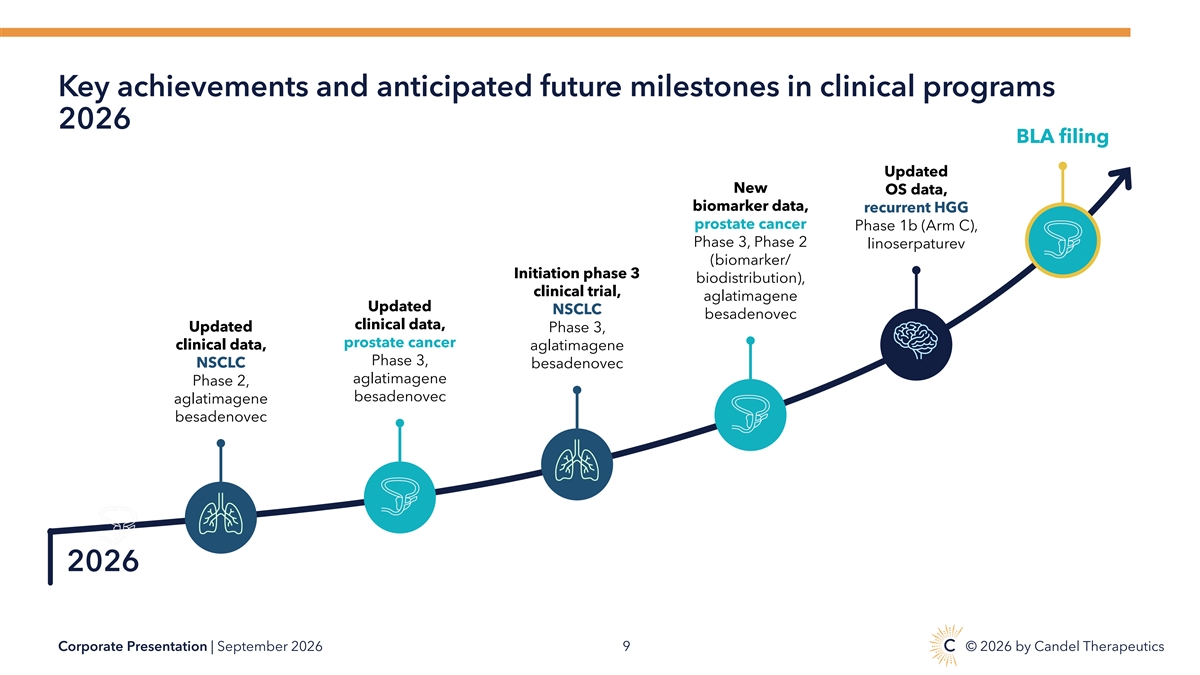
Key achievements and anticipated future milestones in clinical programs 2026 BLA filing Updated New OS data, biomarker data, recurrent HGG prostate cancer Phase 1b (Arm C), Phase 3, Phase 2 linoserpaturev (biomarker/ Initiation phase 3 biodistribution), clinical trial, aglatimagene Updated NSCLC besadenovec clinical data, Updated Phase 3, prostate cancer clinical data, aglatimagene Phase 3, NSCLC besadenovec aglatimagene Phase 2, besadenovec aglatimagene besadenovec 2026 Corporate Presentation | September 2026 9 © 2026 by Candel Therapeutics
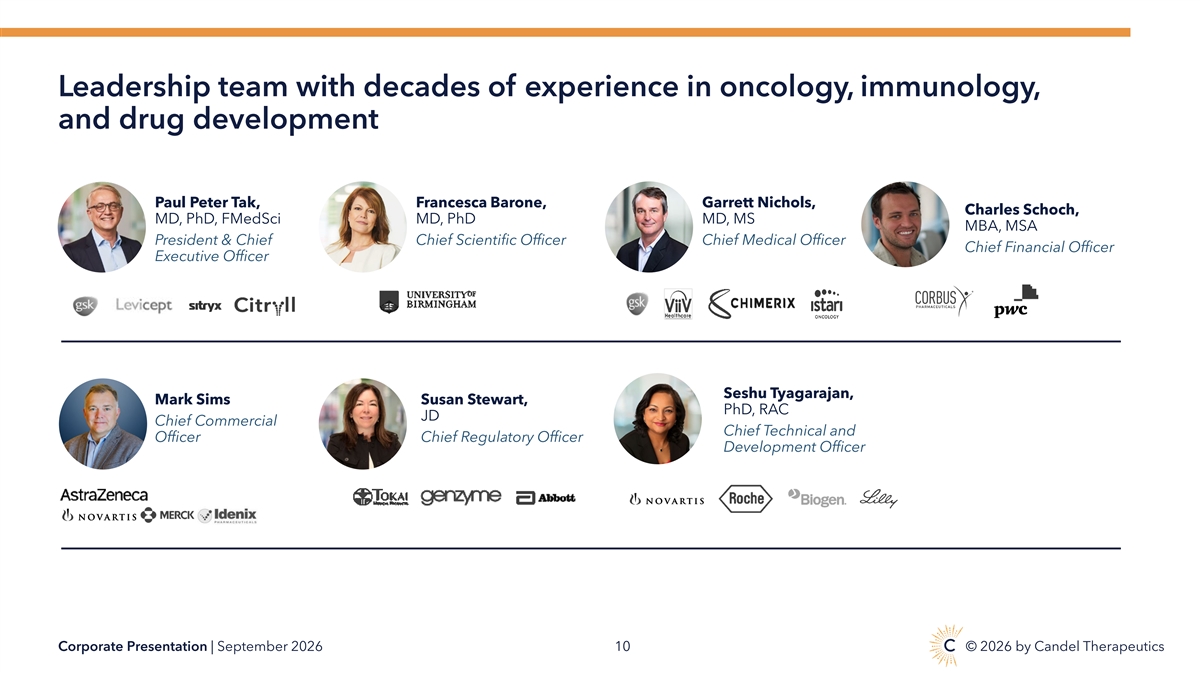
Leadership team with decades of experience in oncology, immunology, and drug development Paul Peter Tak, Francesca Barone, Garrett Nichols, Charles Schoch, MD, PhD, FMedSci MD, PhD MD, MS MBA, MSA President & Chief Chief Scientific Officer Chief Medical Officer Chief Financial Officer Executive Officer Seshu Tyagarajan, Mark Sims Susan Stewart, PhD, RAC JD Chief Commercial Chief Technical and Officer Chief Regulatory Officer Development Officer Corporate Presentation | September 2026 10 © 2026 by Candel Therapeutics

Research Advisory Board of premier thought leaders Edward Benz, MD Henry Brem, MD Roy Herbst, MD, PhD Elizabeth M. Jaffee, MD James Allison, PhD President and CEO Emeritus Director, Department of Director, Dartmouth Cancer Deputy Director of the Sidney Chair of the Department of Dana-Farber Cancer Institute Neurosurgery Center, Associate Dean of Cancer Kimmel Comprehensive Cancer Immunology, MD Anderson Professor of Neurosurgery Programs , Professor of Center at Johns Hopkins and Cancer Center Johns Hopkins University Microbiology and Immunology Co-Director of the Gastrointestinal Director of the Parker Institute and of Medicine, Preston T. and Cancers Program for Cancer Research Virginia R. Kelsey Distinguished 2018 Nobel Recipient Chair in Cancer Carl H. June, MD Philip Kantoff, MD, FASCO Gary Nabel, MD, PhD Bali Pulendran, PhD Padmanee Sharma, MD, PhD Richard W. Vaque Professor CEO and Co-Founder, Chief Innovation Officer of Violetta L. Horton Professor at Professor of Genitourinary in Immunotherapy, Perelman School of Medicine, Medical Oncology and Convergent Therapeutics, Past OPKO and President/CEO Stanford University School of University of Pennsylvania Chairman of Medicine Memorial of ModeX Therapeutics Medicine and Director of the Immunology , MD Anderson Sloan Kettering Cancer Center, Institute for Immunity, Cancer Center Former CSO Sanofi Jerome and Nancy Kohlberg Transplantation and Infection Emeritus Chair in Medicine, at Stanford University Harvard Medical School Corporate Presentation | September 2026 11 © 2026 by Candel Therapeutics
Aglatimagene (CAN-2409) Off-the-shelf therapy, individualized anti-cancer immune response Corporate Presentation | September 2026 12 © 2026 by Candel Therapeutics
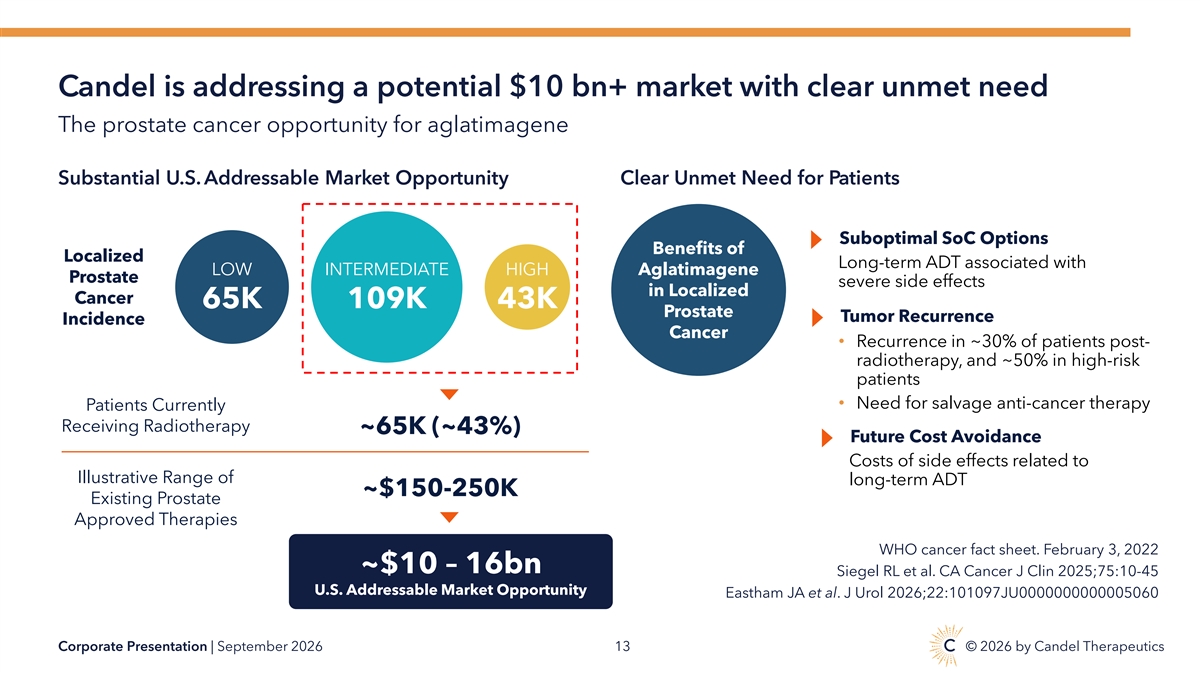
Candel is addressing a potential $10 bn+ market with clear unmet need The prostate cancer opportunity for aglatimagene Substantial U.S. Addressable Market Opportunity Clear Unmet Need for Patients Suboptimal SoC Options Benefits of Localized Long-term ADT associated with LOW INTERMEDIATE HIGH Aglatimagene Prostate severe side effects in Localized Cancer 65K 109K 43K Prostate Tumor Recurrence Incidence Cancer • Recurrence in ~30% of patients post- radiotherapy, and ~50% in high-risk patients • Need for salvage anti-cancer therapy Patients Currently Receiving Radiotherapy ~65K (~43%) Future Cost Avoidance Costs of side effects related to Illustrative Range of long-term ADT ~$150-250K Existing Prostate Approved Therapies WHO cancer fact sheet. February 3, 2022 ~$10 – 16bn Siegel RL et al. CA Cancer J Clin 2025;75:10-45 U.S. Addressable Market Opportunity Eastham JA et al. J Urol 2026;22:101097JU0000000000005060 Corporate Presentation | September 2026 13 © 2026 by Candel Therapeutics
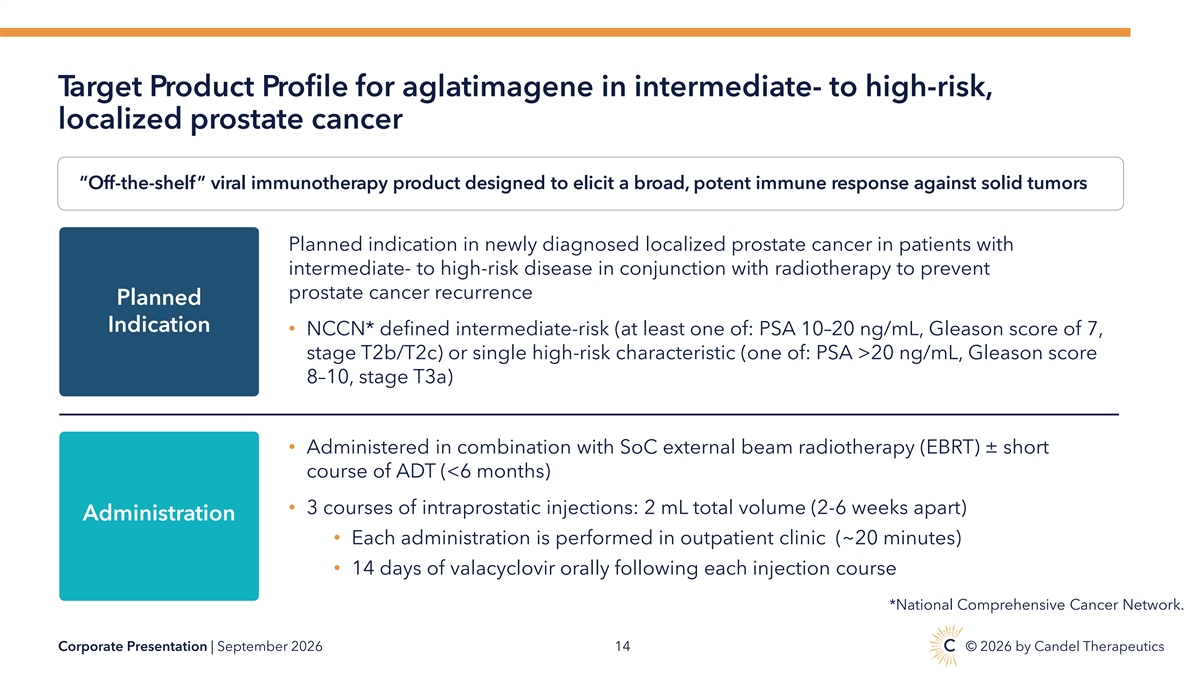
Target Product Profile for aglatimagene in intermediate- to high-risk, localized prostate cancer “Off-the-shelf” viral immunotherapy product designed to elicit a broad, potent immune response against solid tumors Planned indication in newly diagnosed localized prostate cancer in patients with intermediate- to high-risk disease in conjunction with radiotherapy to prevent prostate cancer recurrence Planned Indication • NCCN* defined intermediate-risk (at least one of: PSA 10–20 ng/mL, Gleason score of 7, stage T2b/T2c) or single high-risk characteristic (one of: PSA >20 ng/mL, Gleason score 8–10, stage T3a) • Administered in combination with SoC external beam radiotherapy (EBRT) ± short course of ADT (<6 months) • 3 courses of intraprostatic injections: 2 mL total volume (2-6 weeks apart) Administration • Each administration is performed in outpatient clinic (~20 minutes) • 14 days of valacyclovir orally following each injection course *National Comprehensive Cancer Network. Corporate Presentation | September 2026 14 © 2026 by Candel Therapeutics
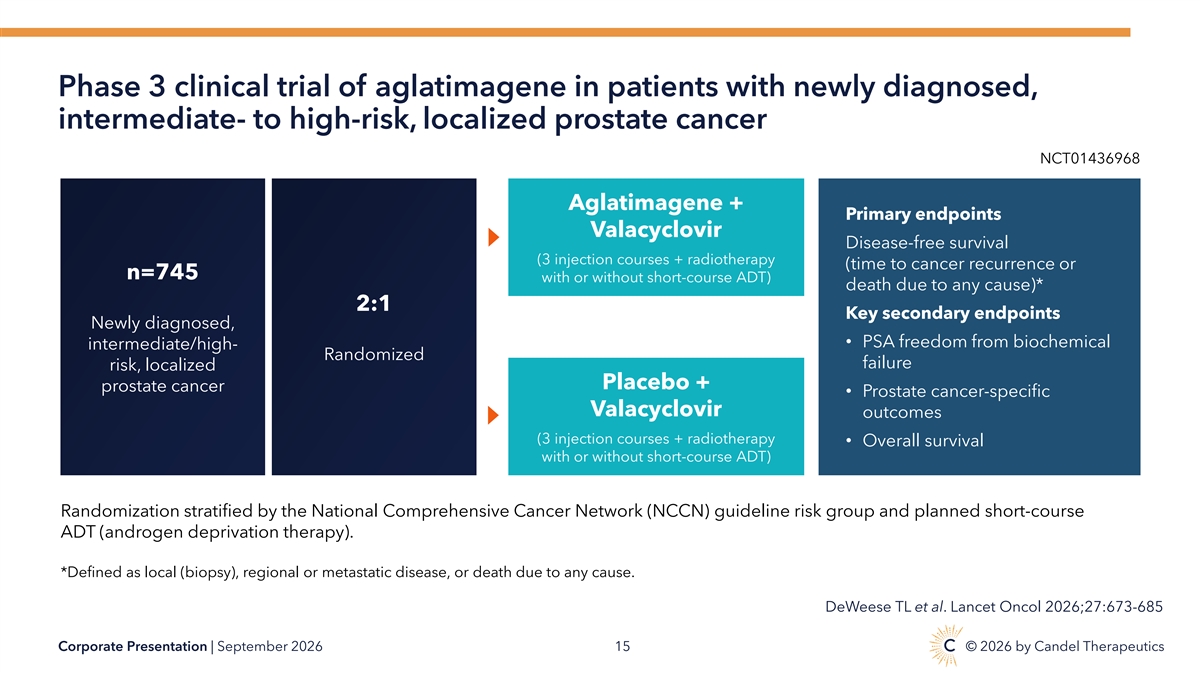
Phase 3 clinical trial of aglatimagene in patients with newly diagnosed, intermediate- to high-risk, localized prostate cancer NCT01436968 Aglatimagene + Primary endpoints Valacyclovir Disease-free survival (3 injection courses + radiotherapy (time to cancer recurrence or n=745 with or without short-course ADT) death due to any cause)* 2:1 Key secondary endpoints Newly diagnosed, • PSA freedom from biochemical intermediate/high- Randomized failure risk, localized Placebo + prostate cancer • Prostate cancer-specific Valacyclovir outcomes (3 injection courses + radiotherapy • Overall survival with or without short-course ADT) Randomization stratified by the National Comprehensive Cancer Network (NCCN) guideline risk group and planned short-course ADT (androgen deprivation therapy). *Defined as local (biopsy), regional or metastatic disease, or death due to any cause. DeWeese TL et al. Lancet Oncol 2026;27:673-685 Corporate Presentation | September 2026 15 © 2026 by Candel Therapeutics
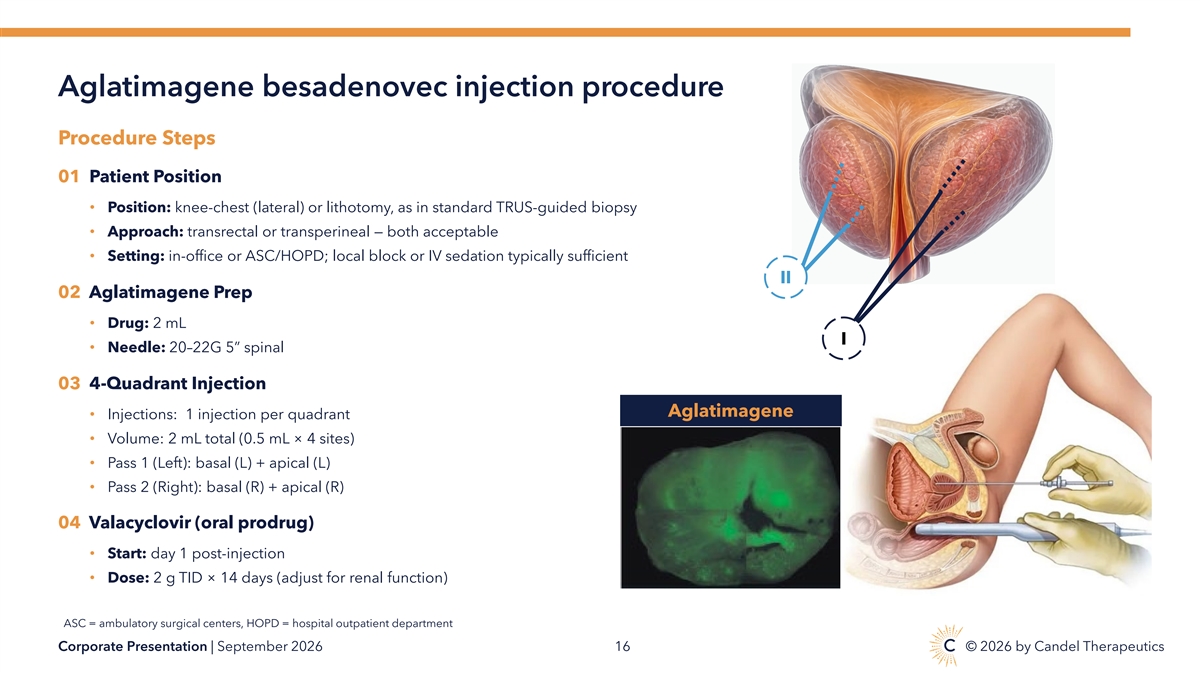
Aglatimagene besadenovec injection procedure Procedure Steps 01 Patient Position • Position: knee-chest (lateral) or lithotomy, as in standard TRUS-guided biopsy • Approach: transrectal or transperineal — both acceptable • Setting: in-office or ASC/HOPD; local block or IV sedation typically sufficient II 02 Aglatimagene Prep • Drug: 2 mL I • Needle: 20–22G 5” spinal 03 4-Quadrant Injection Aglatimagene • Injections: 1 injection per quadrant • Volume: 2 mL total (0.5 mL × 4 sites) • Pass 1 (Left): basal (L) + apical (L) • Pass 2 (Right): basal (R) + apical (R) 04 Valacyclovir (oral prodrug) • Start: day 1 post-injection • Dose: 2 g TID × 14 days (adjust for renal function) ASC = ambulatory surgical centers, HOPD = hospital outpatient department Corporate Presentation | September 2026 16 © 2026 by Candel Therapeutics
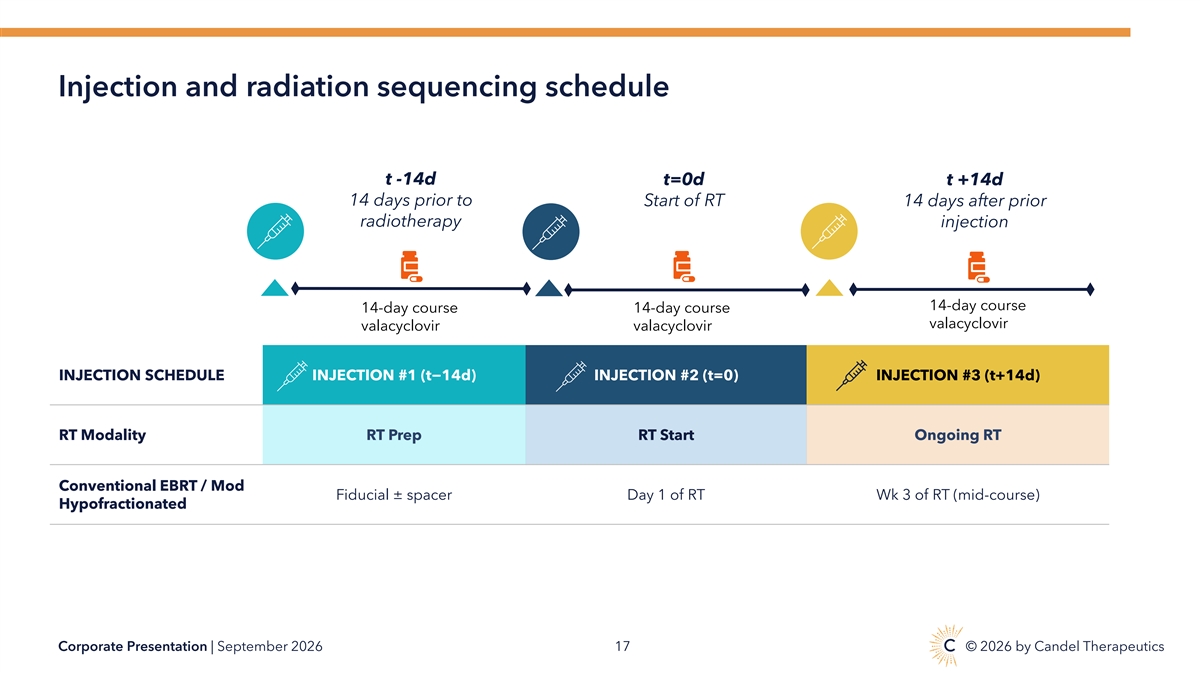
Injection and radiation sequencing schedule t -14d t=0d t +14d 14 days prior to Start of RT 14 days after prior radiotherapy injection 14-day course 14-day course 14-day course valacyclovir valacyclovir valacyclovir INJECTION SCHEDULE INJECTION #1 (t−14d) INJECTION #2 (t=0) INJECTION #3 (t+14d) RT Modality RT Prep RT Start Ongoing RT Conventional EBRT / Mod Fiducial ± spacer Day 1 of RT Wk 3 of RT (mid-course) Hypofractionated Corporate Presentation | September 2026 17 © 2026 by Candel Therapeutics
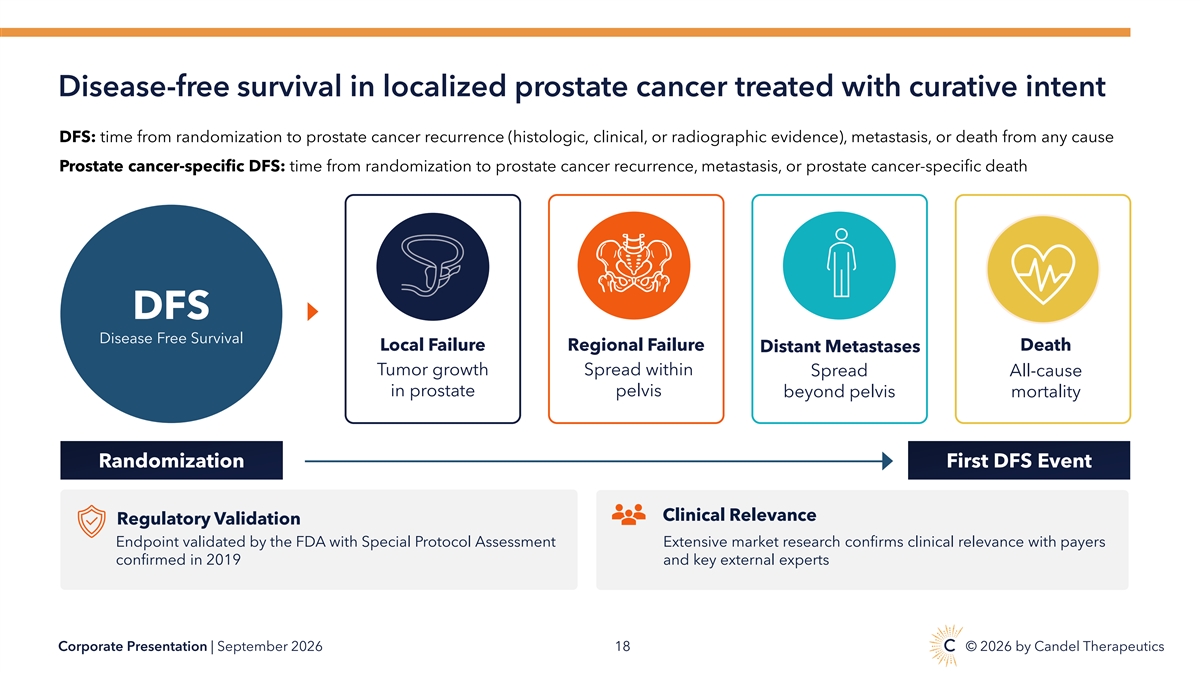
Disease-free survival in localized prostate cancer treated with curative intent DFS: time from randomization to prostate cancer recurrence (histologic, clinical, or radiographic evidence), metastasis, or death from any cause Prostate cancer-specific DFS: time from randomization to prostate cancer recurrence, metastasis, or prostate cancer-specific death DFS Disease Free Survival Local Failure Regional Failure Death Distant Metastases Tumor growth Spread within Spread All-cause in prostate pelvis beyond pelvis mortality Randomization First DFS Event Clinical Relevance Regulatory Validation Endpoint validated by the FDA with Special Protocol Assessment Extensive market research confirms clinical relevance with payers confirmed in 2019 and key external experts Corporate Presentation | September 2026 18 © 2026 by Candel Therapeutics
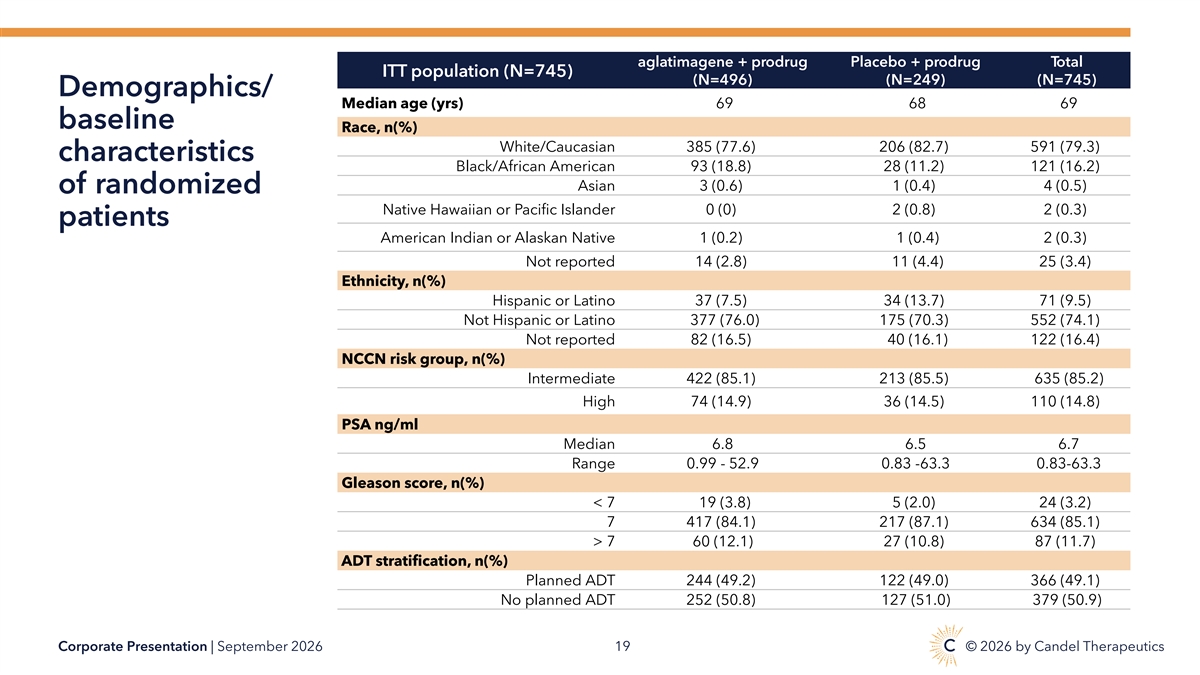
aglatimagene + prodrug Placebo + prodrug Total ITT population (N=745) (N=496) (N=249) (N=745) Demographics/ Median age (yrs) 69 68 69 baseline Race, n(%) White/Caucasian 385 (77.6) 206 (82.7) 591 (79.3) characteristics Black/African American 93 (18.8) 28 (11.2) 121 (16.2) Asian 3 (0.6) 1 (0.4) 4 (0.5) of randomized Native Hawaiian or Pacific Islander 0 (0) 2 (0.8) 2 (0.3) patients American Indian or Alaskan Native 1 (0.2) 1 (0.4) 2 (0.3) Not reported 14 (2.8) 11 (4.4) 25 (3.4) Ethnicity, n(%) Hispanic or Latino 37 (7.5) 34 (13.7) 71 (9.5) Not Hispanic or Latino 377 (76.0) 175 (70.3) 552 (74.1) Not reported 82 (16.5) 40 (16.1) 122 (16.4) NCCN risk group, n(%) Intermediate 422 (85.1) 213 (85.5) 635 (85.2) High 74 (14.9) 36 (14.5) 110 (14.8) PSA ng/ml Median 6.8 6.5 6.7 Range 0.99 - 52.9 0.83 -63.3 0.83-63.3 Gleason score, n(%) < 7 19 (3.8) 5 (2.0) 24 (3.2) 7 417 (84.1) 217 (87.1) 634 (85.1) > 7 60 (12.1) 27 (10.8) 87 (11.7) ADT stratification, n(%) Planned ADT 244 (49.2) 122 (49.0) 366 (49.1) No planned ADT 252 (50.8) 127 (51.0) 379 (50.9) Corporate Presentation | September 2026 19 © 2026 by Candel Therapeutics
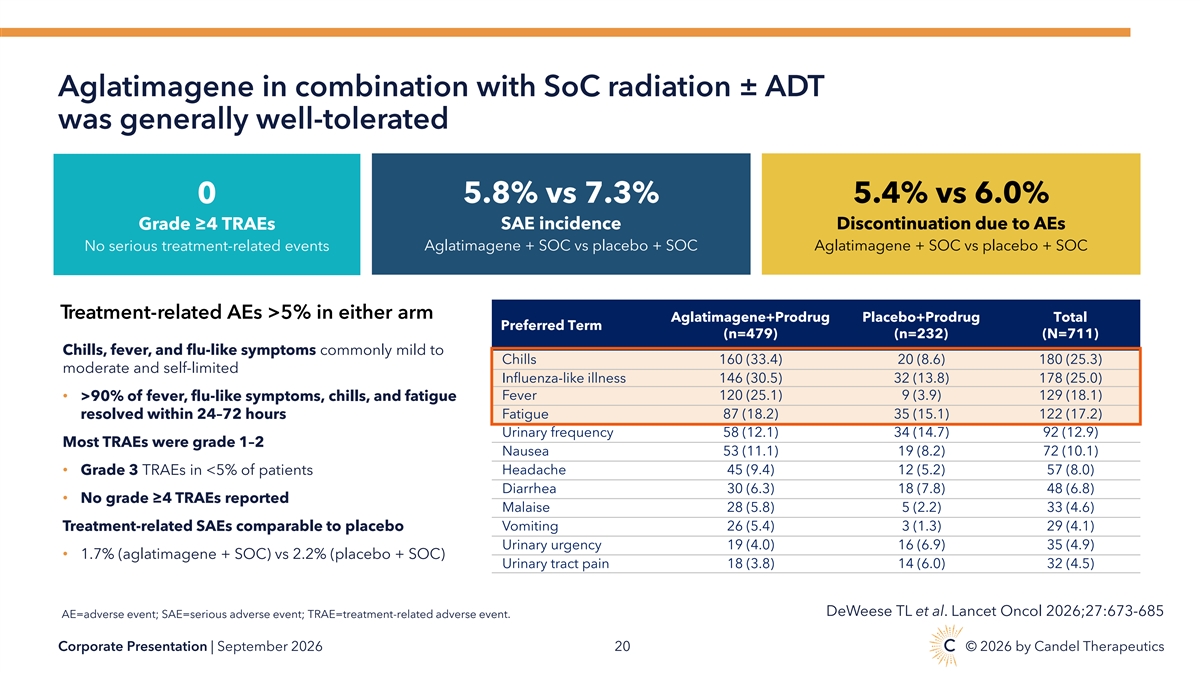
Aglatimagene in combination with SoC radiation ± ADT was generally well-tolerated 5.8% vs 7.3% 5.4% vs 6.0% 0 Grade ≥4 TRAEs SAE incidence Discontinuation due to AEs No serious treatment-related events Aglatimagene + SOC vs placebo + SOC Aglatimagene + SOC vs placebo + SOC Treatment-related AEs >5% in either arm Aglatimagene+Prodrug Placebo+Prodrug Total Preferred Term (n=479) (n=232) (N=711) Chills, fever, and flu-like symptoms commonly mild to Chills 160 (33.4) 20 (8.6) 180 (25.3) moderate and self-limited Influenza-like illness 146 (30.5) 32 (13.8) 178 (25.0) Fever 120 (25.1) 9 (3.9) 129 (18.1) • >90% of fever, flu-like symptoms, chills, and fatigue resolved within 24–72 hours Fatigue 87 (18.2) 35 (15.1) 122 (17.2) Urinary frequency 58 (12.1) 34 (14.7) 92 (12.9) Most TRAEs were grade 1–2 Nausea 53 (11.1) 19 (8.2) 72 (10.1) • Grade 3 TRAEs in <5% of patients Headache 45 (9.4) 12 (5.2) 57 (8.0) Diarrhea 30 (6.3) 18 (7.8) 48 (6.8) • No grade ≥4 TRAEs reported Malaise 28 (5.8) 5 (2.2) 33 (4.6) Treatment-related SAEs comparable to placebo Vomiting 26 (5.4) 3 (1.3) 29 (4.1) Urinary urgency 19 (4.0) 16 (6.9) 35 (4.9) • 1.7% (aglatimagene + SOC) vs 2.2% (placebo + SOC) Urinary tract pain 18 (3.8) 14 (6.0) 32 (4.5) DeWeese TL et al. Lancet Oncol 2026;27:673-685 AE=adverse event; SAE=serious adverse event; TRAE=treatment-related adverse event. Corporate Presentation | September 2026 20 © 2026 by Candel Therapeutics
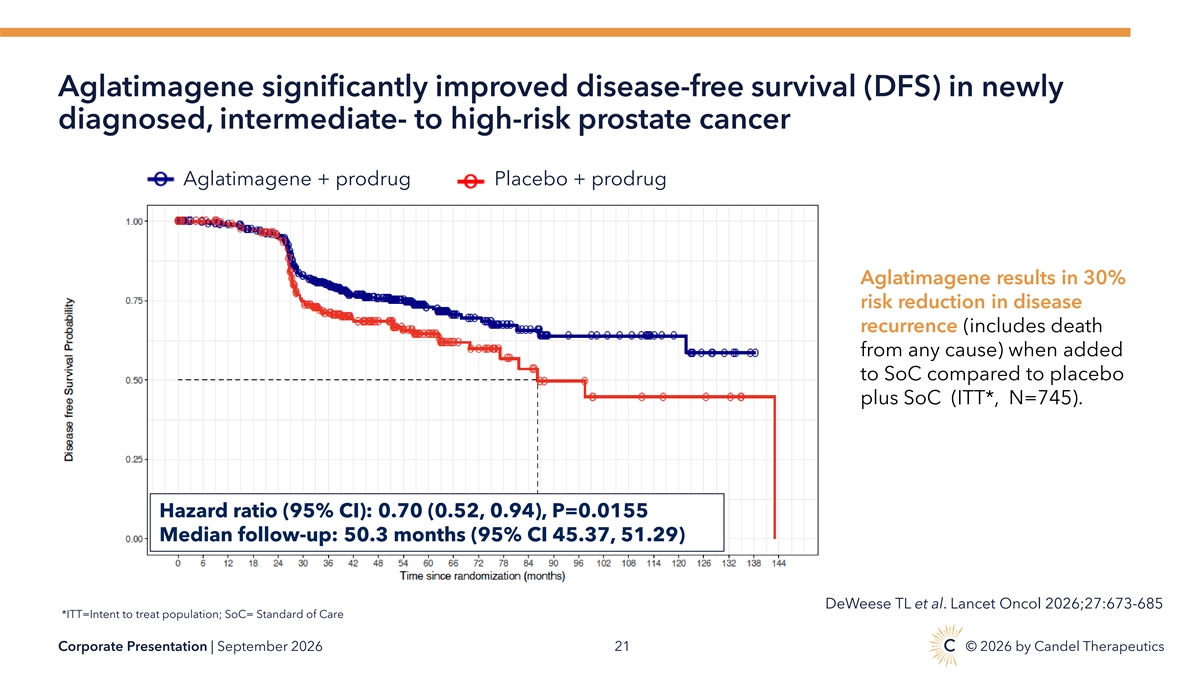
Aglatimagene significantly improved disease-free survival (DFS) in newly diagnosed, intermediate- to high-risk prostate cancer Aglatimagene + prodrug Placebo + prodrug Aglatimagene results in 30% risk reduction in disease recurrence (includes death from any cause) when added to SoC compared to placebo plus SoC (ITT*, N=745). Hazard ratio (95% CI): 0.70 (0.52, 0.94), P=0.0155 Median follow-up: 50.3 months (95% CI 45.37, 51.29) DeWeese TL et al. Lancet Oncol 2026;27:673-685 *ITT=Intent to treat population; SoC= Standard of Care Corporate Presentation | September 2026 21 © 2026 by Candel Therapeutics
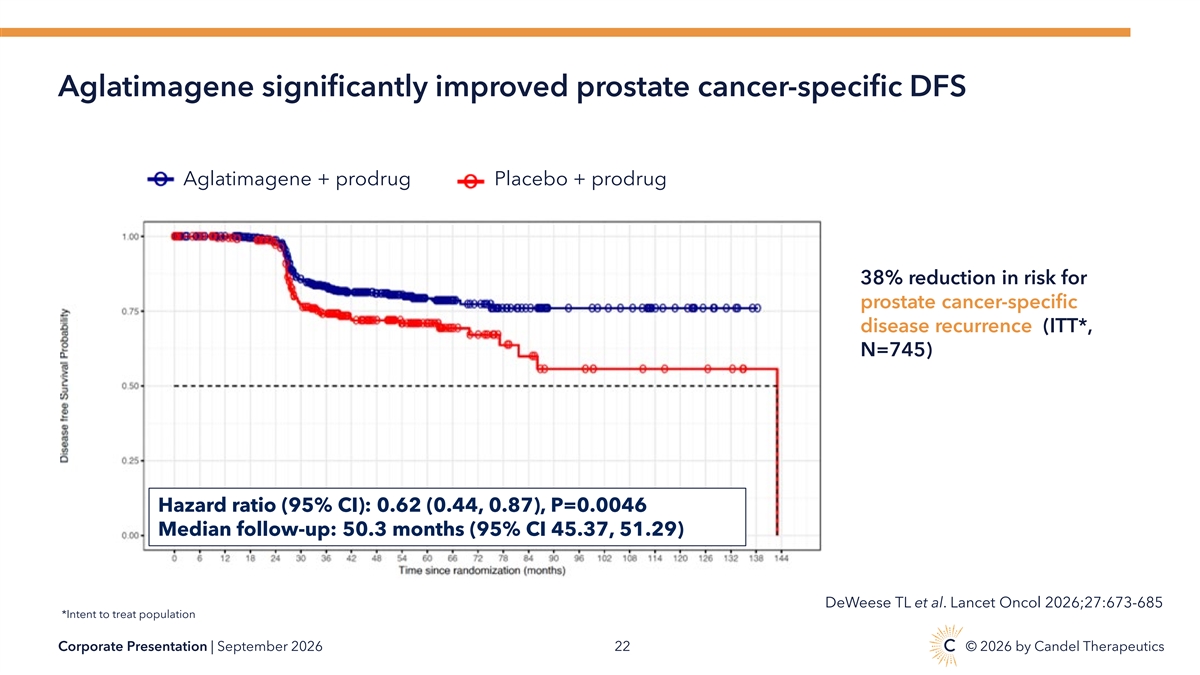
Aglatimagene significantly improved prostate cancer-specific DFS Aglatimagene + prodrug Placebo + prodrug 38% reduction in risk for prostate cancer-specific disease recurrence (ITT*, N=745) Hazard ratio (95% CI): 0.62 (0.44, 0.87), P=0.0046 Median follow-up: 50.3 months (95% CI 45.37, 51.29) DeWeese TL et al. Lancet Oncol 2026;27:673-685 *Intent to treat population Corporate Presentation | September 2026 22 © 2026 by Candel Therapeutics
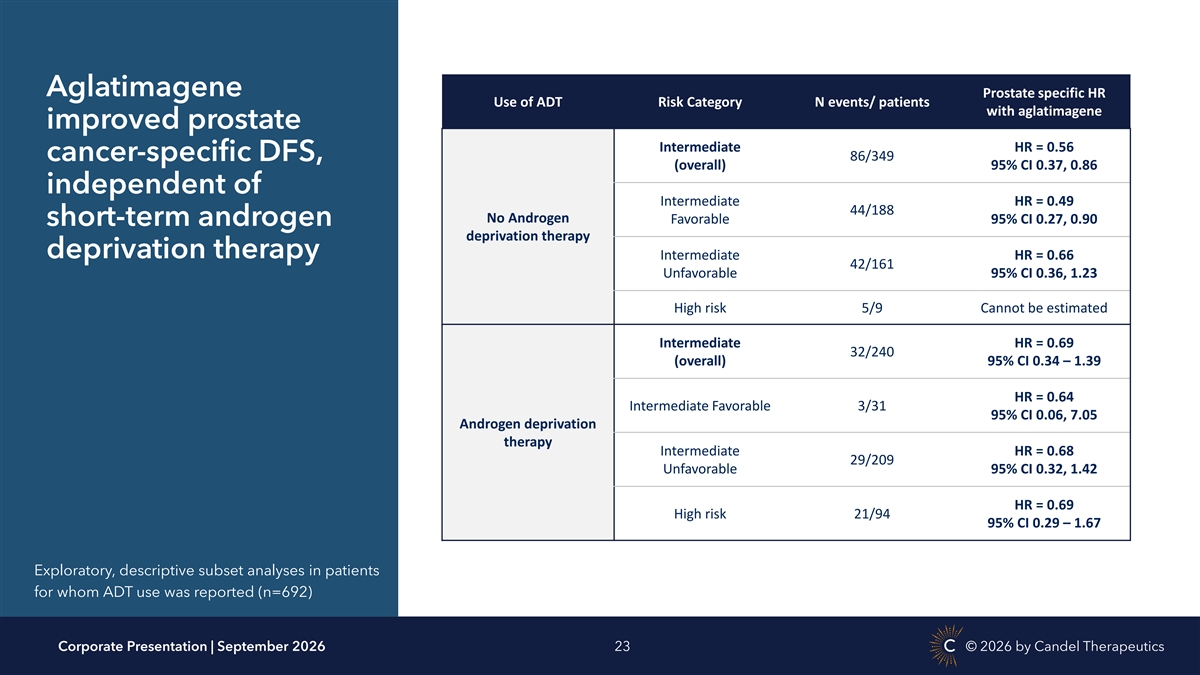
Aglatimagene Prostate specific HR Use of ADT Risk Category N events/ patients with aglatimagene improved prostate Intermediate HR = 0.56 cancer-specific DFS, 86/349 (overall) 95% CI 0.37, 0.86 independent of Intermediate HR = 0.49 44/188 No Androgen Favorable 95% CI 0.27, 0.90 short-term androgen deprivation therapy deprivation therapy Intermediate HR = 0.66 42/161 Unfavorable 95% CI 0.36, 1.23 High risk 5/9 Cannot be estimated Intermediate HR = 0.69 32/240 (overall) 95% CI 0.34 – 1.39 HR = 0.64 Intermediate Favorable 3/31 95% CI 0.06, 7.05 Androgen deprivation therapy Intermediate HR = 0.68 29/209 Unfavorable 95% CI 0.32, 1.42 HR = 0.69 High risk 21/94 95% CI 0.29 – 1.67 Exploratory, descriptive subset analyses in patients for whom ADT use was reported (n=692) Corporate Presentation | September 2026 23 © © 2026 2026 by by C Ca an ndel del T Ther hera ap peu eut ti ic cs s
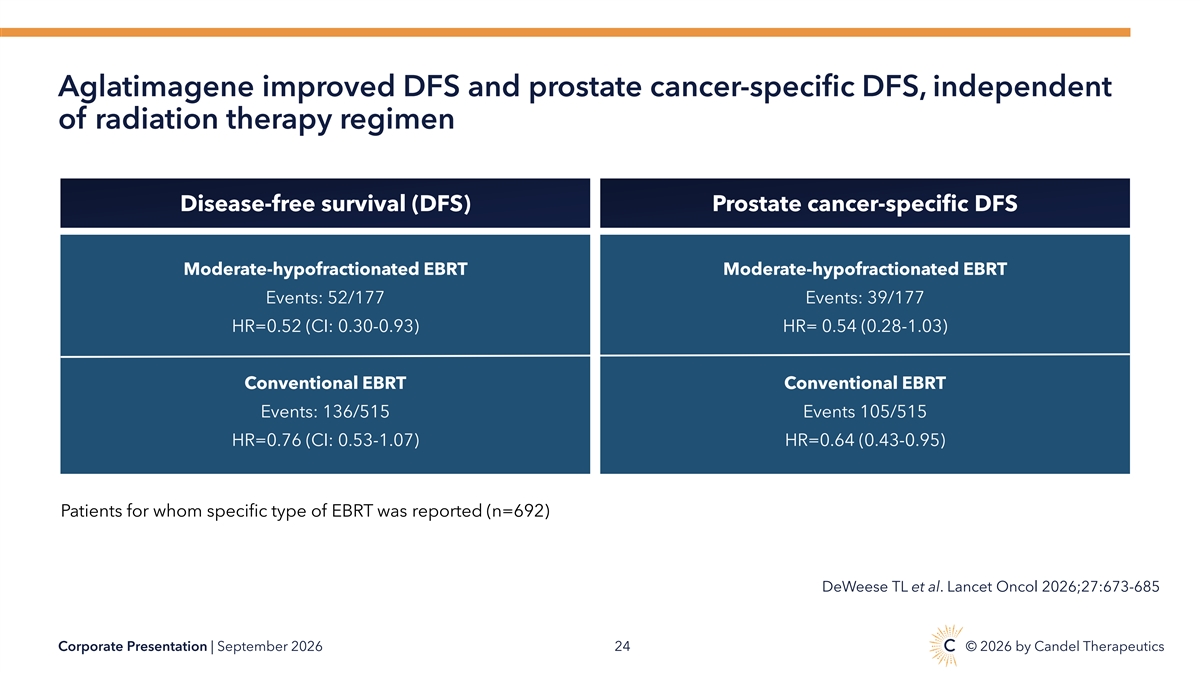
Aglatimagene improved DFS and prostate cancer-specific DFS, independent of radiation therapy regimen Disease-free survival (DFS) Prostate cancer-specific DFS Moderate-hypofractionated EBRT Moderate-hypofractionated EBRT Events: 52/177 Events: 39/177 HR=0.52 (CI: 0.30-0.93) HR= 0.54 (0.28-1.03) Conventional EBRT Conventional EBRT Events: 136/515 Events 105/515 HR=0.76 (CI: 0.53-1.07) HR=0.64 (0.43-0.95) Patients for whom specific type of EBRT was reported (n=692) DeWeese TL et al. Lancet Oncol 2026;27:673-685 Corporate Presentation | September 2026 24 © 2026 by Candel Therapeutics
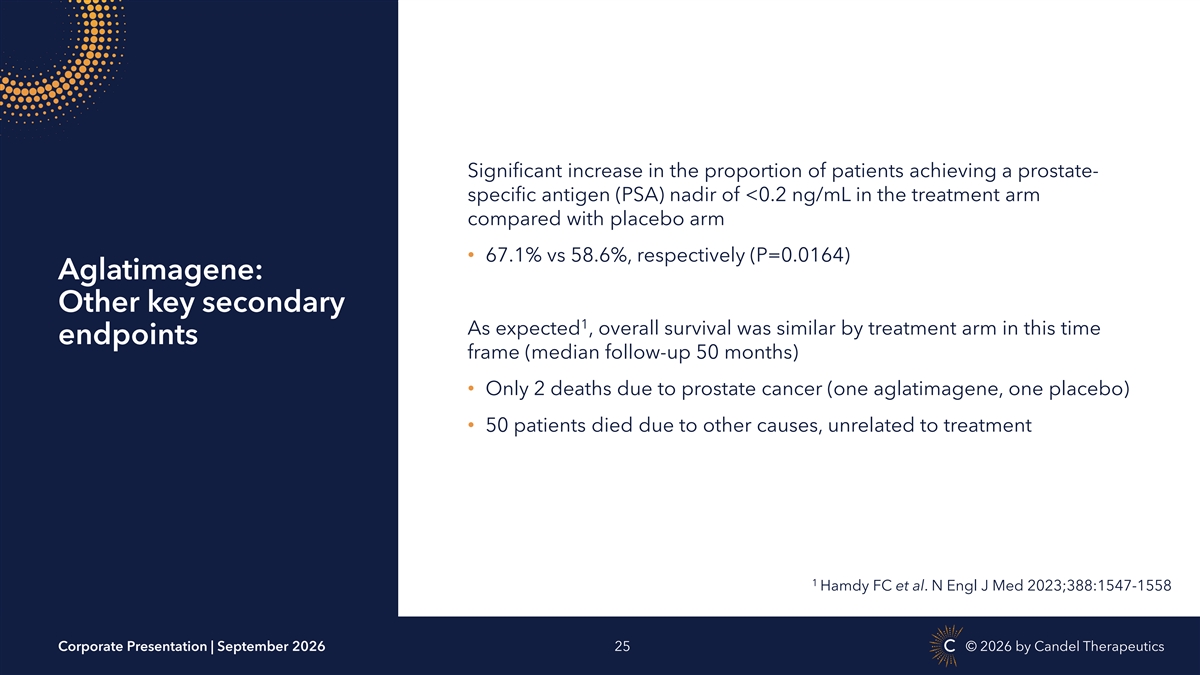
Significant increase in the proportion of patients achieving a prostate- specific antigen (PSA) nadir of <0.2 ng/mL in the treatment arm compared with placebo arm • 67.1% vs 58.6%, respectively (P=0.0164) Aglatimagene: Other key secondary 1 As expected , overall survival was similar by treatment arm in this time endpoints frame (median follow-up 50 months) • Only 2 deaths due to prostate cancer (one aglatimagene, one placebo) • 50 patients died due to other causes, unrelated to treatment 1 Hamdy FC et al. N Engl J Med 2023;388:1547-1558 Corporate Presentation | September 2026 25 © © 2026 2026 by by C Ca an ndel del T Ther hera ap peu eut ti ic cs s
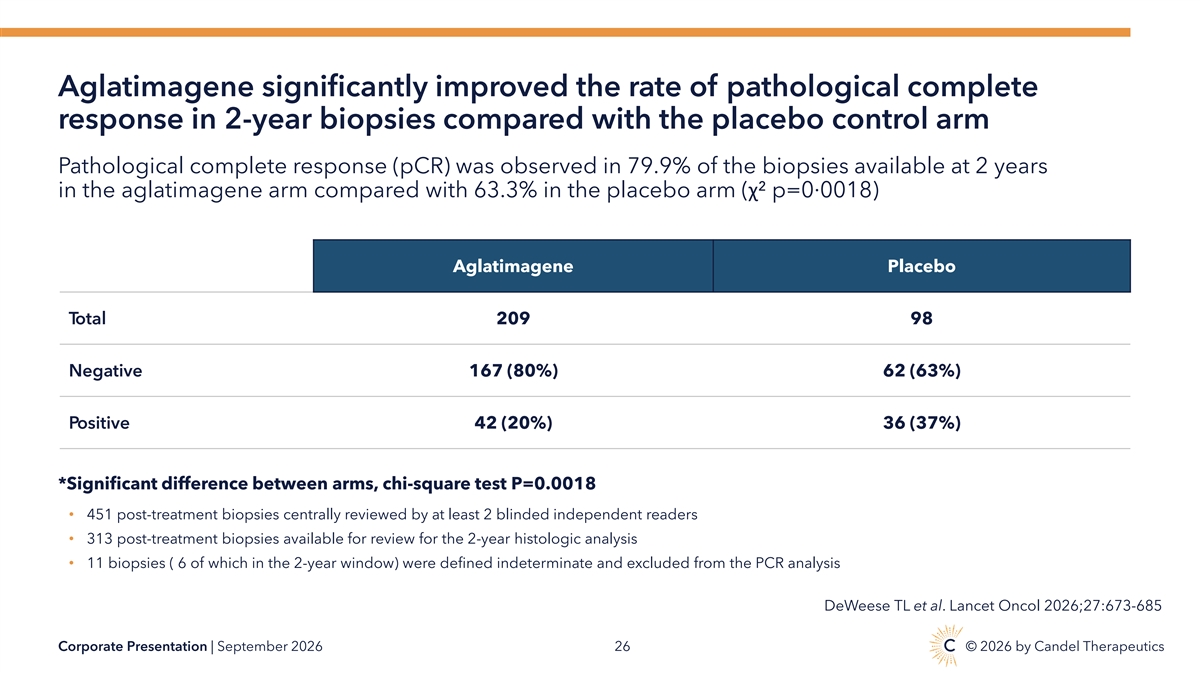
Aglatimagene significantly improved the rate of pathological complete response in 2-year biopsies compared with the placebo control arm Pathological complete response (pCR) was observed in 79.9% of the biopsies available at 2 years in the aglatimagene arm compared with 63.3% in the placebo arm (χ² p=0·0018) Aglatimagene Placebo Total 209 98 Negative 167 (80%) 62 (63%) Positive 42 (20%) 36 (37%) *Significant difference between arms, chi-square test P=0.0018 • 451 post-treatment biopsies centrally reviewed by at least 2 blinded independent readers • 313 post-treatment biopsies available for review for the 2-year histologic analysis • 11 biopsies ( 6 of which in the 2-year window) were defined indeterminate and excluded from the PCR analysis DeWeese TL et al. Lancet Oncol 2026;27:673-685 Corporate Presentation | September 2026 26 © 2026 by Candel Therapeutics
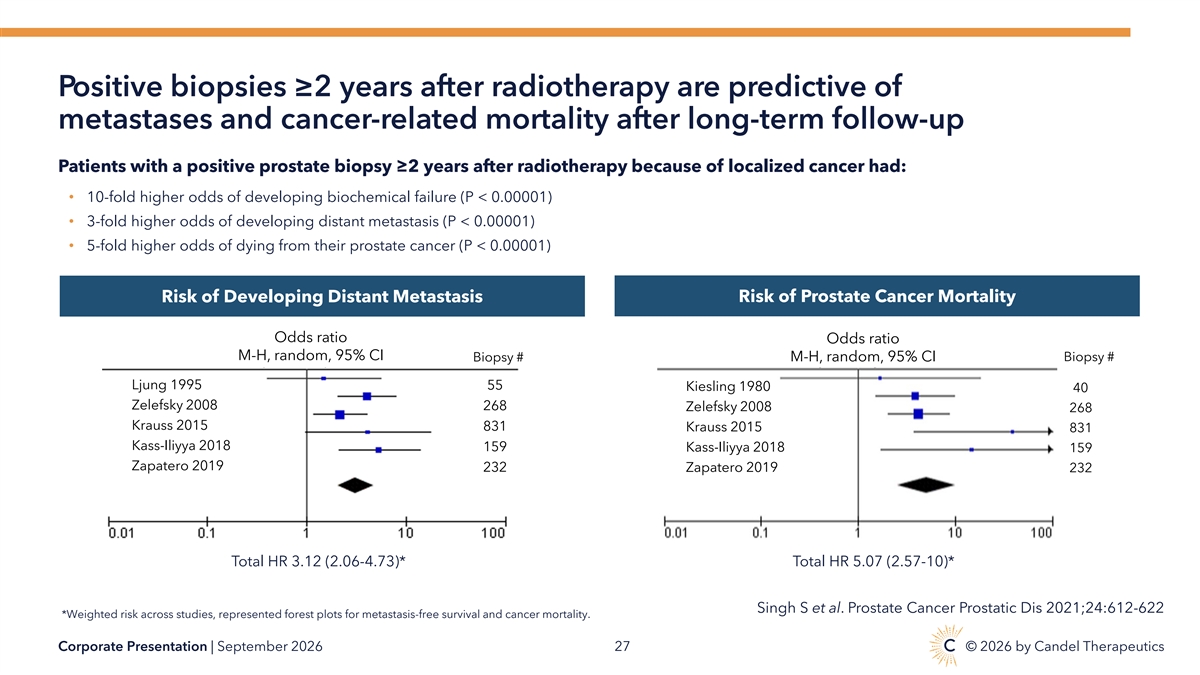
Positive biopsies ≥2 years after radiotherapy are predictive of metastases and cancer-related mortality after long-term follow-up Patients with a positive prostate biopsy ≥2 years after radiotherapy because of localized cancer had: • 10-fold higher odds of developing biochemical failure (P < 0.00001) • 3-fold higher odds of developing distant metastasis (P < 0.00001) • 5-fold higher odds of dying from their prostate cancer (P < 0.00001) Risk of Developing Distant Metastasis Risk of Prostate Cancer Mortality Odds ratio Odds ratio M-H, random, 95% CI Biopsy # M-H, random, 95% CI Biopsy # Ljung 1995 55 Kiesling 1980 40 Zelefsky 2008 268 Zelefsky 2008 268 Krauss 2015 831 Krauss 2015 831 Kass-Iliyya 2018 159 Kass-Iliyya 2018 159 Zapatero 2019 232 Zapatero 2019 232 Total HR 3.12 (2.06-4.73)* Total HR 5.07 (2.57-10)* Singh S et al. Prostate Cancer Prostatic Dis 2021;24:612-622 *Weighted risk across studies, represented forest plots for metastasis-free survival and cancer mortality. Corporate Presentation | September 2026 27 © 2026 by Candel Therapeutics
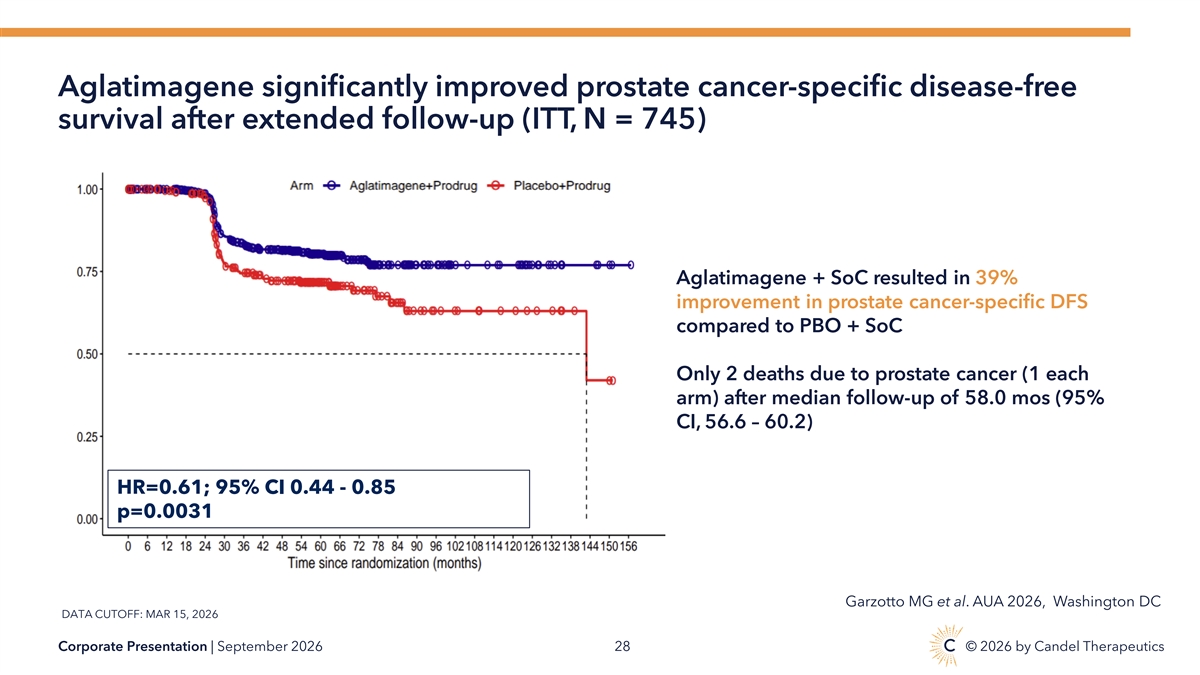
Aglatimagene significantly improved prostate cancer-specific disease-free survival after extended follow-up (ITT, N = 745) Aglatimagene + SoC resulted in 39% improvement in prostate cancer-specific DFS compared to PBO + SoC Only 2 deaths due to prostate cancer (1 each arm) after median follow-up of 58.0 mos (95% CI, 56.6 – 60.2) HR=0.61; 95% CI 0.44 - 0.85 p=0.0031 Garzotto MG et al. AUA 2026, Washington DC DATA CUTOFF: MAR 15, 2026 Corporate Presentation | September 2026 28 © 2026 by Candel Therapeutics
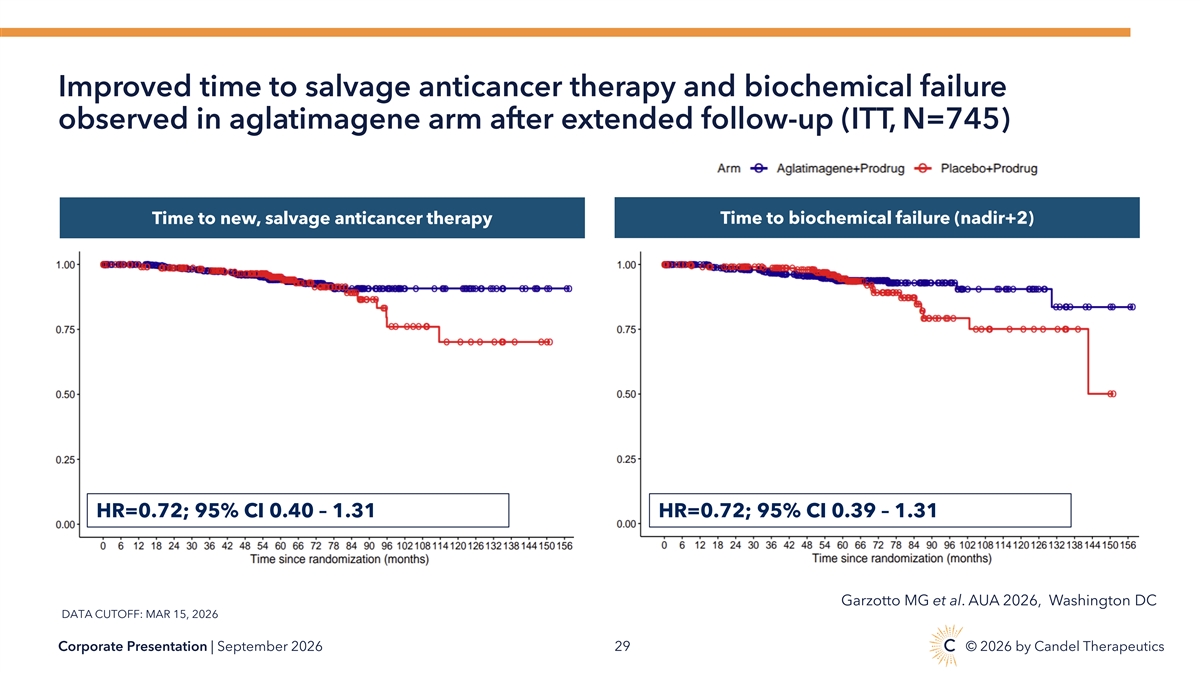
Improved time to salvage anticancer therapy and biochemical failure observed in aglatimagene arm after extended follow-up (ITT, N=745) Time to new, salvage anticancer therapy Time to biochemical failure (nadir+2) HR=0.72; 95% CI 0.40 – 1.31 HR=0.72; 95% CI 0.39 – 1.31 Garzotto MG et al. AUA 2026, Washington DC DATA CUTOFF: MAR 15, 2026 Corporate Presentation | September 2026 29 © 2026 by Candel Therapeutics
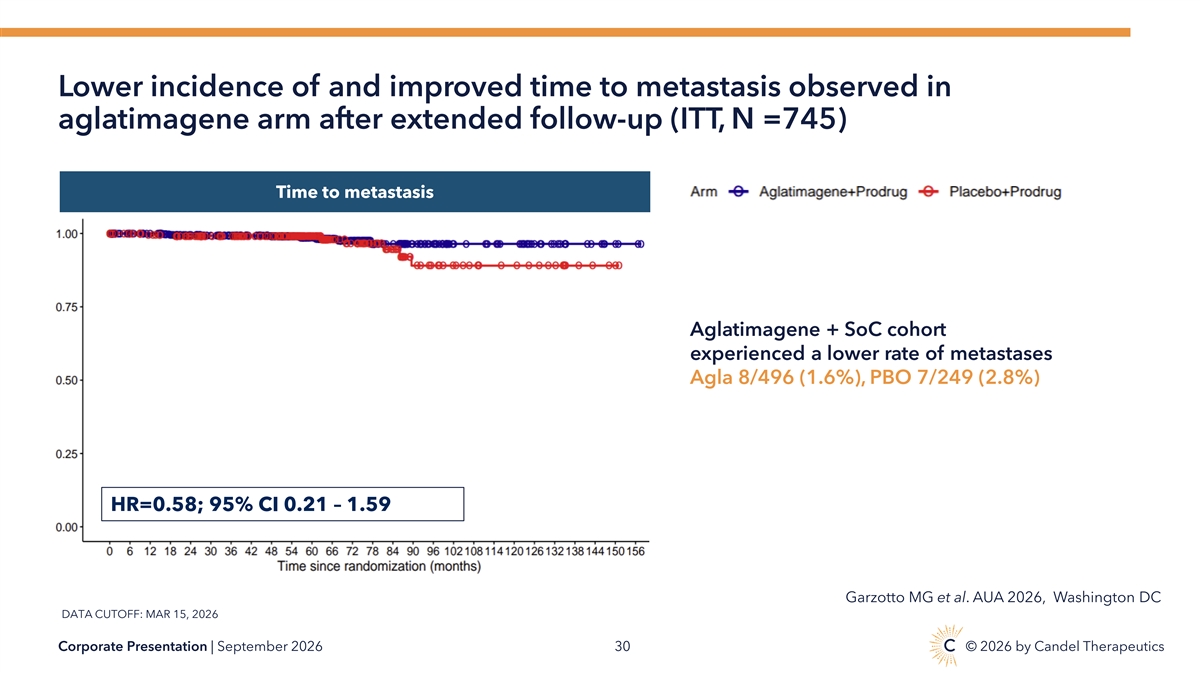
Lower incidence of and improved time to metastasis observed in aglatimagene arm after extended follow-up (ITT, N =745) Time to metastasis Aglatimagene + SoC cohort experienced a lower rate of metastases Agla 8/496 (1.6%), PBO 7/249 (2.8%) HR=0.58; 95% CI 0.21 – 1.59 Garzotto MG et al. AUA 2026, Washington DC DATA CUTOFF: MAR 15, 2026 Corporate Presentation | September 2026 30 © 2026 by Candel Therapeutics
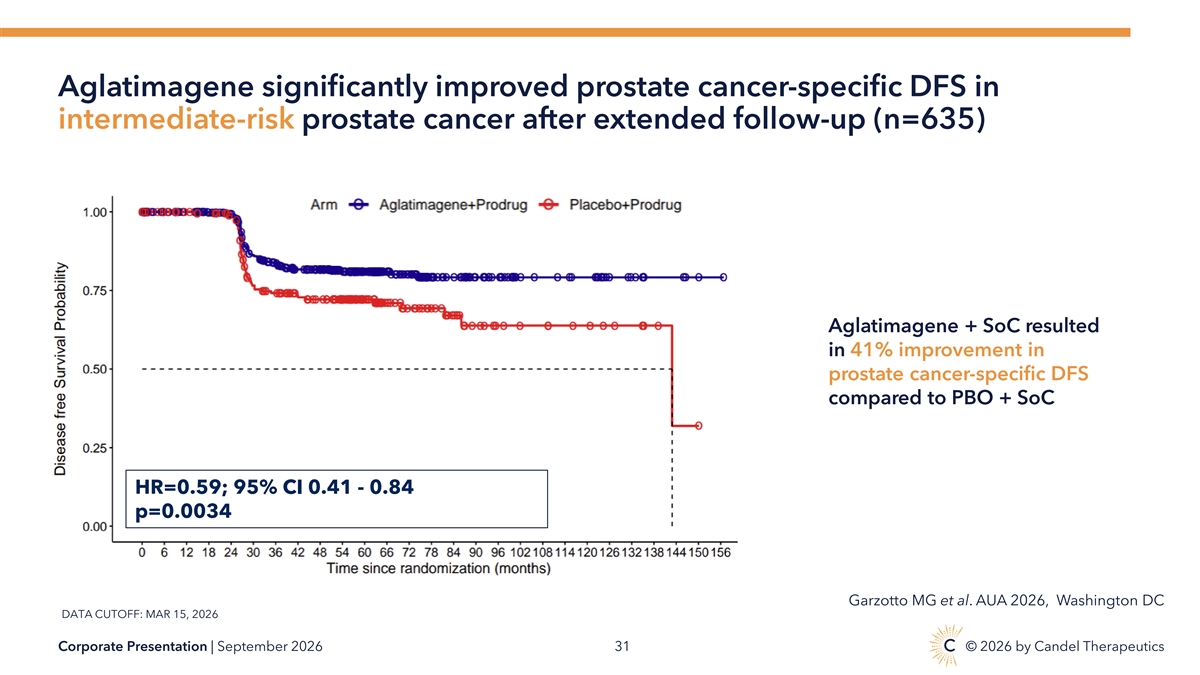
Aglatimagene significantly improved prostate cancer-specific DFS in intermediate-risk prostate cancer after extended follow-up (n=635) Aglatimagene + SoC resulted in 41% improvement in prostate cancer-specific DFS compared to PBO + SoC HR=0.59; 95% CI 0.41 - 0.84 p=0.0034 Garzotto MG et al. AUA 2026, Washington DC DATA CUTOFF: MAR 15, 2026 Corporate Presentation | September 2026 31 © 2026 by Candel Therapeutics
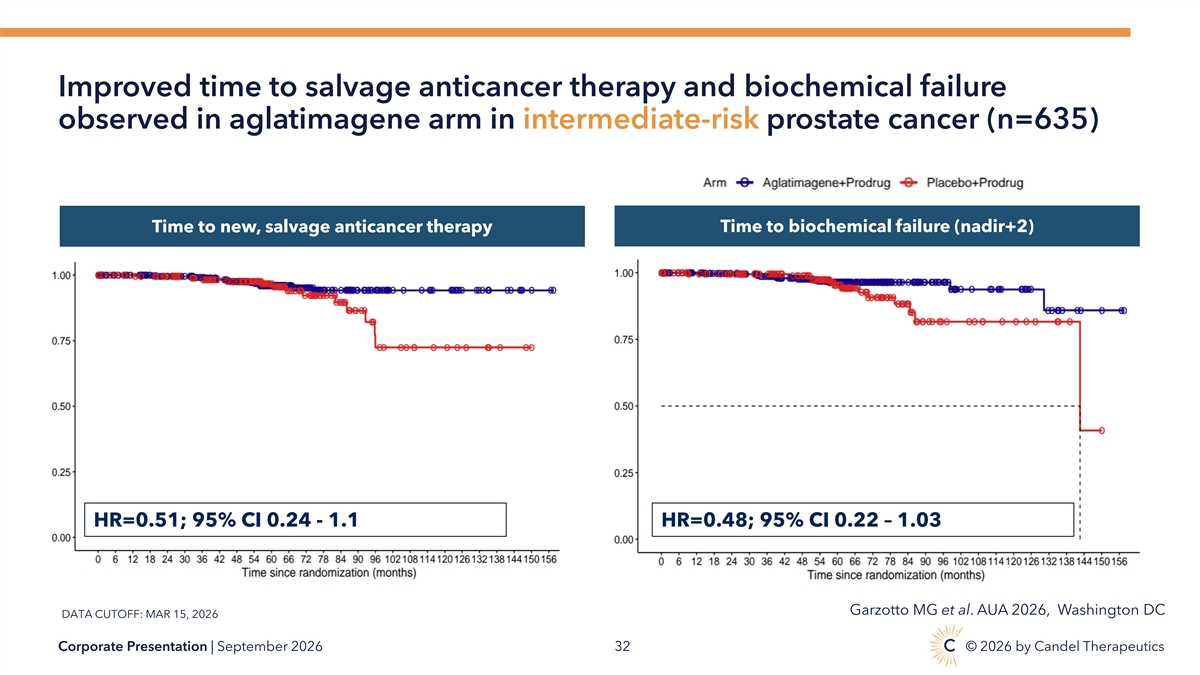
Improved time to salvage anticancer therapy and biochemical failure observed in aglatimagene arm in intermediate-risk prostate cancer (n=635) Time to new, salvage anticancer therapy Time to biochemical failure (nadir+2) HR=0.51; 95% CI 0.24 - 1.1 HR=0.48; 95% CI 0.22 – 1.03 Garzotto MG et al. AUA 2026, Washington DC DATA CUTOFF: MAR 15, 2026 Corporate Presentation | September 2026 32 © 2026 by Candel Therapeutics
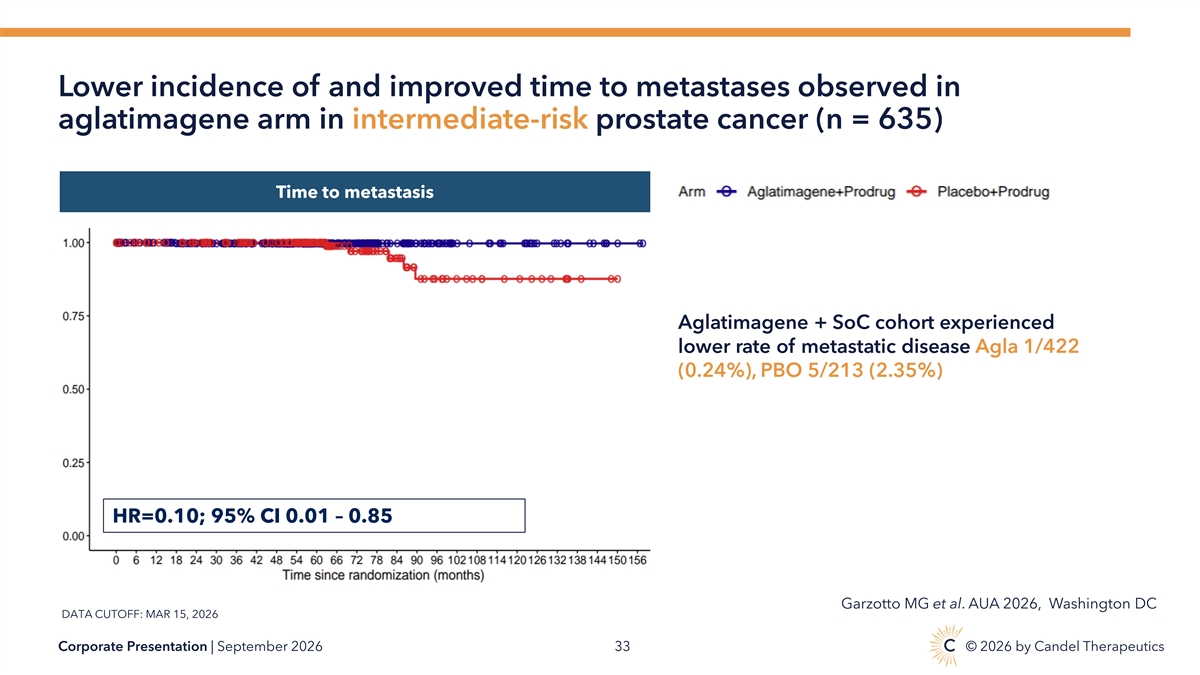
Lower incidence of and improved time to metastases observed in aglatimagene arm in intermediate-risk prostate cancer (n = 635) Time to metastasis Aglatimagene + SoC cohort experienced lower rate of metastatic disease Agla 1/422 (0.24%), PBO 5/213 (2.35%) HR=0.10; 95% CI 0.01 – 0.85 Garzotto MG et al. AUA 2026, Washington DC DATA CUTOFF: MAR 15, 2026 Corporate Presentation | September 2026 33 © 2026 by Candel Therapeutics
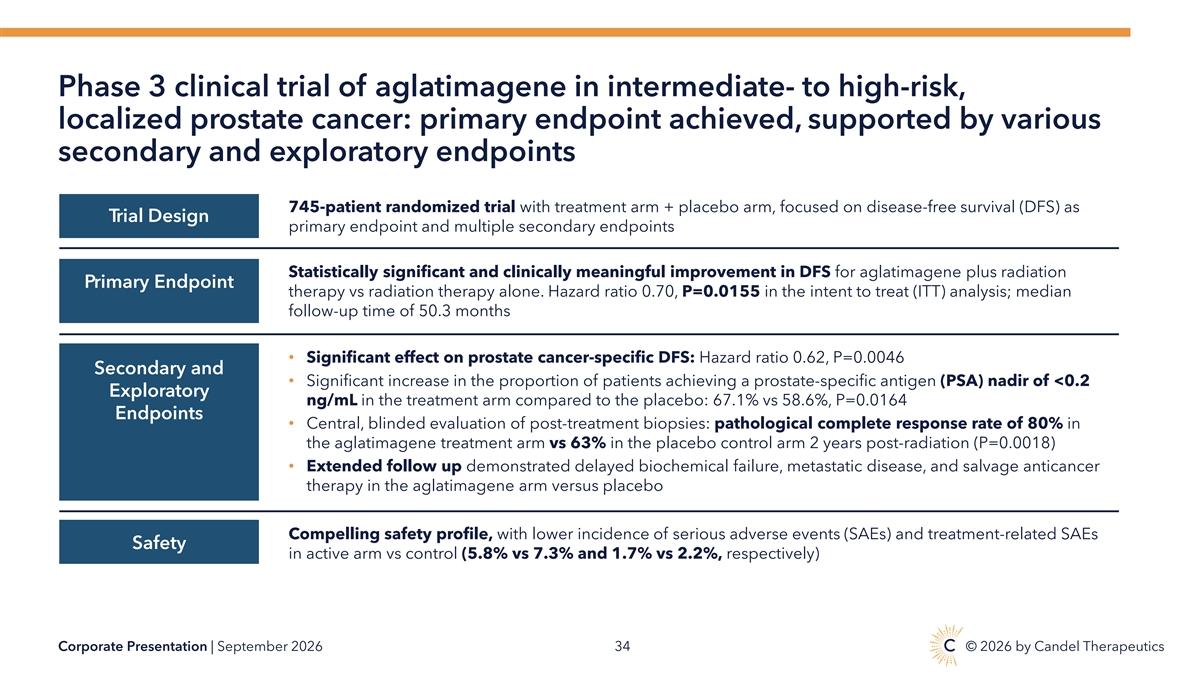
Phase 3 clinical trial of aglatimagene in intermediate- to high-risk, localized prostate cancer: primary endpoint achieved, supported by various secondary and exploratory endpoints 745-patient randomized trial with treatment arm + placebo arm, focused on disease-free survival (DFS) as Trial Design primary endpoint and multiple secondary endpoints Statistically significant and clinically meaningful improvement in DFS for aglatimagene plus radiation Primary Endpoint therapy vs radiation therapy alone. Hazard ratio 0.70, P=0.0155 in the intent to treat (ITT) analysis; median follow-up time of 50.3 months • Significant effect on prostate cancer-specific DFS: Hazard ratio 0.62, P=0.0046 Secondary and • Significant increase in the proportion of patients achieving a prostate-specific antigen (PSA) nadir of <0.2 Exploratory ng/mL in the treatment arm compared to the placebo: 67.1% vs 58.6%, P=0.0164 Endpoints • Central, blinded evaluation of post-treatment biopsies: pathological complete response rate of 80% in the aglatimagene treatment arm vs 63% in the placebo control arm 2 years post-radiation (P=0.0018) • Extended follow up demonstrated delayed biochemical failure, metastatic disease, and salvage anticancer therapy in the aglatimagene arm versus placebo Compelling safety profile, with lower incidence of serious adverse events (SAEs) and treatment-related SAEs Safety in active arm vs control (5.8% vs 7.3% and 1.7% vs 2.2%, respectively) Corporate Presentation | September 2026 34 © 2026 by Candel Therapeutics
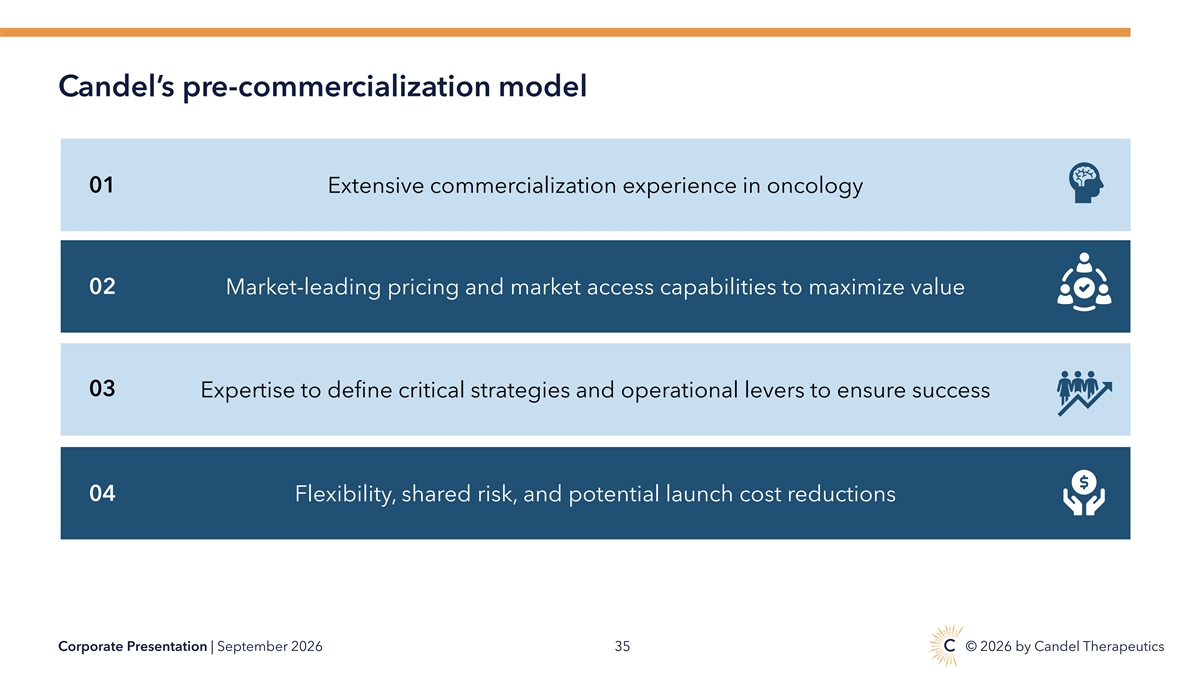
Candel’s pre-commercialization model 01 Extensive commercialization experience in oncology 02 Market-leading pricing and market access capabilities to maximize value 03 Expertise to define critical strategies and operational levers to ensure success 04 Flexibility, shared risk, and potential launch cost reductions Corporate Presentation | September 2026 35 © 2026 by Candel Therapeutics
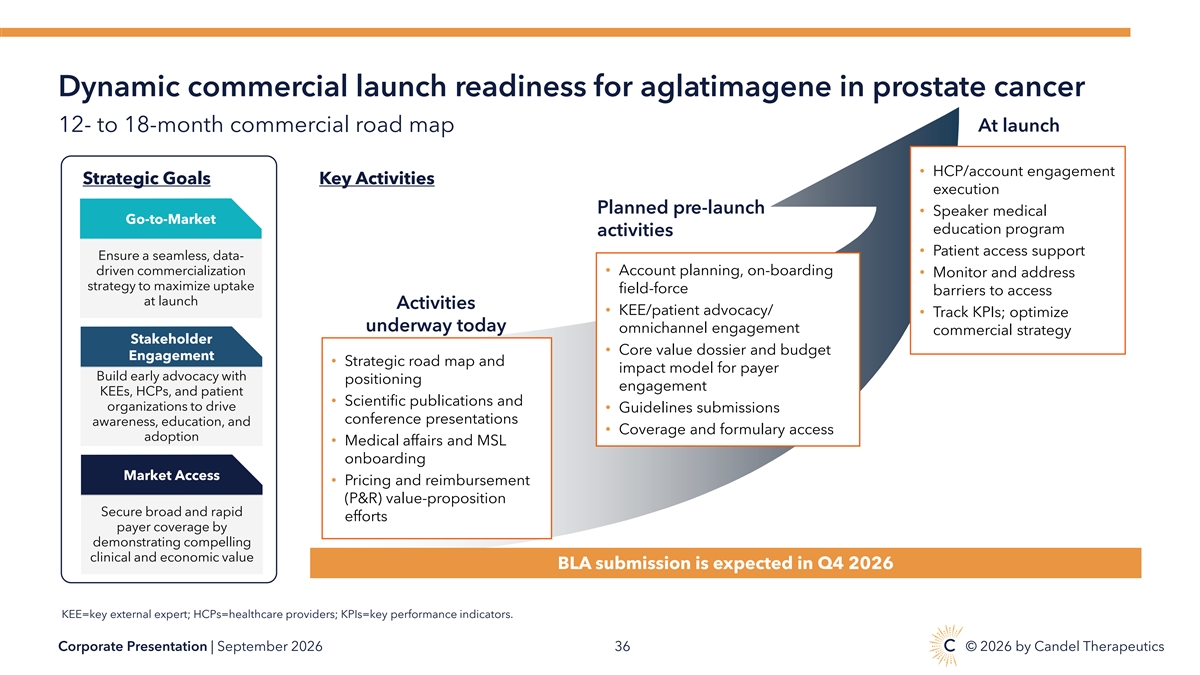
Dynamic commercial launch readiness for aglatimagene in prostate cancer At launch 12- to 18-month commercial road map • HCP/account engagement Strategic Goals Key Activities execution Planned pre-launch • Speaker medical Go-to-Market education program activities • Patient access support Ensure a seamless, data- driven commercialization • Account planning, on-boarding • Monitor and address strategy to maximize uptake field-force barriers to access at launch Activities • KEE/patient advocacy/ • Track KPIs; optimize underway today omnichannel engagement commercial strategy Stakeholder • Core value dossier and budget Engagement • Strategic road map and impact model for payer Build early advocacy with positioning engagement KEEs, HCPs, and patient • Scientific publications and organizations to drive • Guidelines submissions conference presentations awareness, education, and • Coverage and formulary access adoption • Medical affairs and MSL onboarding Market Access • Pricing and reimbursement (P&R) value-proposition Secure broad and rapid efforts payer coverage by demonstrating compelling clinical and economic value BLA submission is expected in Q4 2026 KEE=key external expert; HCPs=healthcare providers; KPIs=key performance indicators. Corporate Presentation | September 2026 36 © 2026 by Candel Therapeutics
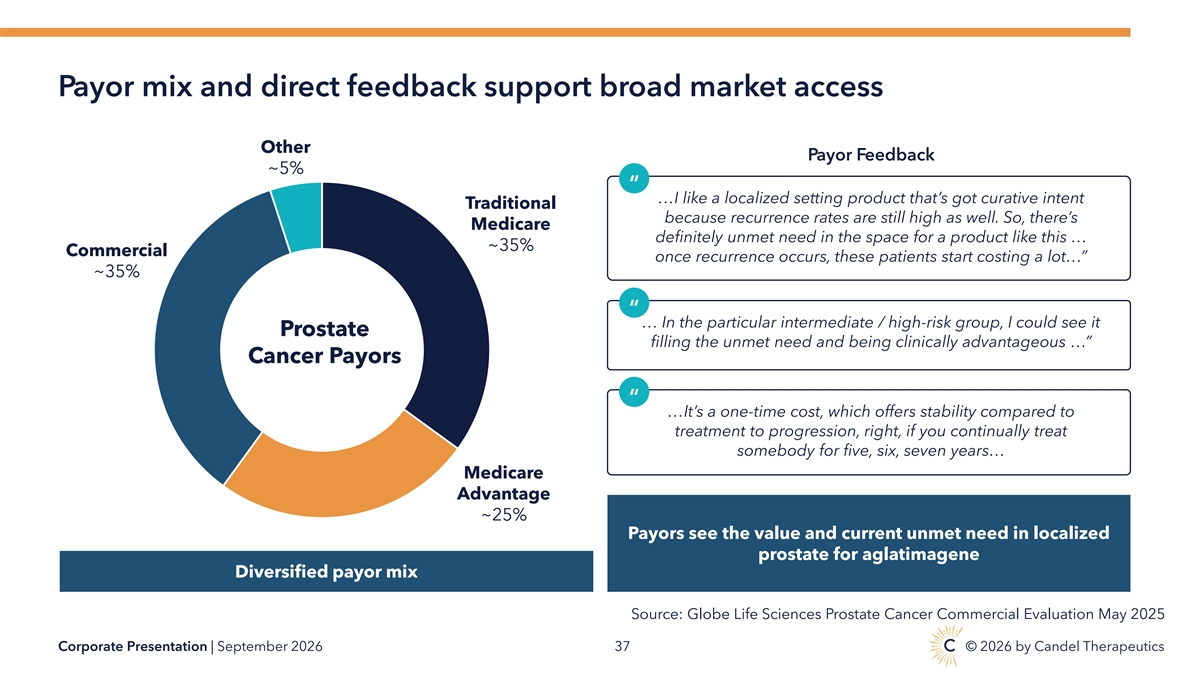
Payor mix and direct feedback support broad market access Other Payor Feedback ~5% “ …I like a localized setting product that’s got curative intent Traditional because recurrence rates are still high as well. So, there’s Medicare definitely unmet need in the space for a product like this … ~35% Commercial once recurrence occurs, these patients start costing a lot…” ~35% “ … In the particular intermediate / high-risk group, I could see it Prostate filling the unmet need and being clinically advantageous …” Cancer Payors “ …It’s a one-time cost, which offers stability compared to treatment to progression, right, if you continually treat somebody for five, six, seven years… Medicare Advantage ~25% Payors see the value and current unmet need in localized prostate for aglatimagene Diversified payor mix Source: Globe Life Sciences Prostate Cancer Commercial Evaluation May 2025 Corporate Presentation | September 2026 37 © 2026 by Candel Therapeutics
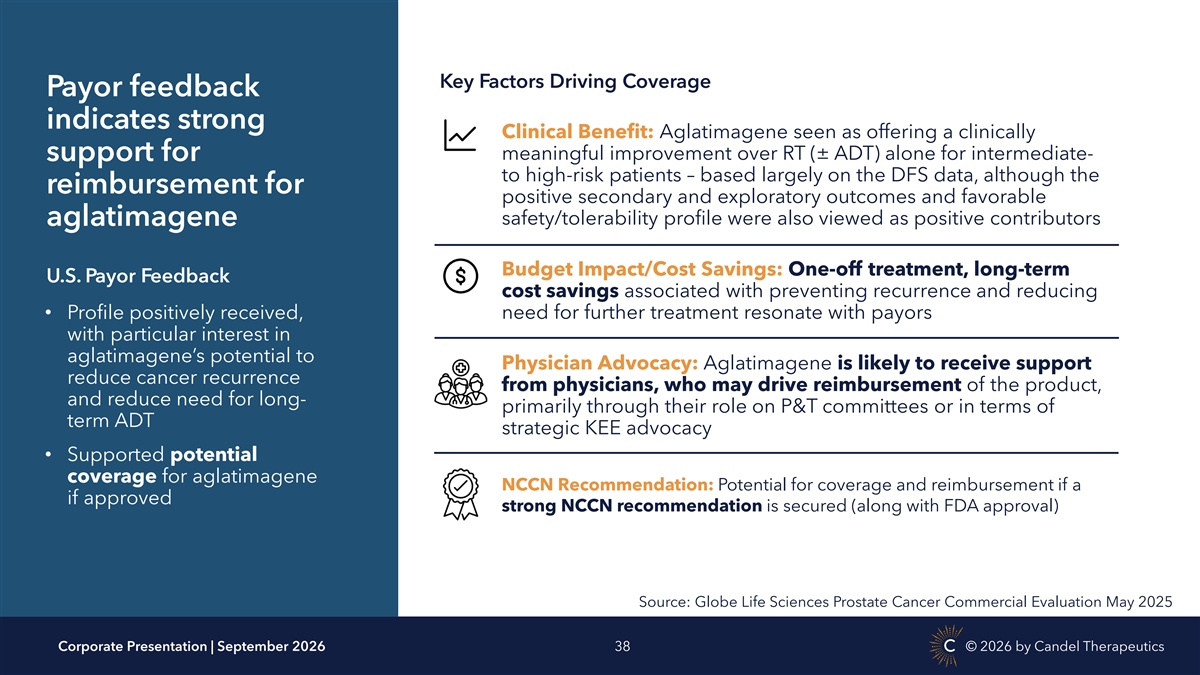
Key Factors Driving Coverage Payor feedback indicates strong Clinical Benefit: Aglatimagene seen as offering a clinically meaningful improvement over RT (± ADT) alone for intermediate- support for to high-risk patients – based largely on the DFS data, although the reimbursement for positive secondary and exploratory outcomes and favorable safety/tolerability profile were also viewed as positive contributors aglatimagene Budget Impact/Cost Savings: One-off treatment, long-term U.S. Payor Feedback cost savings associated with preventing recurrence and reducing • Profile positively received, need for further treatment resonate with payors with particular interest in aglatimagene’s potential to Physician Advocacy: Aglatimagene is likely to receive support reduce cancer recurrence from physicians, who may drive reimbursement of the product, and reduce need for long- primarily through their role on P&T committees or in terms of term ADT strategic KEE advocacy • Supported potential coverage for aglatimagene NCCN Recommendation: Potential for coverage and reimbursement if a if approved strong NCCN recommendation is secured (along with FDA approval) Source: Globe Life Sciences Prostate Cancer Commercial Evaluation May 2025 Corporate Presentation | September 2026 38 © © 2026 2026 by by C Ca an ndel del T Ther hera ap peu eut ti ic cs s
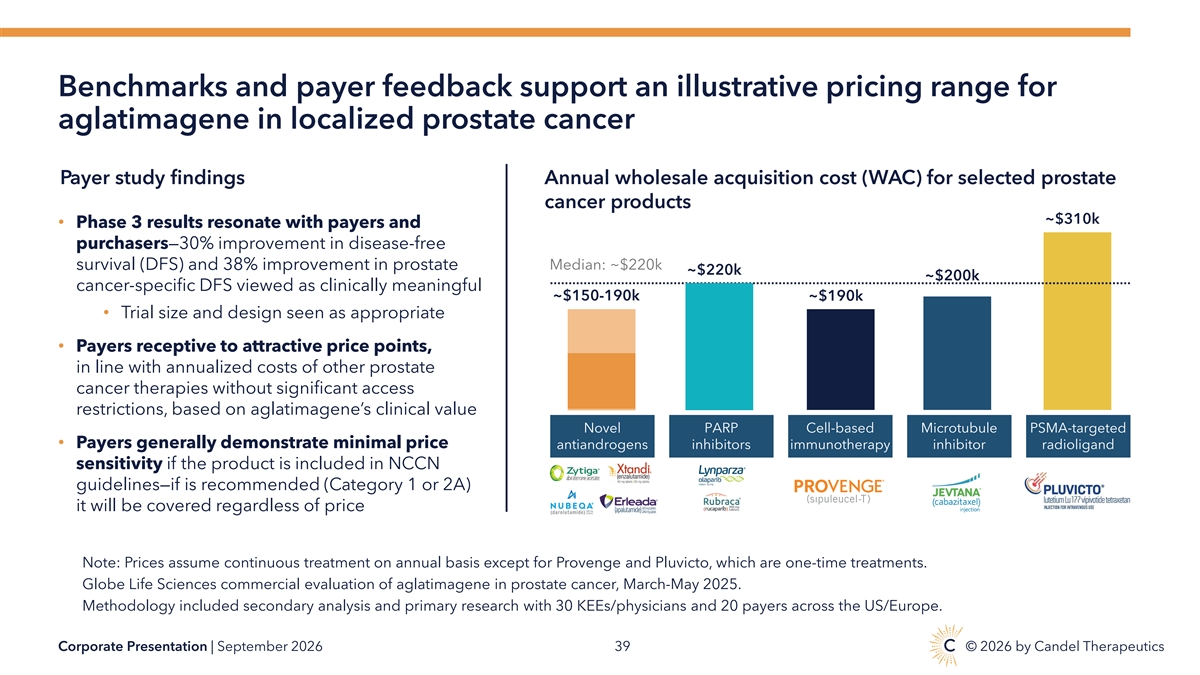
Benchmarks and payer feedback support an illustrative pricing range for aglatimagene in localized prostate cancer Payer study findings Annual wholesale acquisition cost (WAC) for selected prostate cancer products ~$310k • Phase 3 results resonate with payers and purchasers—30% improvement in disease-free survival (DFS) and 38% improvement in prostate Median: ~$220k ~$220k ~$200k cancer-specific DFS viewed as clinically meaningful ~$150-190k ~$190k • Trial size and design seen as appropriate • Payers receptive to attractive price points, in line with annualized costs of other prostate cancer therapies without significant access restrictions, based on aglatimagene’s clinical value Novel PARP Cell-based Microtubule PSMA-targeted • Payers generally demonstrate minimal price antiandrogens inhibitors immunotherapy inhibitor radioligand sensitivity if the product is included in NCCN guidelines—if is recommended (Category 1 or 2A) it will be covered regardless of price Note: Prices assume continuous treatment on annual basis except for Provenge and Pluvicto, which are one-time treatments. Globe Life Sciences commercial evaluation of aglatimagene in prostate cancer, March-May 2025. Methodology included secondary analysis and primary research with 30 KEEs/physicians and 20 payers across the US/Europe. Corporate Presentation | September 2026 39 © 2026 by Candel Therapeutics
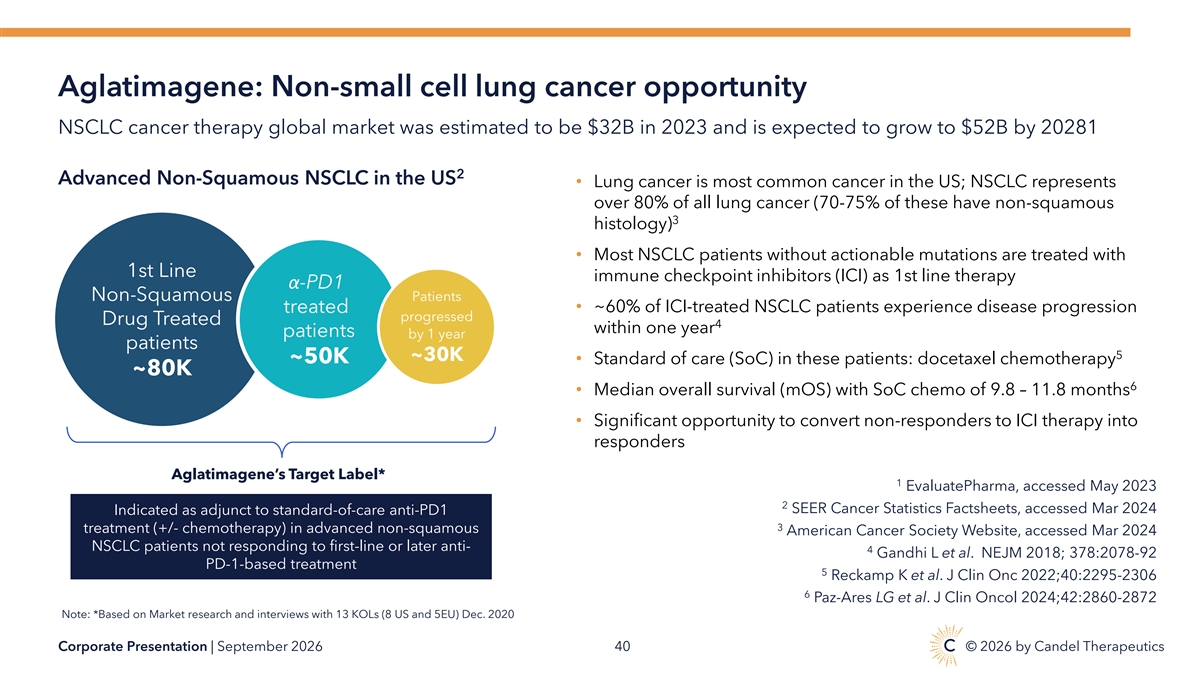
Aglatimagene: Non-small cell lung cancer opportunity NSCLC cancer therapy global market was estimated to be $32B in 2023 and is expected to grow to $52B by 20281 2 Advanced Non-Squamous NSCLC in the US • Lung cancer is most common cancer in the US; NSCLC represents over 80% of all lung cancer (70-75% of these have non-squamous 3 histology) • Most NSCLC patients without actionable mutations are treated with 1st Line immune checkpoint inhibitors (ICI) as 1st line therapy α-PD1 Non-Squamous Patients • ~60% of ICI-treated NSCLC patients experience disease progression treated progressed Drug Treated 4 within one year patients by 1 year patients 5 ~30K ~50K • Standard of care (SoC) in these patients: docetaxel chemotherapy ~80K 6 • Median overall survival (mOS) with SoC chemo of 9.8 – 11.8 months • Significant opportunity to convert non-responders to ICI therapy into responders Aglatimagene’s Target Label* 1 EvaluatePharma, accessed May 2023 2 SEER Cancer Statistics Factsheets, accessed Mar 2024 Indicated as adjunct to standard-of-care anti-PD1 3 treatment (+/- chemotherapy) in advanced non-squamous American Cancer Society Website, accessed Mar 2024 NSCLC patients not responding to first-line or later anti- 4 Gandhi L et al. NEJM 2018; 378:2078-92 PD-1-based treatment 5 Reckamp K et al. J Clin Onc 2022;40:2295-2306 6 Paz-Ares LG et al. J Clin Oncol 2024;42:2860-2872 Note: *Based on Market research and interviews with 13 KOLs (8 US and 5EU) Dec. 2020 Corporate Presentation | September 2026 40 © 2026 by Candel Therapeutics
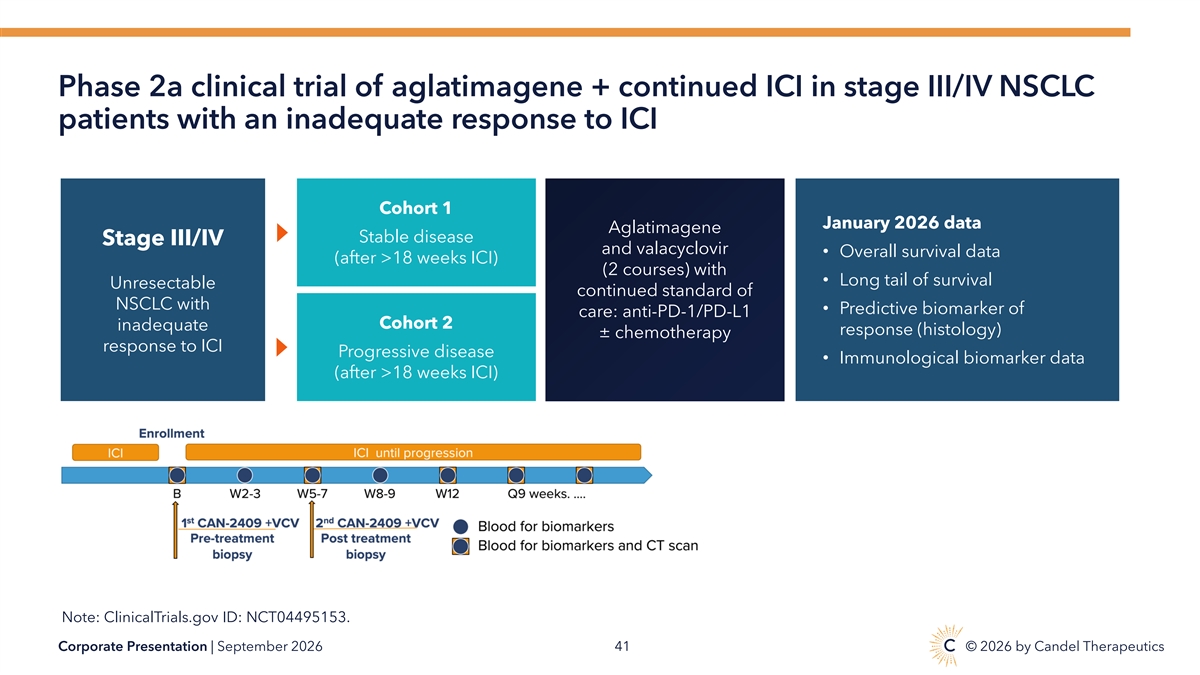
Phase 2a clinical trial of aglatimagene + continued ICI in stage III/IV NSCLC patients with an inadequate response to ICI Cohort 1 January 2026 data Aglatimagene Stable disease Stage III/IV and valacyclovir • Overall survival data (after >18 weeks ICI) (2 courses) with • Long tail of survival Unresectable continued standard of NSCLC with • Predictive biomarker of care: anti-PD-1/PD-L1 Cohort 2 inadequate response (histology) ± chemotherapy response to ICI Progressive disease • Immunological biomarker data (after >18 weeks ICI) Note: ClinicalTrials.gov ID: NCT04495153. Corporate Presentation | September 2026 41 © 2026 by Candel Therapeutics
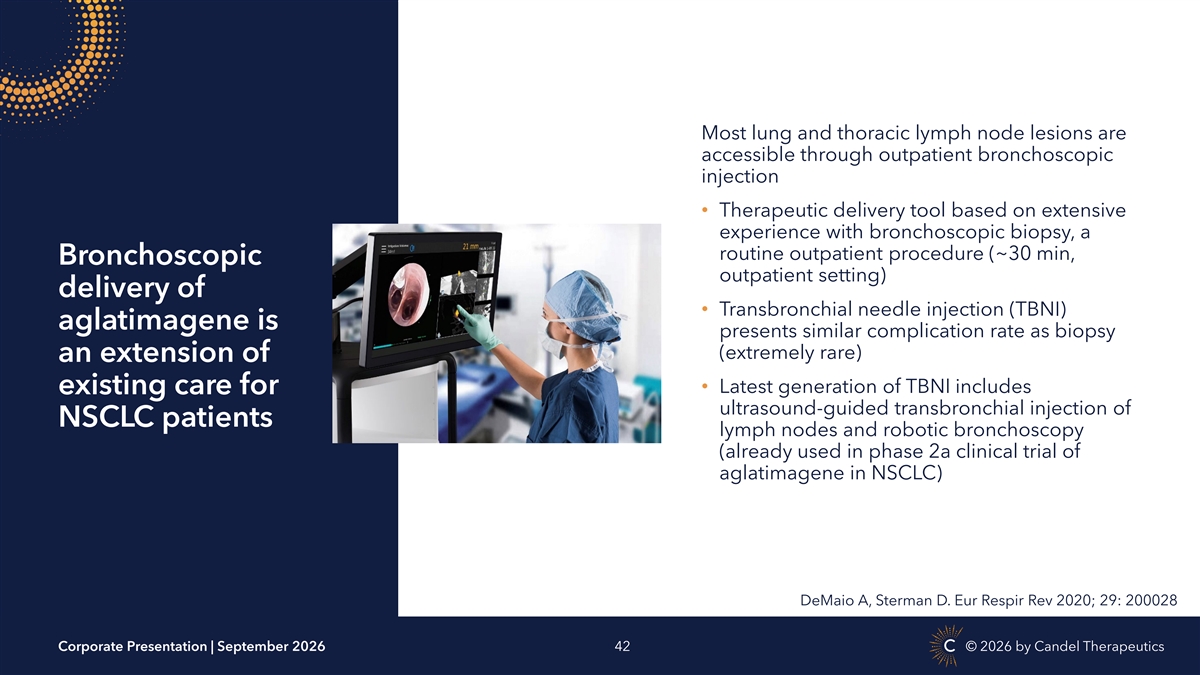
Most lung and thoracic lymph node lesions are accessible through outpatient bronchoscopic injection • Therapeutic delivery tool based on extensive experience with bronchoscopic biopsy, a routine outpatient procedure (~30 min, Bronchoscopic outpatient setting) delivery of • Transbronchial needle injection (TBNI) aglatimagene is presents similar complication rate as biopsy (extremely rare) an extension of • Latest generation of TBNI includes existing care for ultrasound-guided transbronchial injection of NSCLC patients lymph nodes and robotic bronchoscopy (already used in phase 2a clinical trial of aglatimagene in NSCLC) DeMaio A, Sterman D. Eur Respir Rev 2020; 29: 200028 Corporate Presentation | September 2026 42 © © 2026 2026 by by C Ca an ndel del T Ther hera ap peu eut ti ic cs s
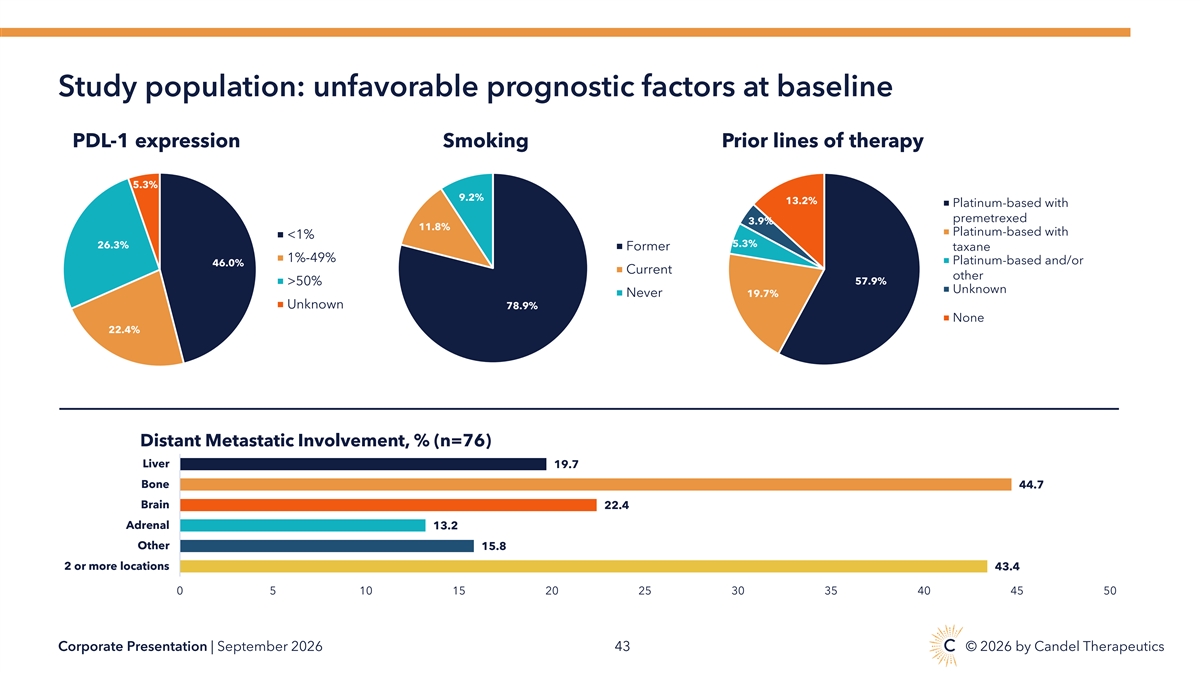
Study population: unfavorable prognostic factors at baseline PDL-1 expression Smoking Prior lines of therapy 5.3% 9.2% 13.2% Platinum-based with premetrexed 3.9% 11.8% Platinum-based with <1% 5.3% 26.3% Former taxane 1%-49% Platinum-based and/or 46.0% Current other >50% 57.9% Unknown Never 19.7% Unknown 78.9% None 22.4% Distant Metastatic Involvement, % (n=76) Liver 19.7 Bone 44.7 Brain 22.4 Adrenal 13.2 Other 15.8 2 or more locations 43.4 0 5 10 15 20 25 30 35 40 45 50 Corporate Presentation | September 2026 43 © 2026 by Candel Therapeutics
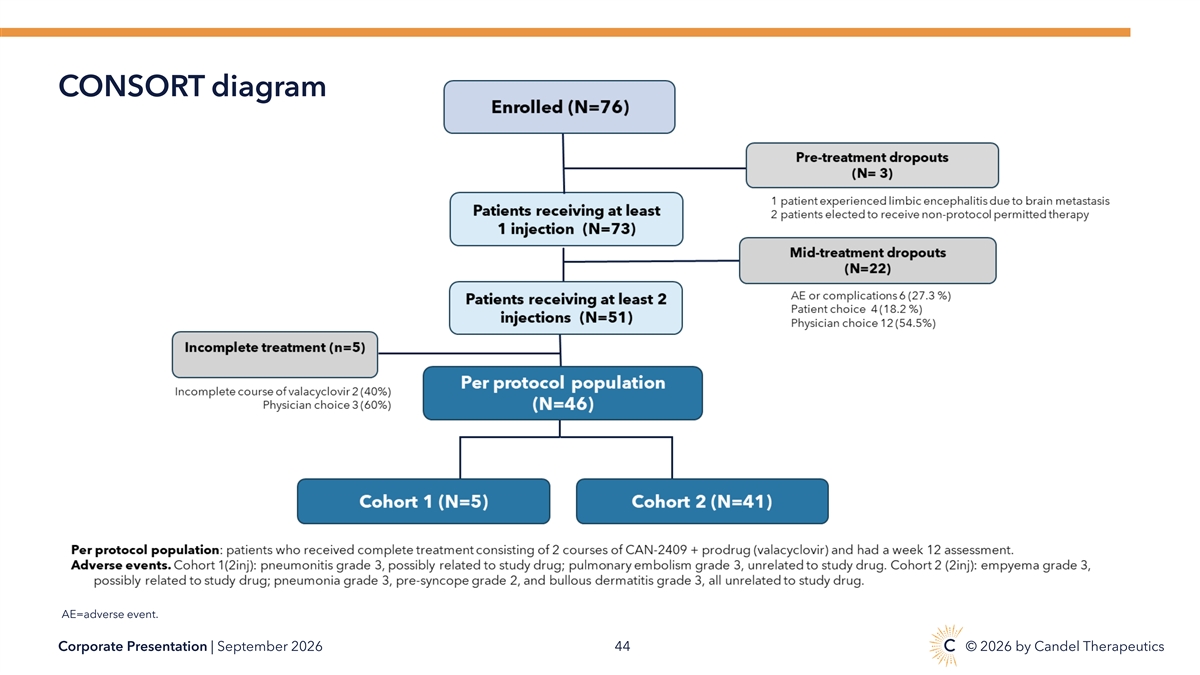
CONSORT diagram AE=adverse event. Corporate Presentation | September 2026 44 © 2026 by Candel Therapeutics
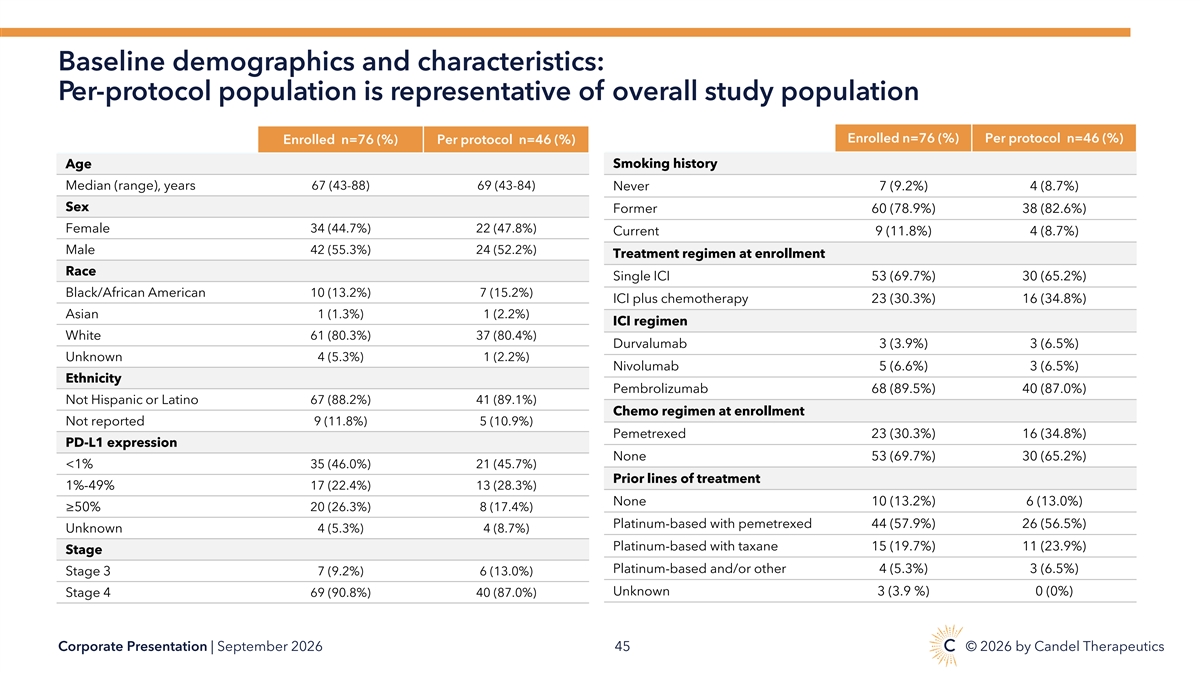
Baseline demographics and characteristics: Per-protocol population is representative of overall study population Enrolled n=76 (%) Per protocol n=46 (%) Enrolled n=76 (%) Per protocol n=46 (%) Smoking history Age Median (range), years 67 (43-88) 69 (43-84) Never 7 (9.2%) 4 (8.7%) Sex Former 60 (78.9%) 38 (82.6%) Female 34 (44.7%) 22 (47.8%) Current 9 (11.8%) 4 (8.7%) Male 42 (55.3%) 24 (52.2%) Treatment regimen at enrollment Race Single ICI 53 (69.7%) 30 (65.2%) Black/African American 10 (13.2%) 7 (15.2%) ICI plus chemotherapy 23 (30.3%) 16 (34.8%) Asian 1 (1.3%) 1 (2.2%) ICI regimen White 61 (80.3%) 37 (80.4%) Durvalumab 3 (3.9%) 3 (6.5%) Unknown 4 (5.3%) 1 (2.2%) Nivolumab 5 (6.6%) 3 (6.5%) Ethnicity Pembrolizumab 68 (89.5%) 40 (87.0%) Not Hispanic or Latino 67 (88.2%) 41 (89.1%) Chemo regimen at enrollment 9 (11.8%) 5 (10.9%) Not reported Pemetrexed 23 (30.3%) 16 (34.8%) PD-L1 expression None 53 (69.7%) 30 (65.2%) <1% 35 (46.0%) 21 (45.7%) Prior lines of treatment 1%-49% 17 (22.4%) 13 (28.3%) None 10 (13.2%) 6 (13.0%) ≥50% 20 (26.3%) 8 (17.4%) Platinum-based with pemetrexed 44 (57.9%) 26 (56.5%) Unknown 4 (5.3%) 4 (8.7%) Platinum-based with taxane 15 (19.7%) 11 (23.9%) Stage Platinum-based and/or other 4 (5.3%) 3 (6.5%) 7 (9.2%) 6 (13.0%) Stage 3 Unknown 3 (3.9 %) 0 (0%) Stage 4 69 (90.8%) 40 (87.0%) Corporate Presentation | September 2026 45 © 2026 by Candel Therapeutics
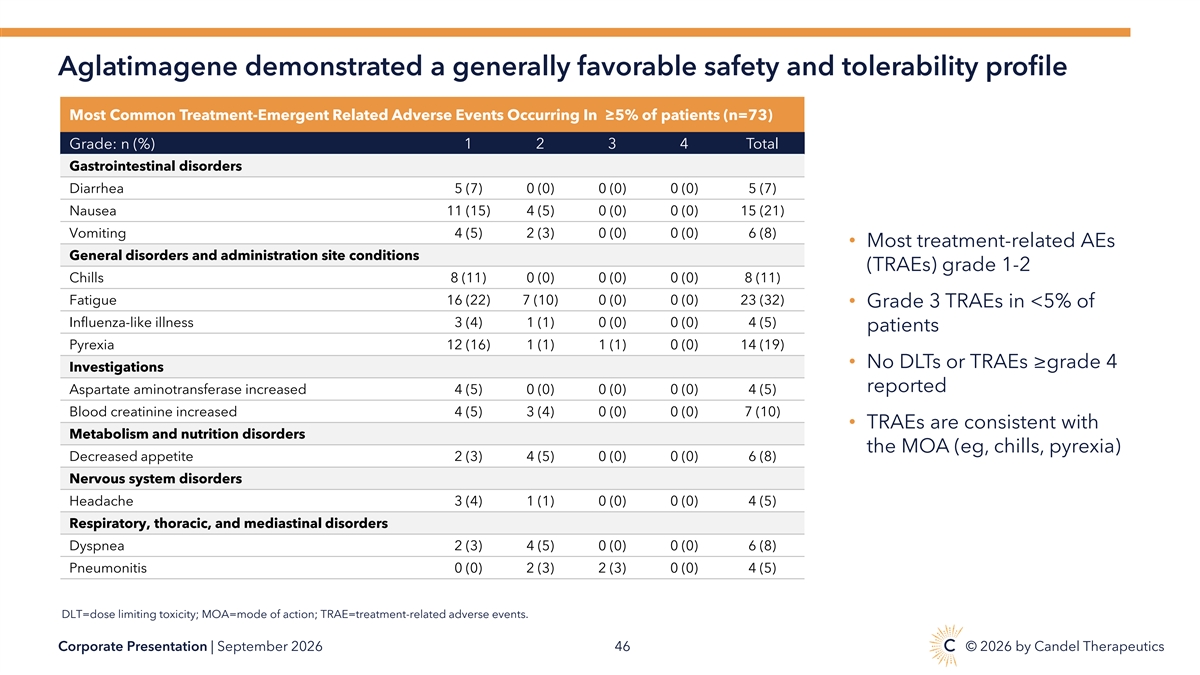
Aglatimagene demonstrated a generally favorable safety and tolerability profile Most Common Treatment-Emergent Related Adverse Events Occurring In ≥5% of patients (n=73) Grade: n (%) 1 2 3 4 Total Gastrointestinal disorders Diarrhea 5 (7) 0 (0) 0 (0) 0 (0) 5 (7) Nausea 11 (15) 4 (5) 0 (0) 0 (0) 15 (21) Vomiting 4 (5) 2 (3) 0 (0) 0 (0) 6 (8) • Most treatment-related AEs General disorders and administration site conditions (TRAEs) grade 1-2 Chills 8 (11) 0 (0) 0 (0) 0 (0) 8 (11) Fatigue 16 (22) 7 (10) 0 (0) 0 (0) 23 (32) • Grade 3 TRAEs in <5% of Influenza-like illness 3 (4) 1 (1) 0 (0) 0 (0) 4 (5) patients Pyrexia 12 (16) 1 (1) 1 (1) 0 (0) 14 (19) • No DLTs or TRAEs ≥grade 4 Investigations reported Aspartate aminotransferase increased 4 (5) 0 (0) 0 (0) 0 (0) 4 (5) Blood creatinine increased 4 (5) 3 (4) 0 (0) 0 (0) 7 (10) • TRAEs are consistent with Metabolism and nutrition disorders the MOA (eg, chills, pyrexia) Decreased appetite 2 (3) 4 (5) 0 (0) 0 (0) 6 (8) Nervous system disorders Headache 3 (4) 1 (1) 0 (0) 0 (0) 4 (5) Respiratory, thoracic, and mediastinal disorders Dyspnea 2 (3) 4 (5) 0 (0) 0 (0) 6 (8) Pneumonitis 0 (0) 2 (3) 2 (3) 0 (0) 4 (5) DLT=dose limiting toxicity; MOA=mode of action; TRAE=treatment-related adverse events. Corporate Presentation | September 2026 46 © 2026 by Candel Therapeutics
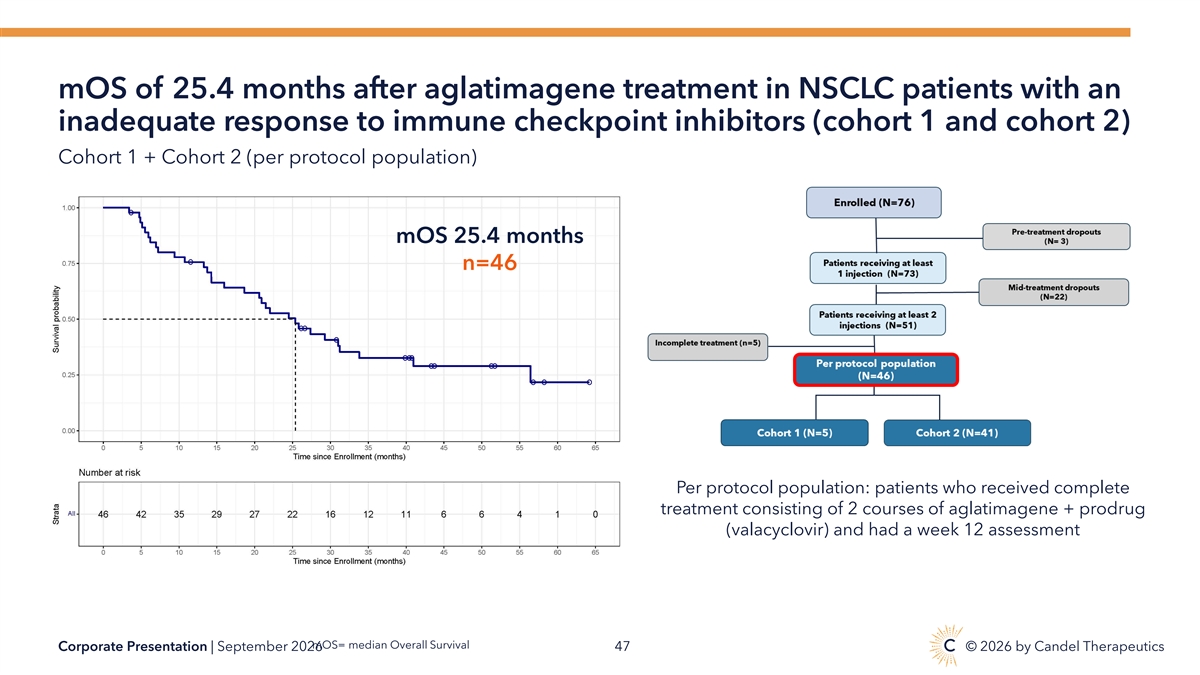
mOS of 25.4 months after aglatimagene treatment in NSCLC patients with an inadequate response to immune checkpoint inhibitors (cohort 1 and cohort 2) Cohort 1 + Cohort 2 (per protocol population) mOS 25.4 months n=46 Per protocol population: patients who received complete treatment consisting of 2 courses of aglatimagene + prodrug (valacyclovir) and had a week 12 assessment mOS= median Overall Survival Corporate Presentation | September 2026 47 © 2026 by Candel Therapeutics
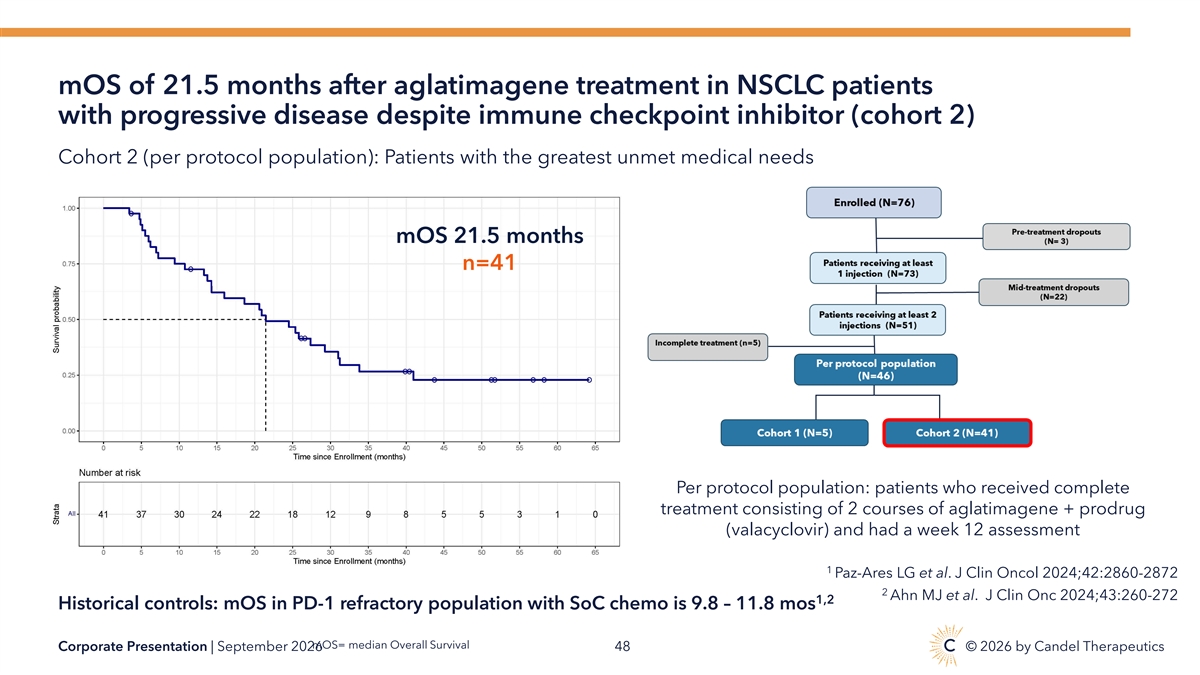
mOS of 21.5 months after aglatimagene treatment in NSCLC patients with progressive disease despite immune checkpoint inhibitor (cohort 2) Cohort 2 (per protocol population): Patients with the greatest unmet medical needs mOS 21.5 months n=41 Per protocol population: patients who received complete treatment consisting of 2 courses of aglatimagene + prodrug (valacyclovir) and had a week 12 assessment 1 Paz-Ares LG et al. J Clin Oncol 2024;42:2860-2872 2 Ahn MJ et al. J Clin Onc 2024;43:260-272 1,2 Historical controls: mOS in PD-1 refractory population with SoC chemo is 9.8 – 11.8 mos mOS= median Overall Survival Corporate Presentation | September 2026 48 © 2026 by Candel Therapeutics
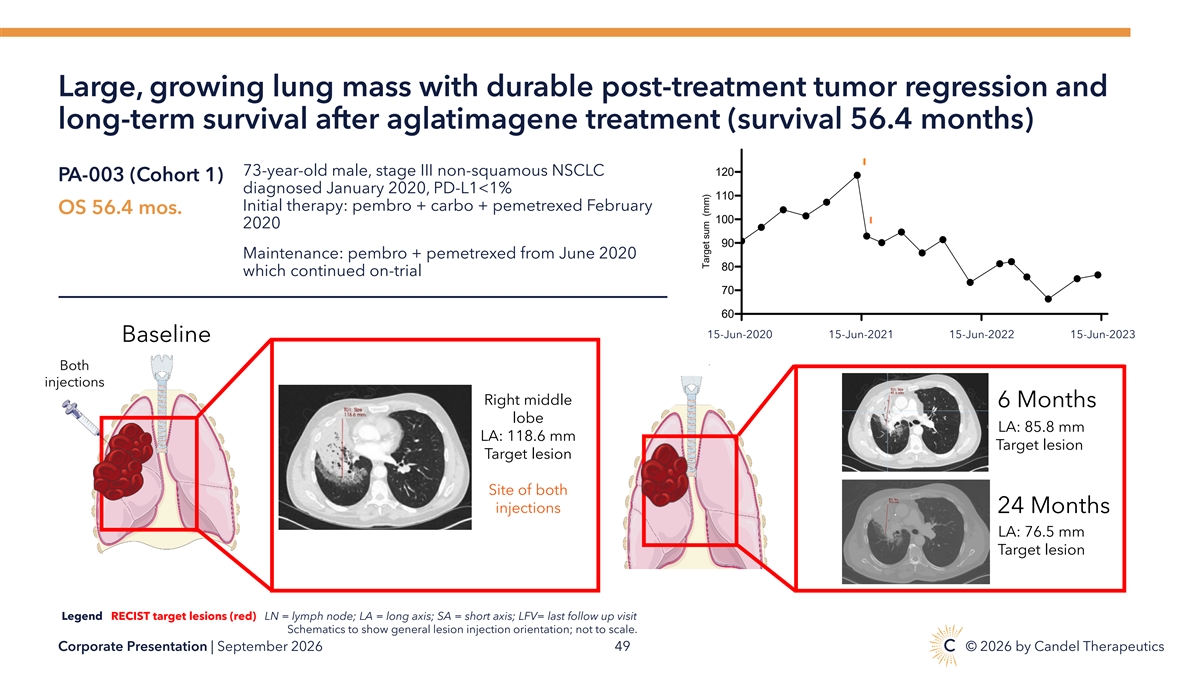
Large, growing lung mass with durable post-treatment tumor regression and long-term survival after aglatimagene treatment (survival 56.4 months) 73-year-old male, stage III non-squamous NSCLC 120 PA-003 (Cohort 1) diagnosed January 2020, PD-L1<1% 110 Initial therapy: pembro + carbo + pemetrexed February OS 56.4 mos. 100 2020 90 Maintenance: pembro + pemetrexed from June 2020 80 which continued on-trial 70 60 15-Jun-2020 15-Jun-2021 15-Jun-2022 15-Jun-2023 Baseline Both injections Right middle 6 Months lobe LA: 85.8 mm LA: 118.6 mm Target lesion Target lesion Site of both injections 24 Months LA: 76.5 mm Target lesion Legend RECIST target lesions (red) LN = lymph node; LA = long axis; SA = short axis; LFV= last follow up visit Schematics to show general lesion injection orientation; not to scale. Corporate Presentation | September 2026 49 © 2026 by Candel Therapeutics 15-Jun-2020 15-Jun-2021 15-Jun-2022 15-Jun-2023 Target sum (mm)
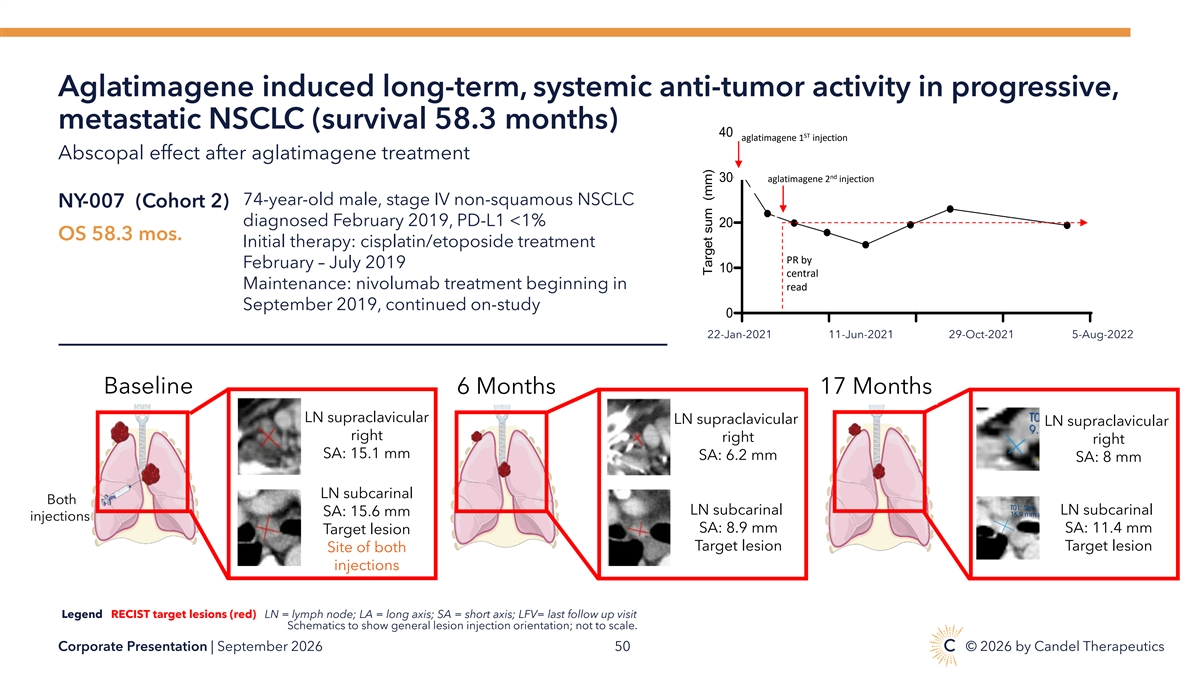
Aglatimagene induced long-term, systemic anti-tumor activity in progressive, metastatic NSCLC (survival 58.3 months) 40 ST aglatimagene 1 injection Abscopal effect after aglatimagene treatment nd 30 aglatimagene 2 injection 74-year-old male, stage IV non-squamous NSCLC NY-007 (Cohort 2) diagnosed February 2019, PD-L1 <1% 20 OS 58.3 mos. Initial therapy: cisplatin/etoposide treatment PR by February – July 2019 10 central Maintenance: nivolumab treatment beginning in read September 2019, continued on-study 0 22-Jan-2021 11-Jun-2021 29-Oct-2021 5-Aug-2022 Baseline 6 Months 17 Months LN supraclavicular LN supraclavicular LN supraclavicular right right right SA: 15.1 mm SA: 6.2 mm SA: 8 mm LN subcarinal Both LN subcarinal LN subcarinal SA: 15.6 mm injections SA: 8.9 mm SA: 11.4 mm Target lesion Target lesion Target lesion Site of both injections Legend RECIST target lesions (red) LN = lymph node; LA = long axis; SA = short axis; LFV= last follow up visit Schematics to show general lesion injection orientation; not to scale. Corporate Presentation | September 2026 50 © 2026 by Candel Therapeutics 22-Jan-2021 11-Jun-2021 29-Oct-2021 18-Mar-2022 5-Aug-2022 Target sum (mm)
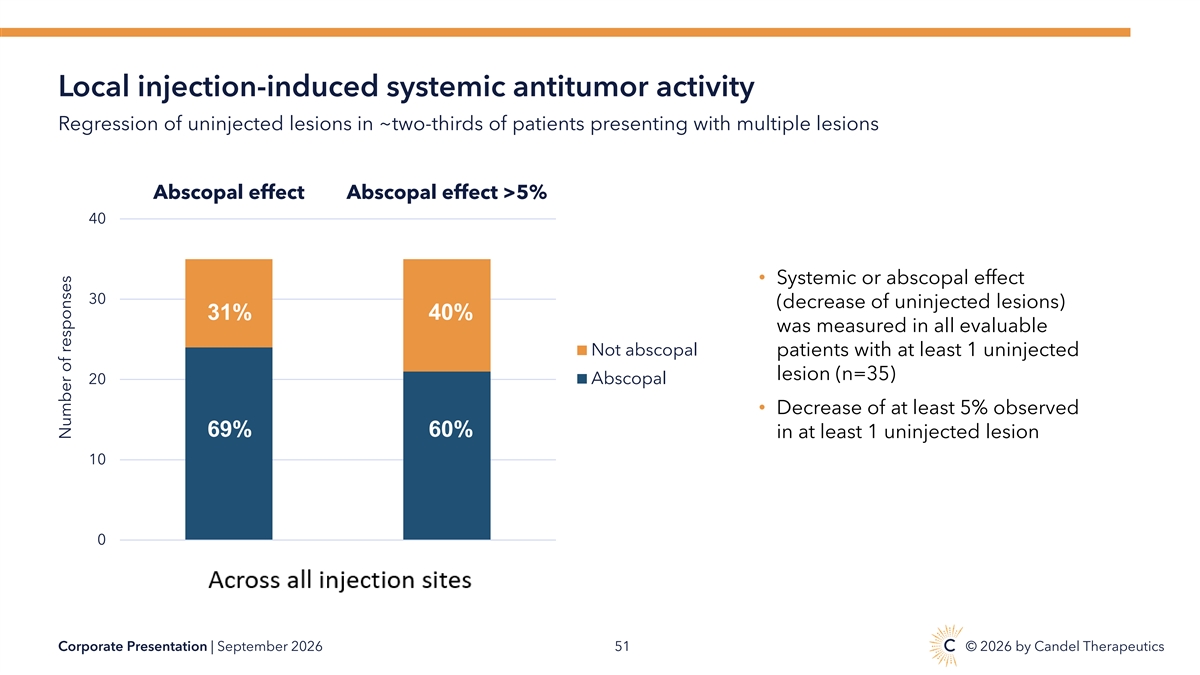
Local injection-induced systemic antitumor activity Regression of uninjected lesions in ~two-thirds of patients presenting with multiple lesions Abscopal effect Abscopal effect >5% 40 • Systemic or abscopal effect 30 (decrease of uninjected lesions) 31% 40% was measured in all evaluable Not abscopal patients with at least 1 uninjected lesion (n=35) 20 Abscopal • Decrease of at least 5% observed 69% 60% in at least 1 uninjected lesion 10 0 Corporate Presentation | September 2026 51 © 2026 by Candel Therapeutics Number of responses
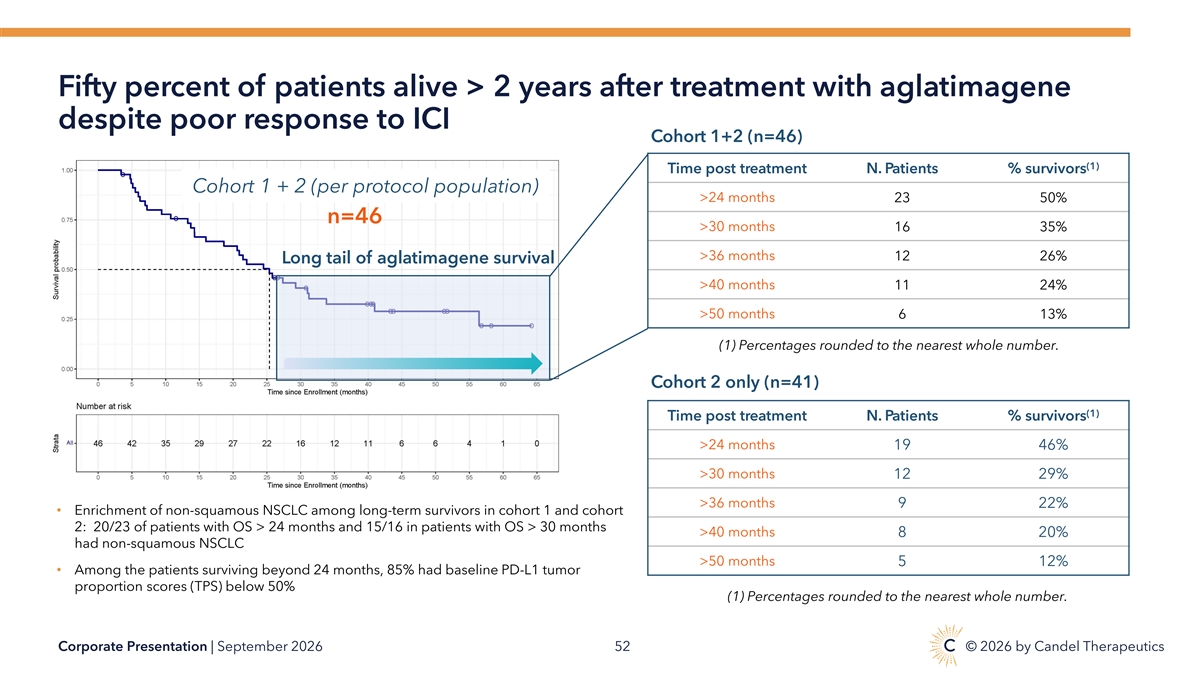
Fifty percent of patients alive > 2 years after treatment with aglatimagene despite poor response to ICI Cohort 1+2 (n=46) (1) Time post treatment N. Patients % survivors Cohort 1 + 2 (per protocol population) >24 months 23 50% n=46 >30 months 16 35% >36 months 12 26% Long tail of aglatimagene survival >40 months 11 24% >50 months 6 13% (1) Percentages rounded to the nearest whole number. Cohort 2 only (n=41) (1) Time post treatment N. Patients % survivors >24 months 19 46% >30 months 12 29% >36 months 9 22% • Enrichment of non-squamous NSCLC among long-term survivors in cohort 1 and cohort 2: 20/23 of patients with OS > 24 months and 15/16 in patients with OS > 30 months >40 months 8 20% had non-squamous NSCLC >50 months 5 12% • Among the patients surviving beyond 24 months, 85% had baseline PD-L1 tumor proportion scores (TPS) below 50% (1) Percentages rounded to the nearest whole number. Corporate Presentation | September 2026 52 © 2026 by Candel Therapeutics
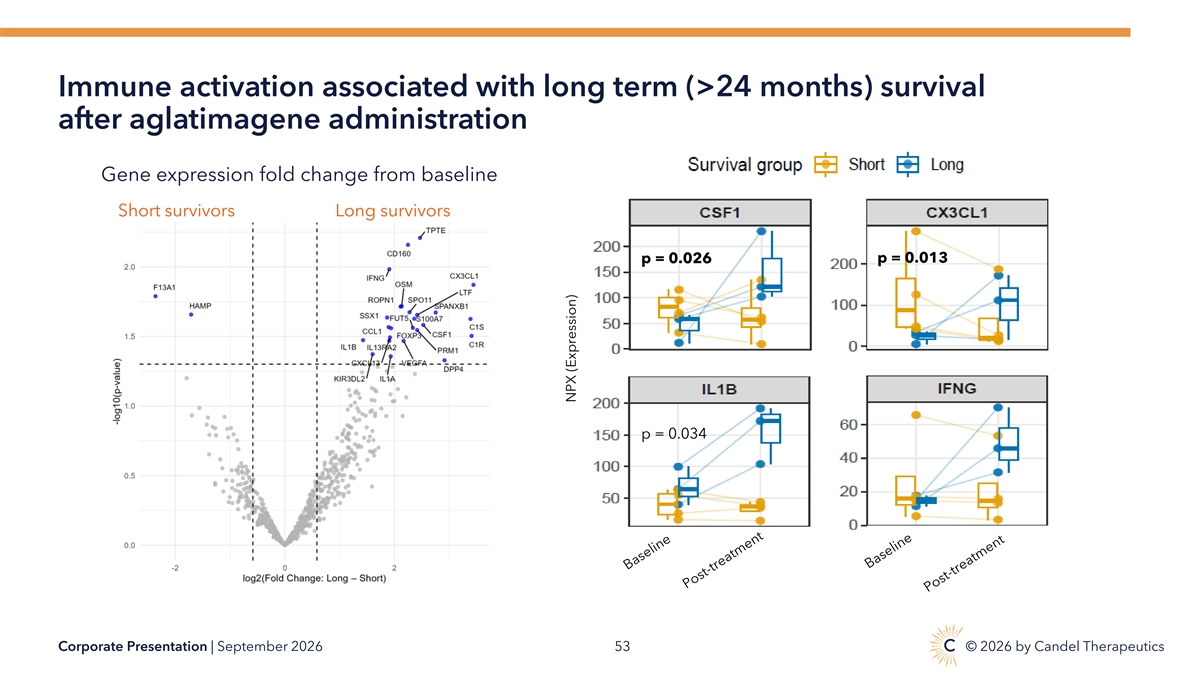
Immune activation associated with long term (>24 months) survival after aglatimagene administration Gene expression fold change from baseline Short survivors Long survivors p = 0.013 p = 0.026 p = 0.034 Corporate Presentation | September 2026 53 © 2026 by Candel Therapeutics NPX (Expression)
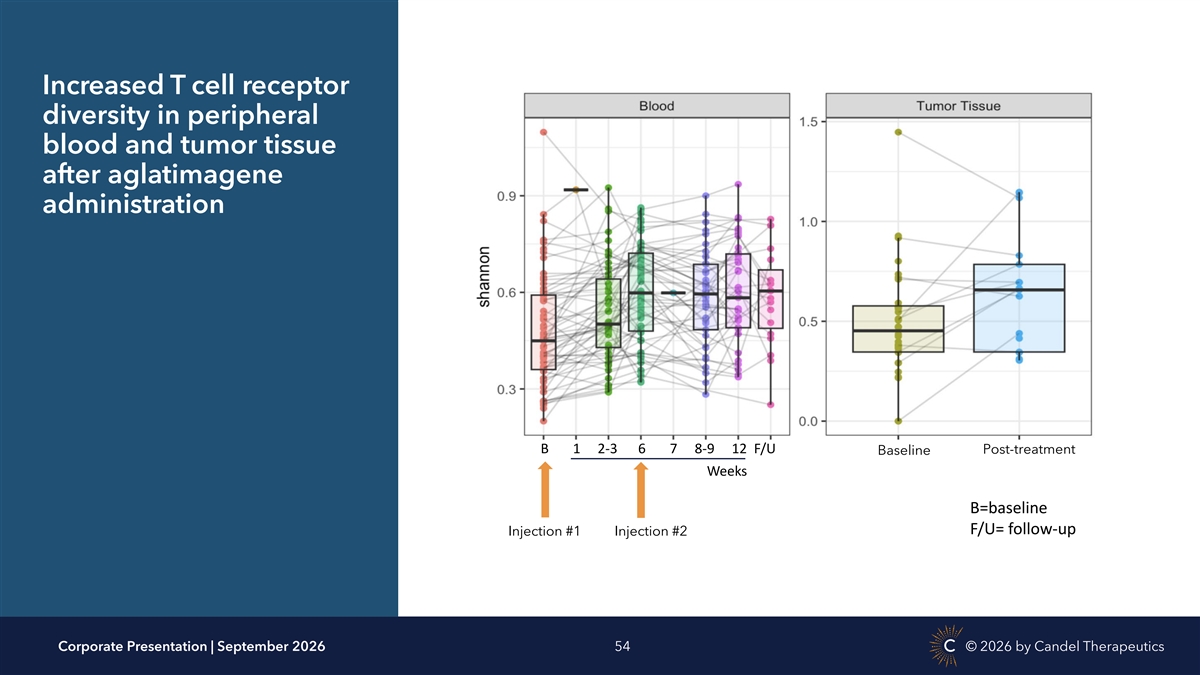
Increased T cell receptor diversity in peripheral blood and tumor tissue after aglatimagene administration B 1 2-3 6 7 8-9 12 F/U Post-treatment Baseline Weeks B=baseline F/U= follow-up Injection #1 Injection #2 Corporate Presentation | September 2026 54 © © 2026 2026 by by C Ca an ndel del T Ther hera ap peu eut ti ic cs s
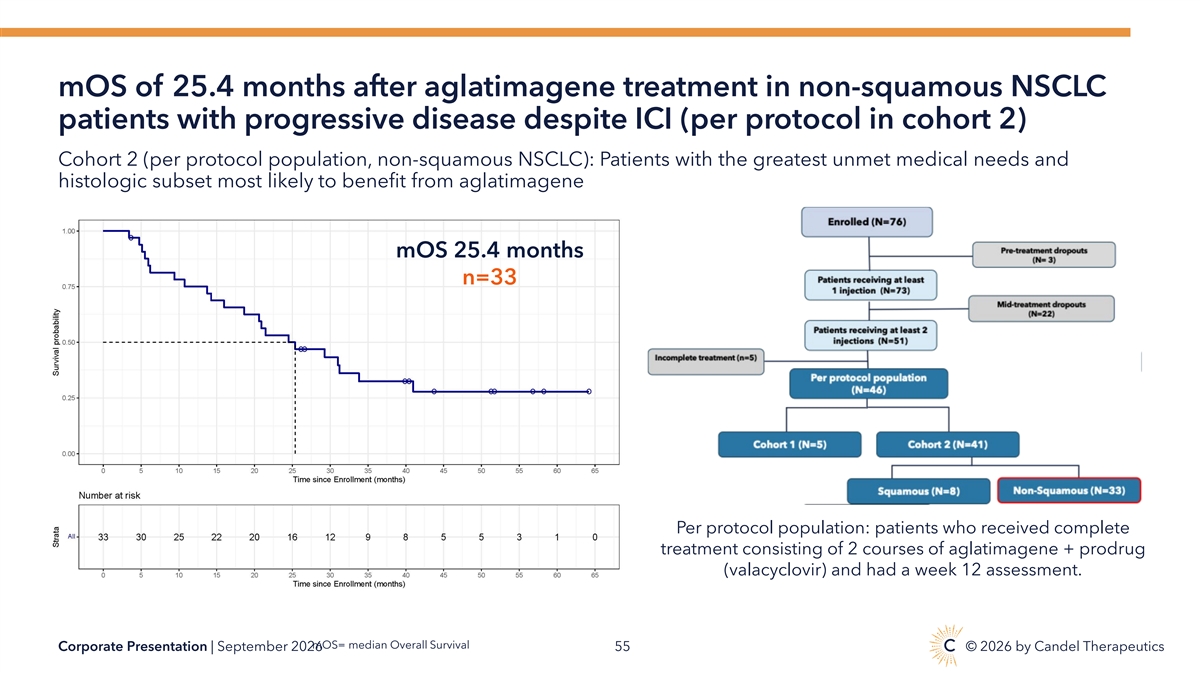
mOS of 25.4 months after aglatimagene treatment in non-squamous NSCLC patients with progressive disease despite ICI (per protocol in cohort 2) Cohort 2 (per protocol population, non-squamous NSCLC): Patients with the greatest unmet medical needs and histologic subset most likely to benefit from aglatimagene mOS 25.4 months n=33 Per protocol population: patients who received complete treatment consisting of 2 courses of aglatimagene + prodrug (valacyclovir) and had a week 12 assessment. mOS= median Overall Survival Corporate Presentation | September 2026 55 © 2026 by Candel Therapeutics
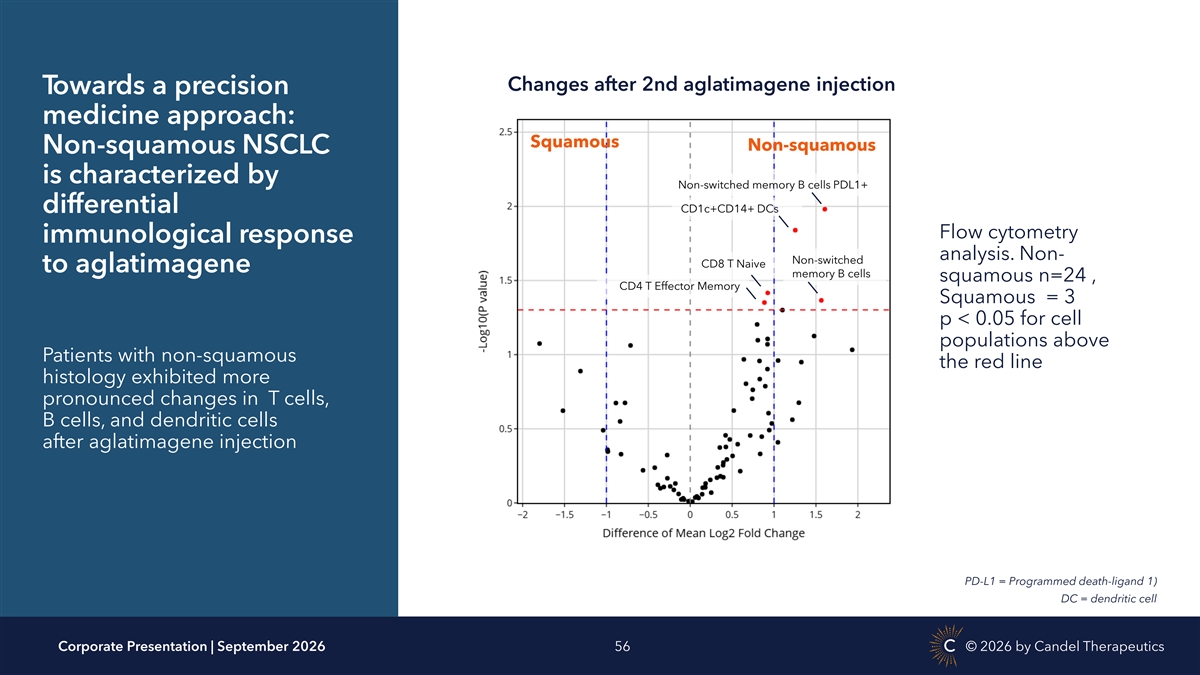
Changes after 2nd aglatimagene injection Towards a precision medicine approach: Squamous Non-squamous Non-squamous NSCLC is characterized by Non-switched memory B cells PDL1+ CD1c+CD14+ DCs differential Flow cytometry immunological response analysis. Non- Non-switched CD8 T Naive to aglatimagene memory B cells squamous n=24 , CD4 T Effector Memory Squamous = 3 p < 0.05 for cell populations above Patients with non-squamous the red line histology exhibited more pronounced changes in T cells, B cells, and dendritic cells after aglatimagene injection PD-L1 = Programmed death-ligand 1) DC = dendritic cell Corporate Presentation | September 2026 56 © © 2026 2026 by by C Ca an ndel del T Ther hera ap peu eut ti ic cs s
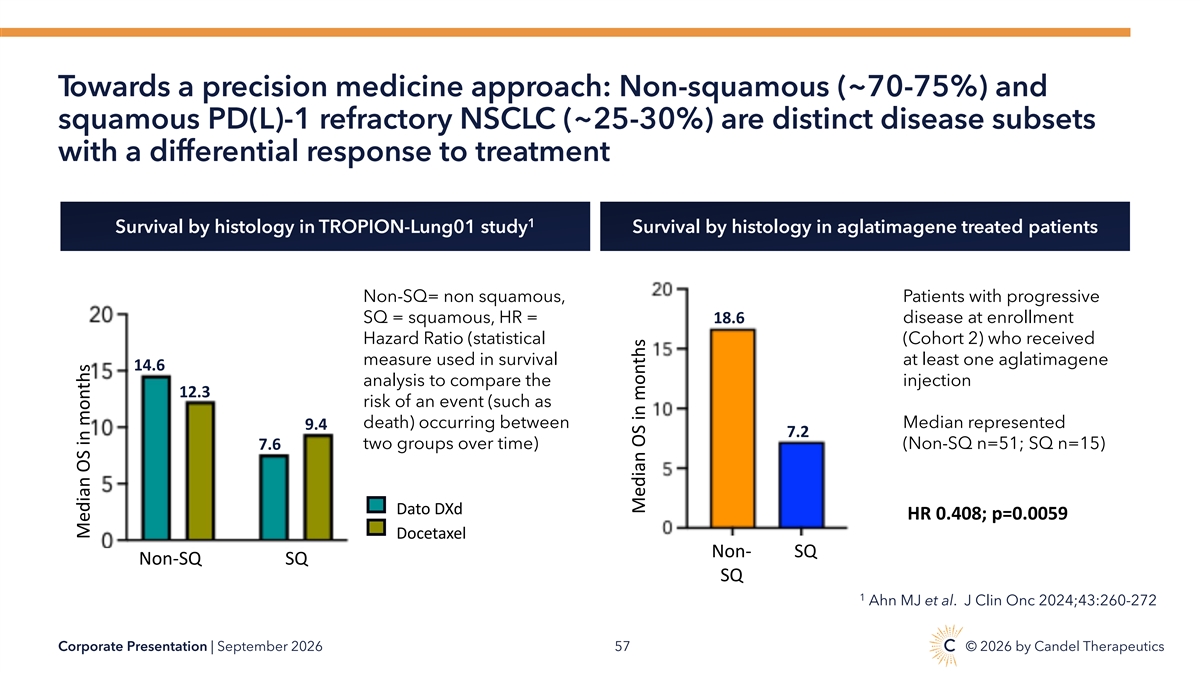
Towards a precision medicine approach: Non-squamous (~70-75%) and squamous PD(L)-1 refractory NSCLC (~25-30%) are distinct disease subsets with a differential response to treatment 1 Survival by histology in TROPION-Lung01 study Survival by histology in aglatimagene treated patients Non-SQ= non squamous, Patients with progressive SQ = squamous, HR = 18.6 disease at enrollment Hazard Ratio (statistical (Cohort 2) who received measure used in survival at least one aglatimagene 14.6 analysis to compare the injection 12.3 risk of an event (such as death) occurring between Median represented 9.4 7.2 two groups over time) (Non-SQ n=51; SQ n=15) 7.6 Dato DXd HR 0.408; p=0.0059 Docetaxel Non- SQ Non-SQ SQ SQ 1 Ahn MJ et al. J Clin Onc 2024;43:260-272 Corporate Presentation | September 2026 57 © 2026 by Candel Therapeutics Median OS in months Median OS in months
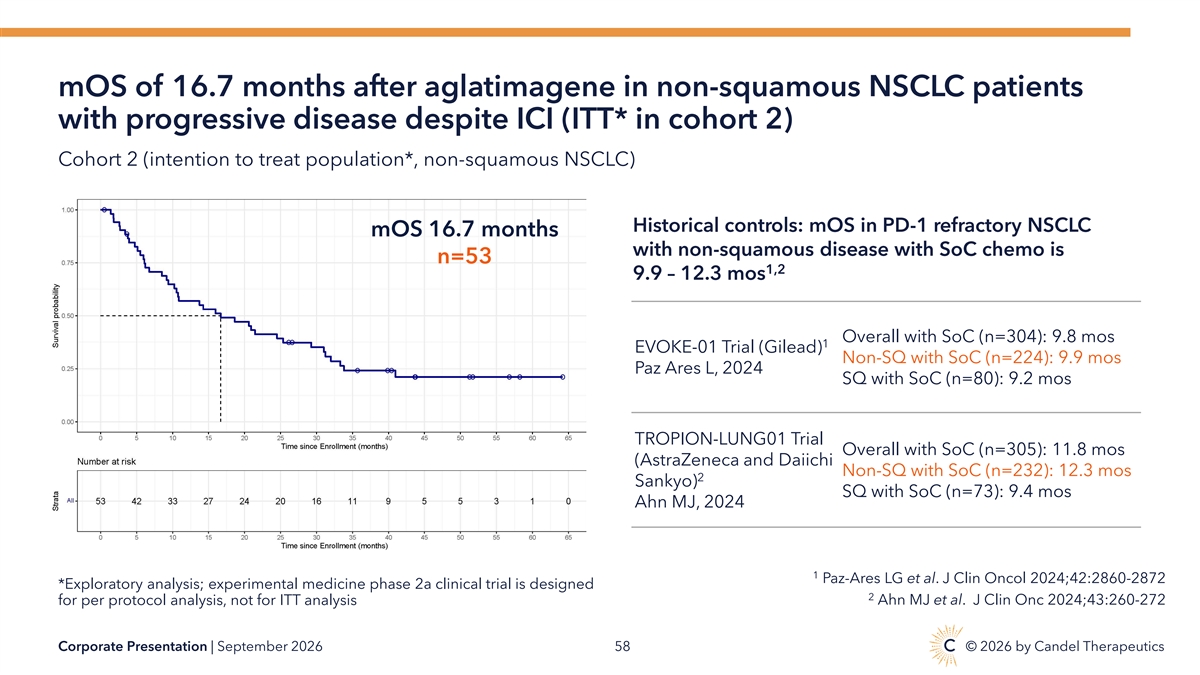
mOS of 16.7 months after aglatimagene in non-squamous NSCLC patients with progressive disease despite ICI (ITT* in cohort 2) Cohort 2 (intention to treat population*, non-squamous NSCLC) Historical controls: mOS in PD-1 refractory NSCLC mOS 16.7 months with non-squamous disease with SoC chemo is n=53 1,2 9.9 – 12.3 mos Overall with SoC (n=304): 9.8 mos 1 EVOKE-01 Trial (Gilead) Non-SQ with SoC (n=224): 9.9 mos Paz Ares L, 2024 SQ with SoC (n=80): 9.2 mos TROPION-LUNG01 Trial Overall with SoC (n=305): 11.8 mos (AstraZeneca and Daiichi Non-SQ with SoC (n=232): 12.3 mos 2 Sankyo) SQ with SoC (n=73): 9.4 mos Ahn MJ, 2024 1 Paz-Ares LG et al. J Clin Oncol 2024;42:2860-2872 *Exploratory analysis; experimental medicine phase 2a clinical trial is designed 2 for per protocol analysis, not for ITT analysis Ahn MJ et al. J Clin Onc 2024;43:260-272 Corporate Presentation | September 2026 58 © 2026 by Candel Therapeutics
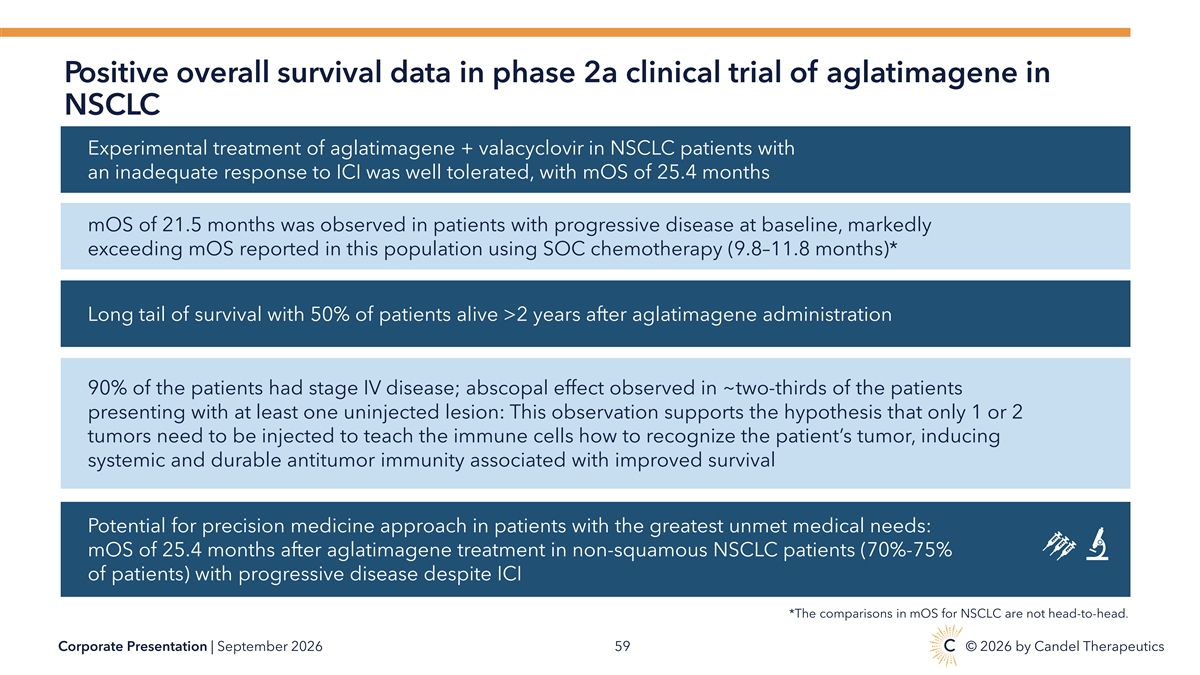
Positive overall survival data in phase 2a clinical trial of aglatimagene in NSCLC Experimental treatment of aglatimagene + valacyclovir in NSCLC patients with an inadequate response to ICI was well tolerated, with mOS of 25.4 months mOS of 21.5 months was observed in patients with progressive disease at baseline, markedly exceeding mOS reported in this population using SOC chemotherapy (9.8–11.8 months)* Long tail of survival with 50% of patients alive >2 years after aglatimagene administration 90% of the patients had stage IV disease; abscopal effect observed in ~two-thirds of the patients presenting with at least one uninjected lesion: This observation supports the hypothesis that only 1 or 2 tumors need to be injected to teach the immune cells how to recognize the patient’s tumor, inducing systemic and durable antitumor immunity associated with improved survival Potential for precision medicine approach in patients with the greatest unmet medical needs: mOS of 25.4 months after aglatimagene treatment in non-squamous NSCLC patients (70%-75% of patients) with progressive disease despite ICI *The comparisons in mOS for NSCLC are not head-to-head. Corporate Presentation | September 2026 59 © 2026 by Candel Therapeutics
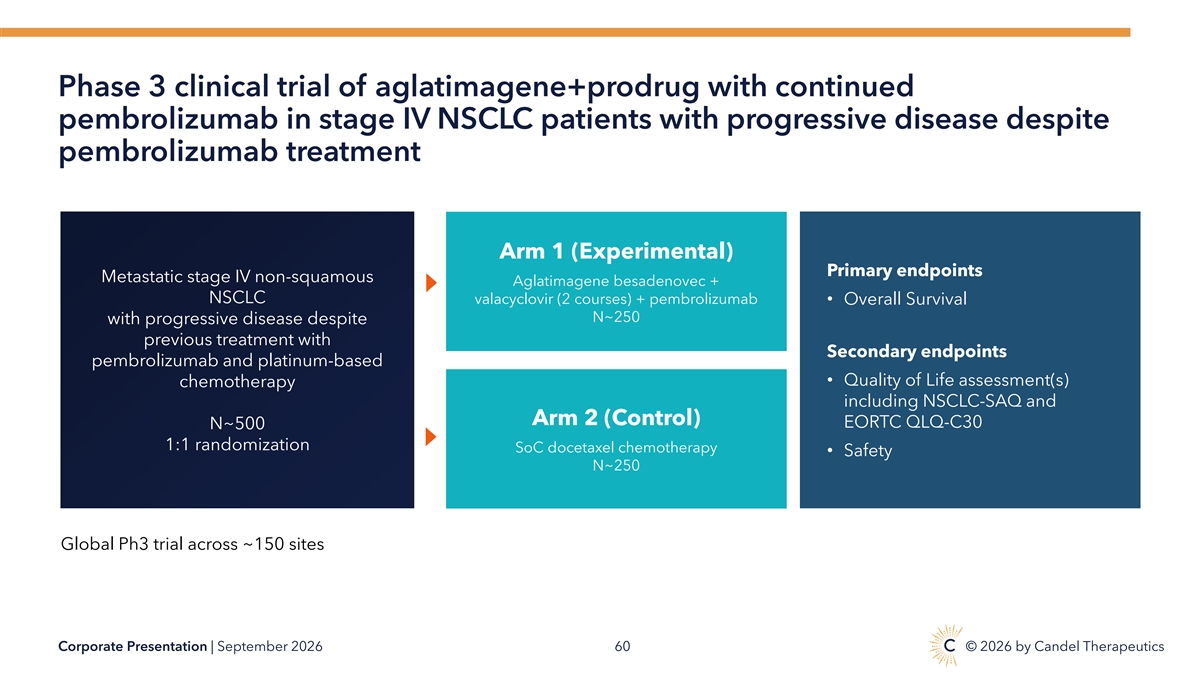
Phase 3 clinical trial of aglatimagene+prodrug with continued pembrolizumab in stage IV NSCLC patients with progressive disease despite pembrolizumab treatment Arm 1 (Experimental) Primary endpoints Metastatic stage IV non-squamous Aglatimagene besadenovec + NSCLC valacyclovir (2 courses) + pembrolizumab • Overall Survival N~250 with progressive disease despite previous treatment with Secondary endpoints pembrolizumab and platinum-based • Quality of Life assessment(s) chemotherapy including NSCLC-SAQ and Arm 2 (Control) EORTC QLQ-C30 N~500 1:1 randomization SoC docetaxel chemotherapy • Safety N~250 Global Ph3 trial across ~150 sites Corporate Presentation | September 2026 60 © 2026 by Candel Therapeutics
Linoserpaturev (CAN-3110) Oncolytic virus with tumor-specificity Corporate Presentation | September 2026 61 © 2026 by Candel Therapeutics
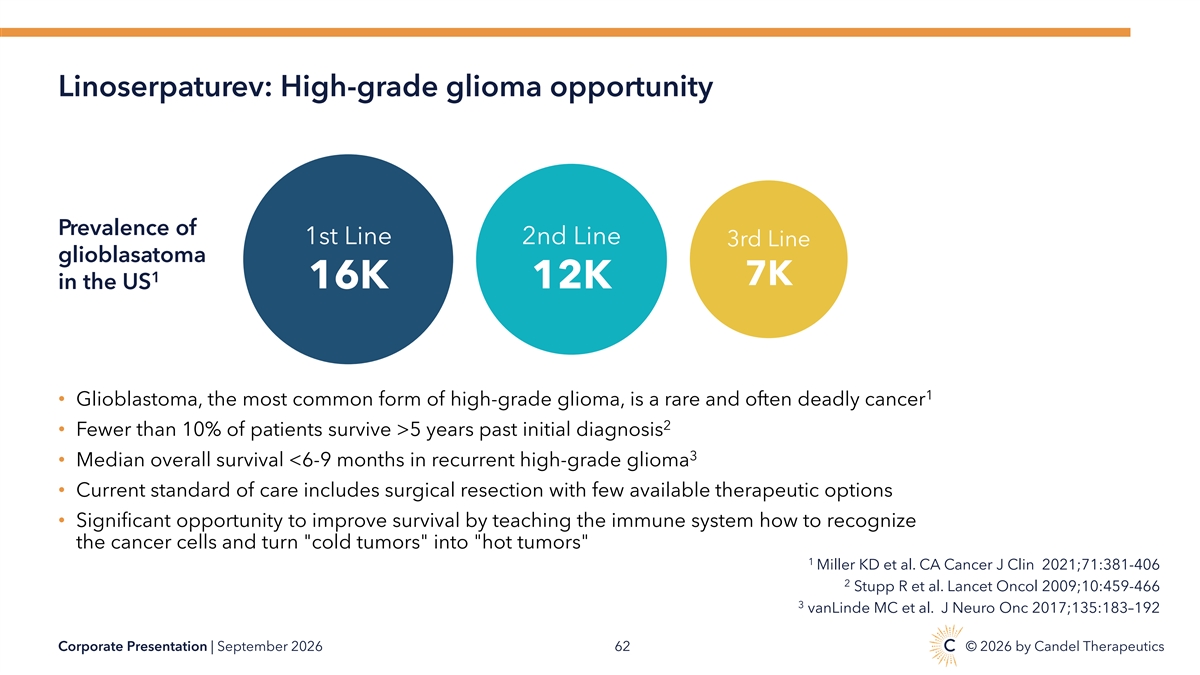
Linoserpaturev: High-grade glioma opportunity Prevalence of 1st Line 2nd Line 3rd Line glioblasatoma 1 7K in the US 16K 12K 1 • Glioblastoma, the most common form of high-grade glioma, is a rare and often deadly cancer 2 • Fewer than 10% of patients survive >5 years past initial diagnosis 3 • Median overall survival <6-9 months in recurrent high-grade glioma • Current standard of care includes surgical resection with few available therapeutic options • Significant opportunity to improve survival by teaching the immune system how to recognize the cancer cells and turn cold tumors into hot tumors 1 Miller KD et al. CA Cancer J Clin 2021;71:381-406 2 Stupp R et al. Lancet Oncol 2009;10:459-466 3 vanLinde MC et al. J Neuro Onc 2017;135:183–192 Corporate Presentation | September 2026 62 © 2026 by Candel Therapeutics
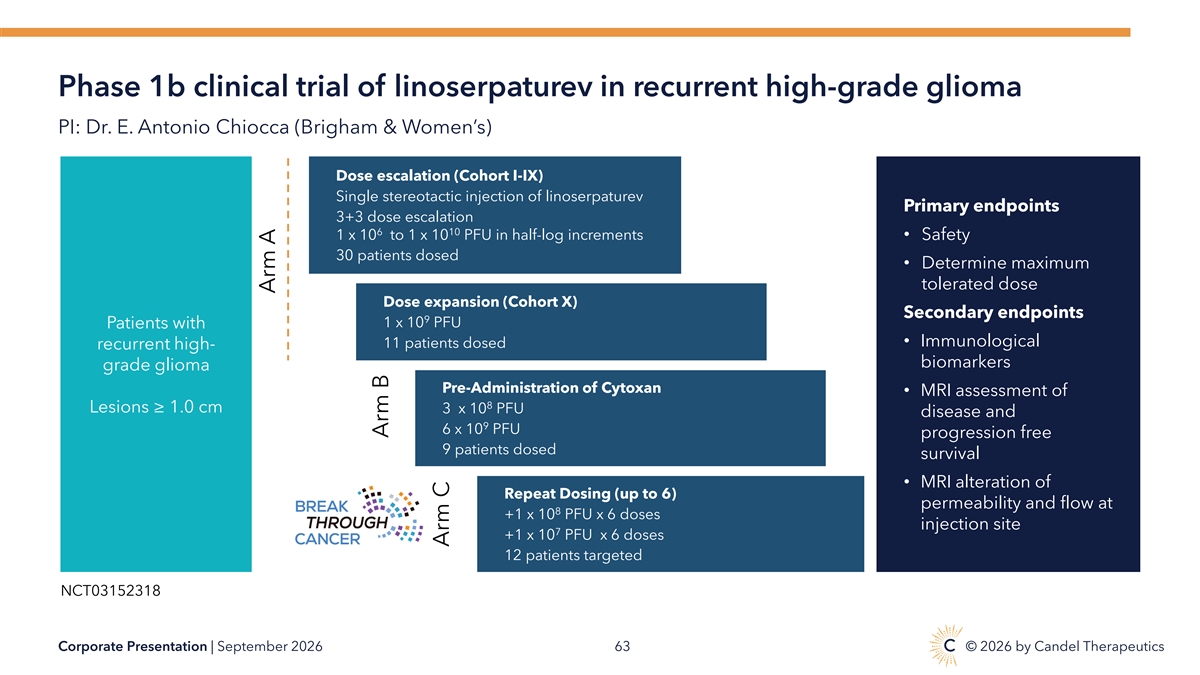
Phase 1b clinical trial of linoserpaturev in recurrent high-grade glioma PI: Dr. E. Antonio Chiocca (Brigham & Women’s) Dose escalation (Cohort I-IX) Single stereotactic injection of linoserpaturev Primary endpoints 3+3 dose escalation 6 10 1 x 10 to 1 x 10 PFU in half-log increments • Safety 30 patients dosed • Determine maximum tolerated dose Dose expansion (Cohort X) Secondary endpoints 9 1 x 10 PFU Patients with • Immunological 11 patients dosed recurrent high- biomarkers grade glioma Pre-Administration of Cytoxan • MRI assessment of 8 Lesions ≥ 1.0 cm 3 x 10 PFU disease and 9 6 x 10 PFU progression free 9 patients dosed survival • MRI alteration of Repeat Dosing (up to 6) permeability and flow at 8 +1 x 10 PFU x 6 doses injection site 7 +1 x 10 PFU x 6 doses 12 patients targeted NCT03152318 Corporate Presentation | September 2026 63 © 2026 by Candel Therapeutics Arm A Arm B Arm C
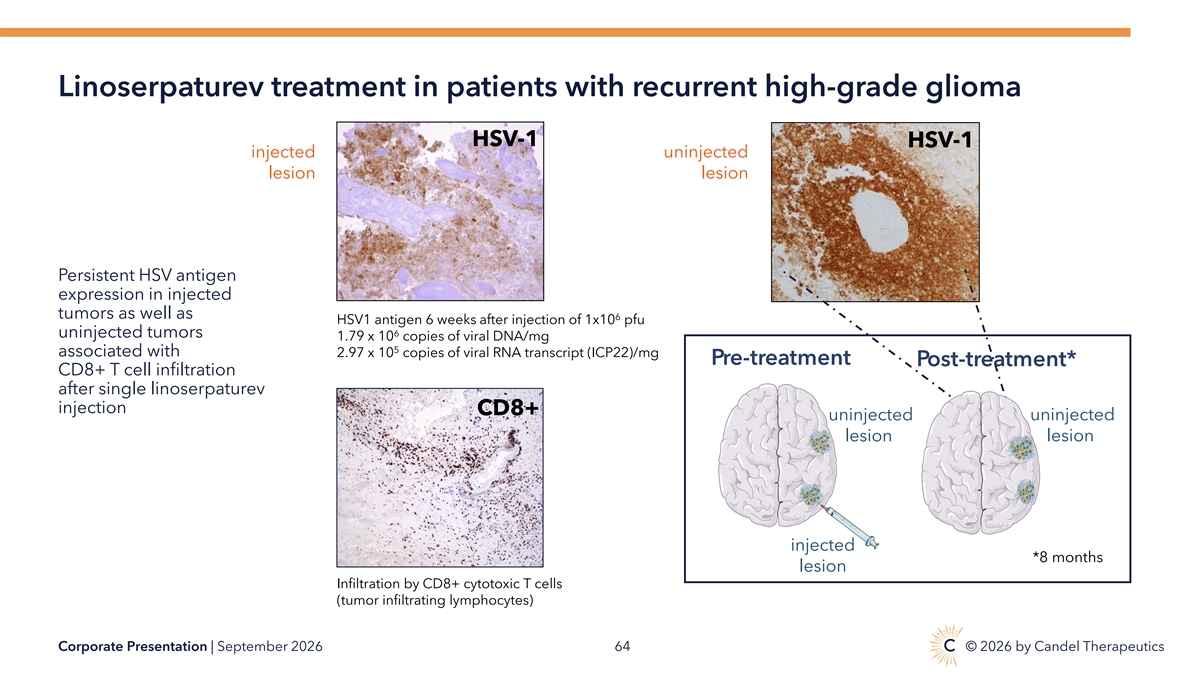
Linoserpaturev treatment in patients with recurrent high-grade glioma HSV-1 HSV-1 injected uninjected lesion lesion Persistent HSV antigen expression in injected tumors as well as 6 HSV1 antigen 6 weeks after injection of 1x10 pfu 6 uninjected tumors 1.79 x 10 copies of viral DNA/mg 5 associated with 2.97 x 10 copies of viral RNA transcript (ICP22)/mg Pre-treatment Post-treatment* CD8+ T cell infiltration after single linoserpaturev injection CD8+ uninjected uninjected lesion lesion injected *8 months lesion Infiltration by CD8+ cytotoxic T cells (tumor infiltrating lymphocytes) Corporate Presentation | September 2026 64 © 2026 by Candel Therapeutics
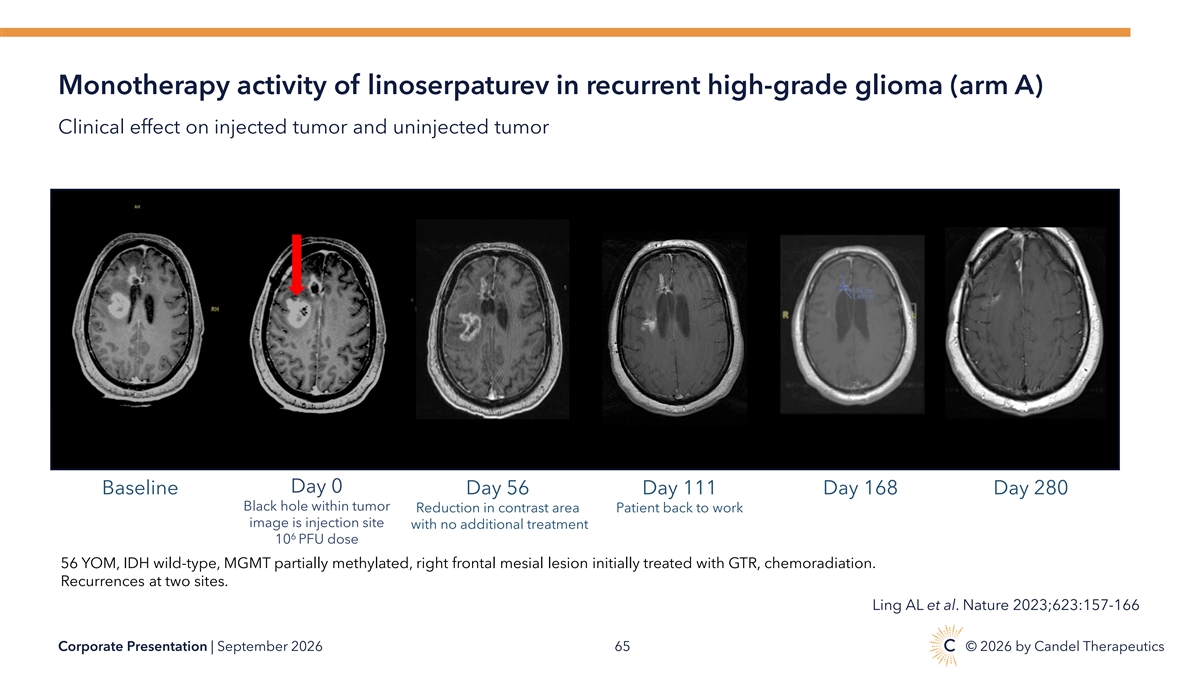
Monotherapy activity of linoserpaturev in recurrent high-grade glioma (arm A) Clinical effect on injected tumor and uninjected tumor Day 0 Baseline Day 56 Day 111 Day 168 Day 280 Black hole within tumor Reduction in contrast area Patient back to work image is injection site with no additional treatment 6 10 PFU dose 56 YOM, IDH wild-type, MGMT partially methylated, right frontal mesial lesion initially treated with GTR, chemoradiation. Recurrences at two sites. Ling AL et al. Nature 2023;623:157-166 Corporate Presentation | September 2026 65 © 2026 by Candel Therapeutics
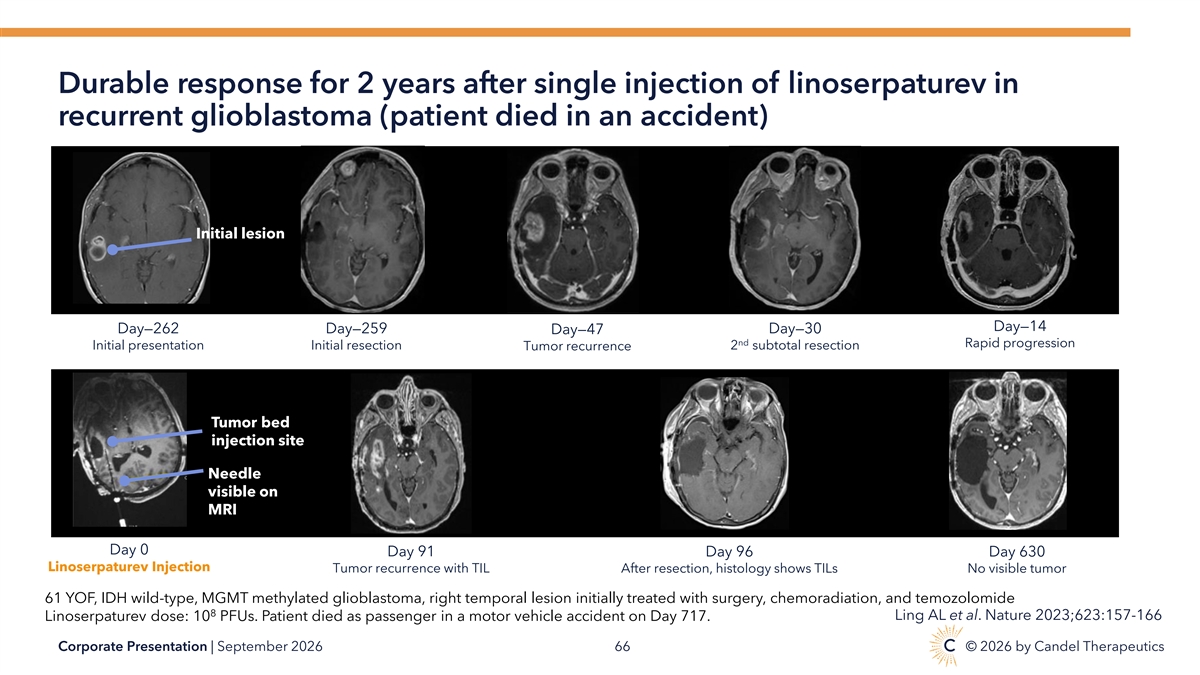
Durable response for 2 years after single injection of linoserpaturev in recurrent glioblastoma (patient died in an accident) Initial lesion Day—14 Day—262 Day—259 Day—47 Day—30 nd Rapid progression Initial presentation Initial resection Tumor recurrence 2 subtotal resection Tumor bed injection site Needle visible on MRI Day 0 Day 91 Day 96 Day 630 Linoserpaturev Injection Tumor recurrence with TIL After resection, histology shows TILs No visible tumor 61 YOF, IDH wild-type, MGMT methylated glioblastoma, right temporal lesion initially treated with surgery, chemoradiation, and temozolomide 8 Ling AL et al. Nature 2023;623:157-166 Linoserpaturev dose: 10 PFUs. Patient died as passenger in a motor vehicle accident on Day 717. Corporate Presentation | September 2026 66 © 2026 by Candel Therapeutics
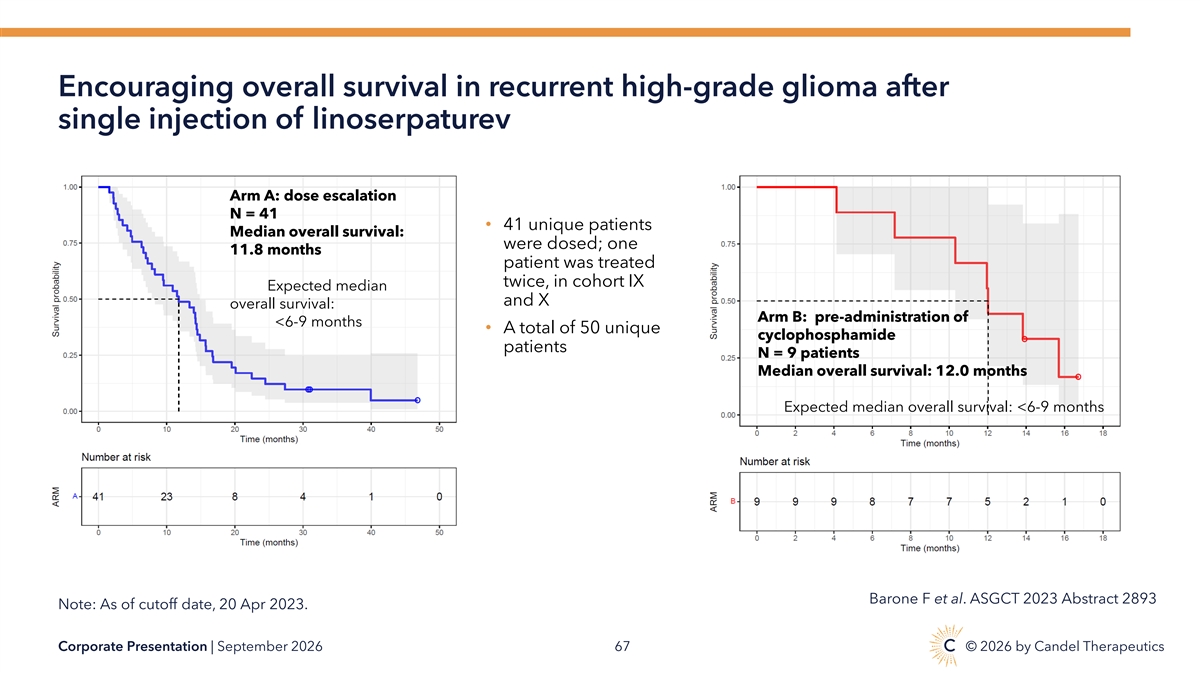
Encouraging overall survival in recurrent high-grade glioma after single injection of linoserpaturev Arm A: dose escalation N = 41 • 41 unique patients Median overall survival: were dosed; one 11.8 months patient was treated twice, in cohort IX Expected median and X overall survival: Arm B: pre-administration of <6-9 months • A total of 50 unique cyclophosphamide patients N = 9 patients Median overall survival: 12.0 months Expected median overall survival: <6-9 months Barone F et al. ASGCT 2023 Abstract 2893 Note: As of cutoff date, 20 Apr 2023. Corporate Presentation | September 2026 67 © 2026 by Candel Therapeutics
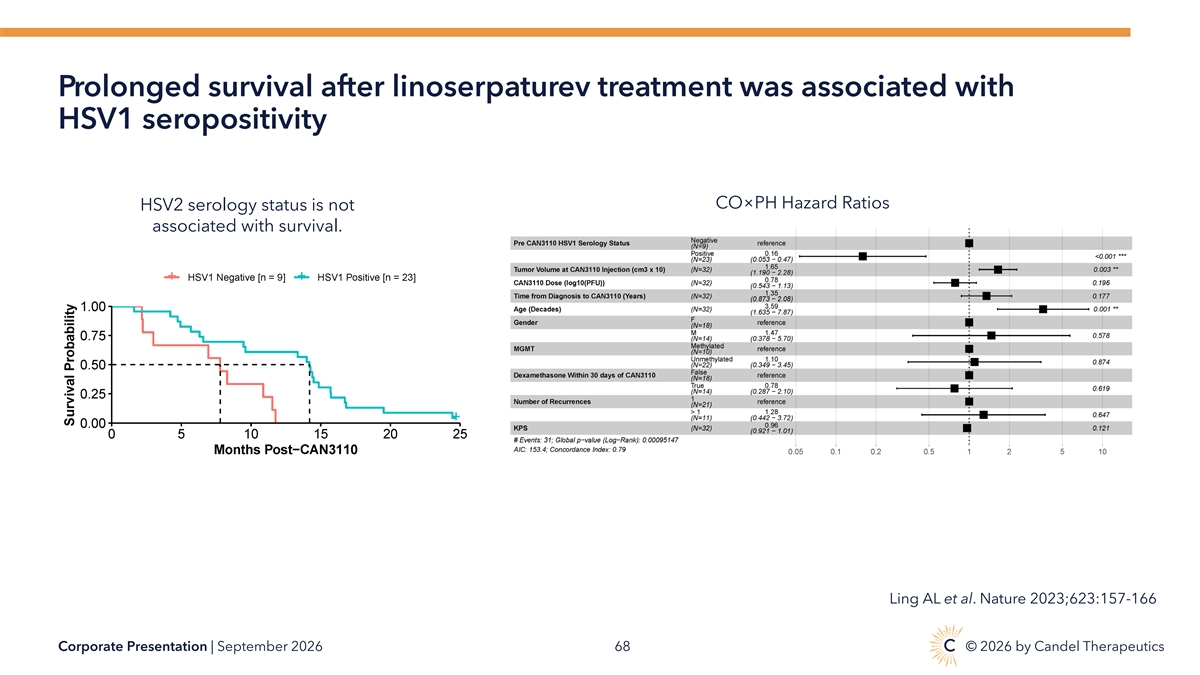
Prolonged survival after linoserpaturev treatment was associated with HSV1 seropositivity CO×PH Hazard Ratios HSV2 serology status is not associated with survival. Ling AL et al. Nature 2023;623:157-166 Corporate Presentation | September 2026 68 © 2026 by Candel Therapeutics
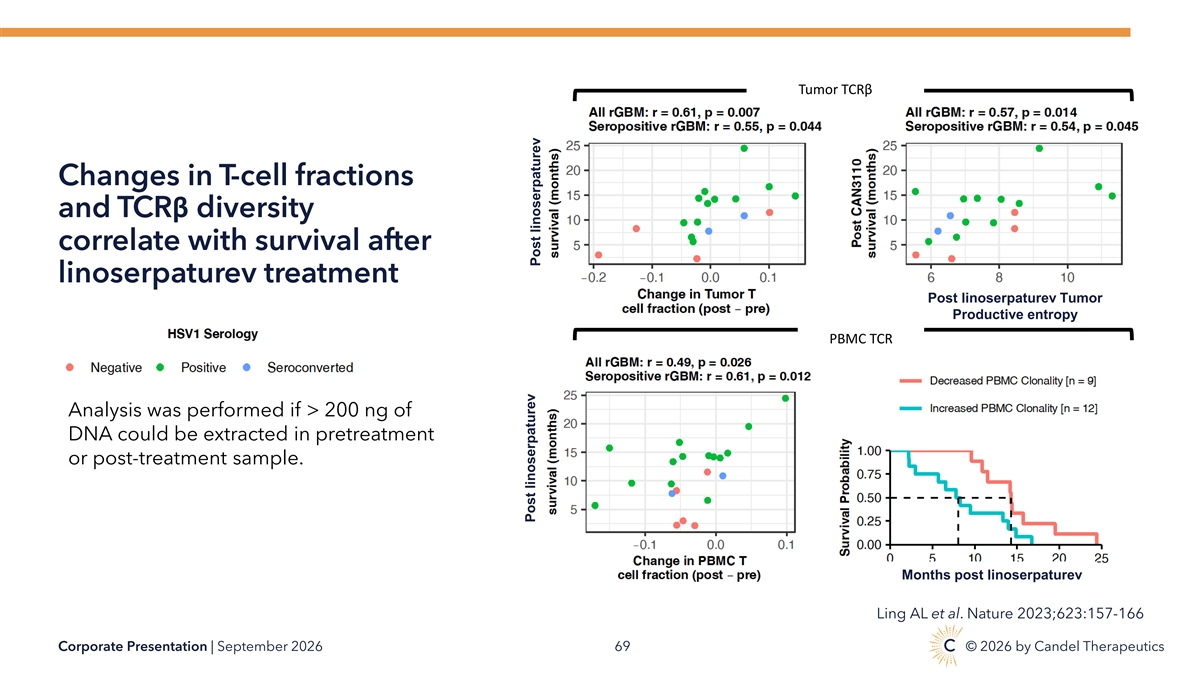
Tumor TCRβ Changes in T-cell fractions and TCRβ diversity correlate with survival after linoserpaturev treatment Post linoserpaturev Tumor Productive entropy PBMC TCR Analysis was performed if > 200 ng of DNA could be extracted in pretreatment or post-treatment sample. Months post linoserpaturev Ling AL et al. Nature 2023;623:157-166 Corporate Presentation | September 2026 69 © 2026 by Candel Therapeutics Post linoserpaturev Post linoserpaturev
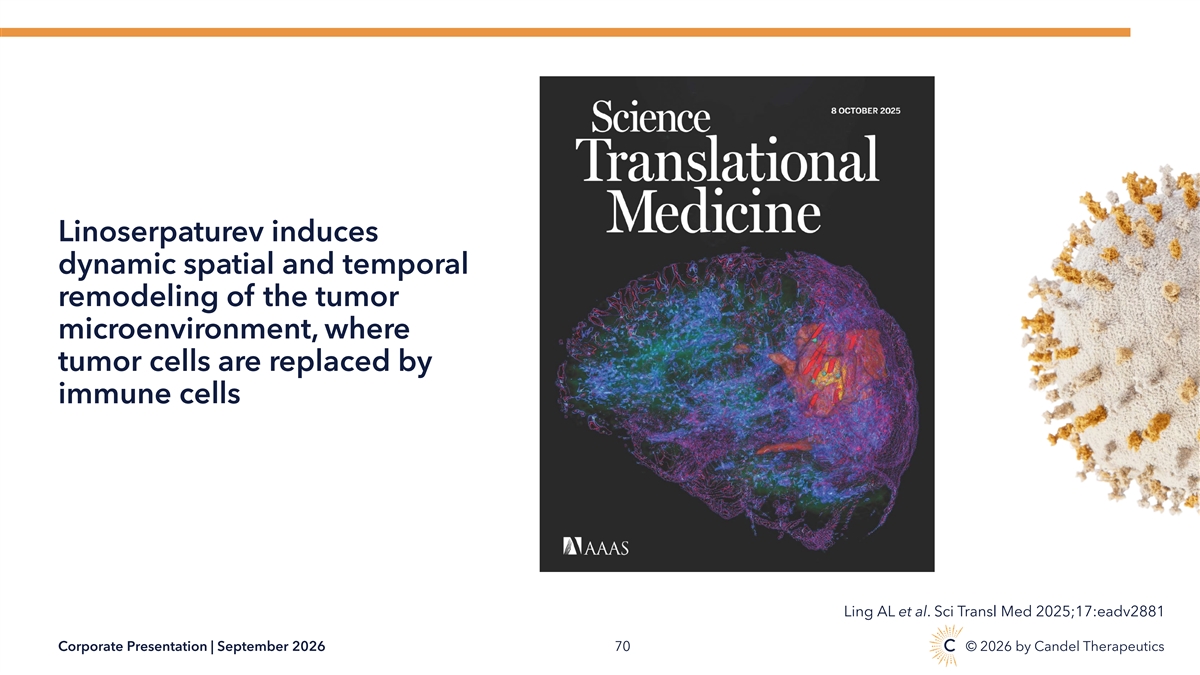
Linoserpaturev induces dynamic spatial and temporal remodeling of the tumor microenvironment, where tumor cells are replaced by immune cells Ling AL et al. Sci Transl Med 2025;17:eadv2881 Corporate Presentation | September 2026 70 © 2026 by Candel Therapeutics
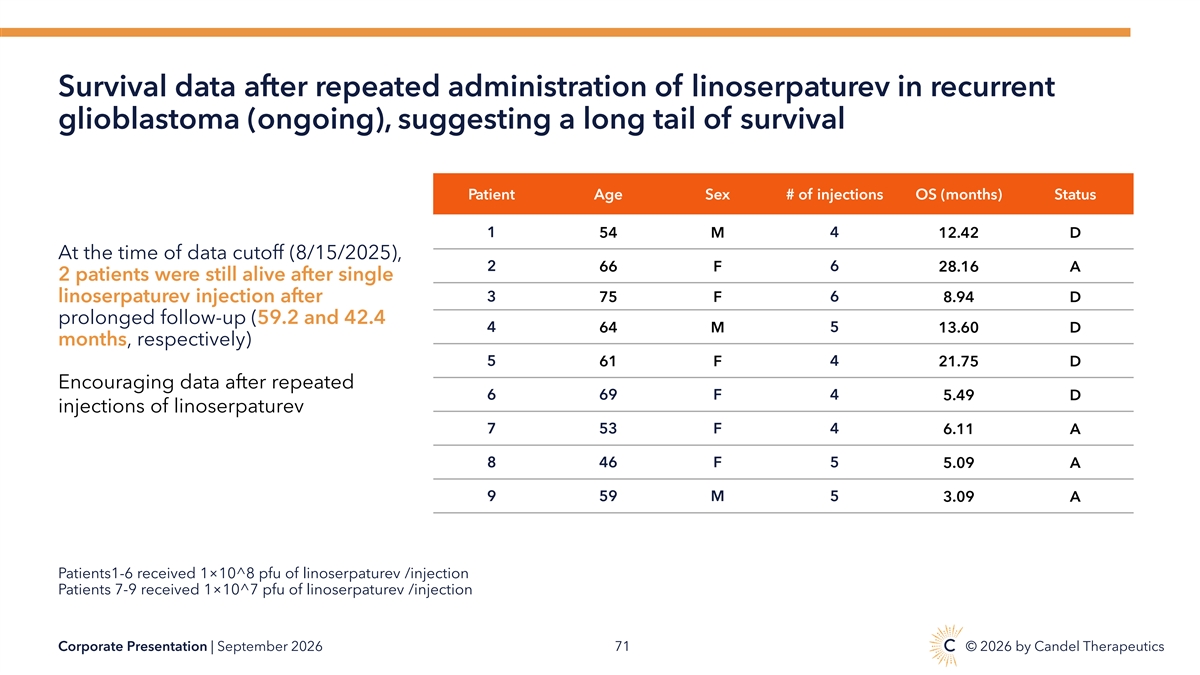
Survival data after repeated administration of linoserpaturev in recurrent glioblastoma (ongoing), suggesting a long tail of survival Patient Age Sex # of injections OS (months) Status 1 54 M 4 12.42 D At the time of data cutoff (8/15/2025), 2 66 F 6 28.16 A 2 patients were still alive after single 3 6 linoserpaturev injection after 75 F 8.94 D prolonged follow-up (59.2 and 42.4 4 64 M 5 13.60 D months, respectively) 5 61 F 4 21.75 D Encouraging data after repeated 6 69 F 4 5.49 D injections of linoserpaturev 7 53 F 4 6.11 A 8 46 F 5 5.09 A 9 59 M 5 3.09 A Patients1-6 received 1×10^8 pfu of linoserpaturev /injection Patients 7-9 received 1×10^7 pfu of linoserpaturev /injection Corporate Presentation | September 2026 71 © 2026 by Candel Therapeutics
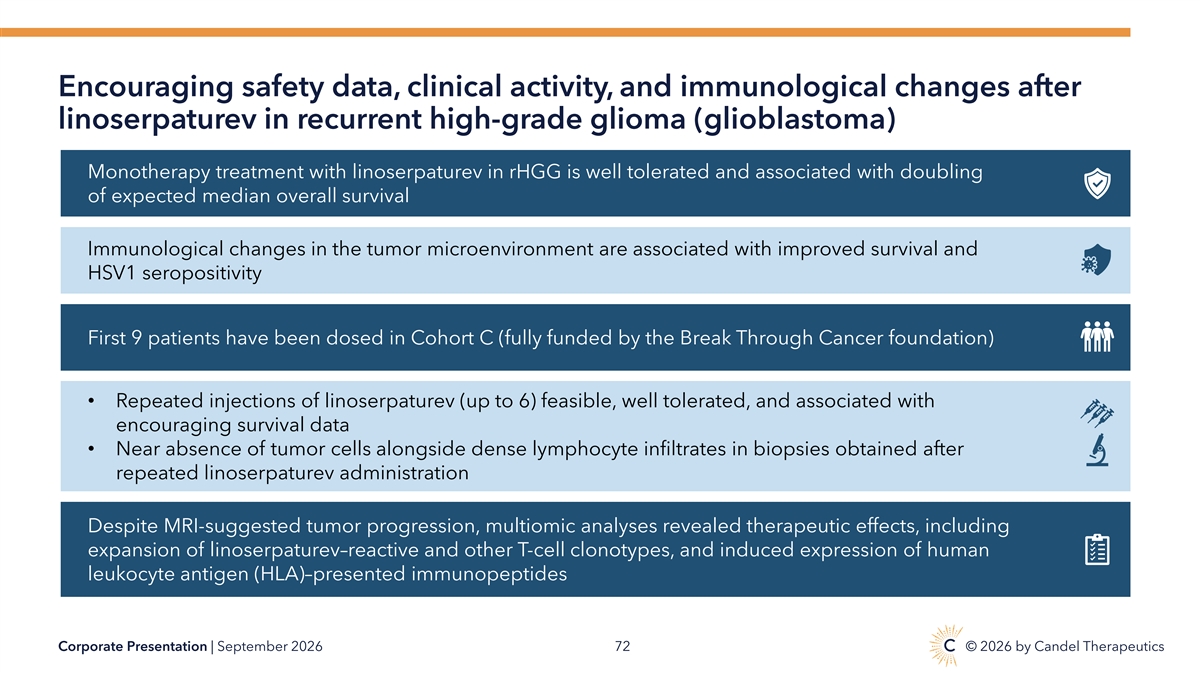
Encouraging safety data, clinical activity, and immunological changes after linoserpaturev in recurrent high-grade glioma (glioblastoma) Monotherapy treatment with linoserpaturev in rHGG is well tolerated and associated with doubling of expected median overall survival Immunological changes in the tumor microenvironment are associated with improved survival and HSV1 seropositivity First 9 patients have been dosed in Cohort C (fully funded by the Break Through Cancer foundation) • Repeated injections of linoserpaturev (up to 6) feasible, well tolerated, and associated with encouraging survival data • Near absence of tumor cells alongside dense lymphocyte infiltrates in biopsies obtained after repeated linoserpaturev administration Despite MRI-suggested tumor progression, multiomic analyses revealed therapeutic effects, including expansion of linoserpaturev–reactive and other T-cell clonotypes, and induced expression of human leukocyte antigen (HLA)–presented immunopeptides Corporate Presentation | September 2026 72 © 2026 by Candel Therapeutics
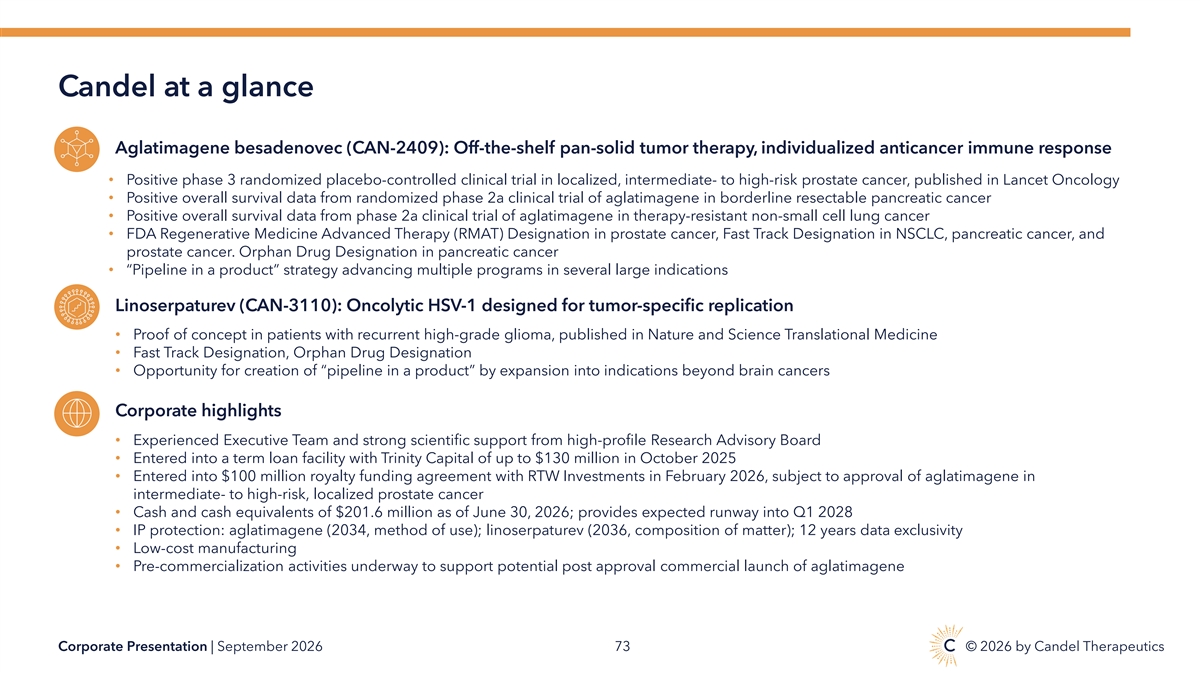
Candel at a glance Aglatimagene besadenovec (CAN-2409): Off-the-shelf pan-solid tumor therapy, individualized anticancer immune response • Positive phase 3 randomized placebo-controlled clinical trial in localized, intermediate- to high-risk prostate cancer, published in Lancet Oncology • Positive overall survival data from randomized phase 2a clinical trial of aglatimagene in borderline resectable pancreatic cancer • Positive overall survival data from phase 2a clinical trial of aglatimagene in therapy-resistant non-small cell lung cancer • FDA Regenerative Medicine Advanced Therapy (RMAT) Designation in prostate cancer, Fast Track Designation in NSCLC, pancreatic cancer, and prostate cancer. Orphan Drug Designation in pancreatic cancer • “Pipeline in a product” strategy advancing multiple programs in several large indications Linoserpaturev (CAN-3110): Oncolytic HSV-1 designed for tumor-specific replication • Proof of concept in patients with recurrent high-grade glioma, published in Nature and Science Translational Medicine • Fast Track Designation, Orphan Drug Designation • Opportunity for creation of “pipeline in a product” by expansion into indications beyond brain cancers Corporate highlights • Experienced Executive Team and strong scientific support from high-profile Research Advisory Board • Entered into a term loan facility with Trinity Capital of up to $130 million in October 2025 • Entered into $100 million royalty funding agreement with RTW Investments in February 2026, subject to approval of aglatimagene in intermediate- to high-risk, localized prostate cancer • Cash and cash equivalents of $201.6 million as of June 30, 2026; provides expected runway into Q1 2028 • IP protection: aglatimagene (2034, method of use); linoserpaturev (2036, composition of matter); 12 years data exclusivity • Low-cost manufacturing • Pre-commercialization activities underway to support potential post approval commercial launch of aglatimagene Corporate Presentation | September 2026 73 © 2026 by Candel Therapeutics